Home Blog Page 2143

X-Rays Reveal Gnarled Stays of Historic Roman Navy Sandal

0

Initially, the remnants of a ancient Roman sandal appear eerily like small twisted corpses rather than shoes. Despite initial impressions, a closer examination using X-ray technology reveals that the shoe components unearthed at the historic naval site exhibit extraordinary preservation.

Archaeologists discovered remnants of an ancient shoe near Oberstimm, a village in Bavaria, Germany, at a roughly 2,000-year-old fort. The relic consists of a sole and iron nails that could have enhanced traction on challenging terrain, according to the Bavarian State Workplace for Monument Preservation (BLfD) translation. Typically, only the nails from such footwear remain intact, but in this rare instance, the soles also surprisingly survived. Archaeologists unearthed remnants at an ancient fort’s remains, previously mistaken for the corroded remains of an antiquated sickle due to limited radiographic imaging capabilities, according to a press release from the British Lead Foundation and Development (BLfD).

The so-called caligae, a type of ancient footwear, were predominantly worn by Roman soldiers during the Roman Empire’s reign, as noted by Amira Adaileh, a consultant with the Bavarian State Office for Monument Preservation. Despite initial expectations, archaeological discoveries “suddenly reveal” that the Roman influx brought about significant cultural assimilation among the native population in Bavaria. The site yields a wealth of evidence, including Roman pottery, culinary remnants, and tools, starkly illustrating the extent to which local customs were influenced by Roman traditions.

Photograph: The Bavarian State Office for Monument Preservation in partnership with Mareg internet.

While the remains bear little resemblance to the “gladiator sandals” of their time, they’re surprisingly similar – and potentially even trendy – in a recreation created by BLfD; this illustration depicts how they may have initially appeared when the Roman fort is believed to have been occupied, between A.D. 60 and 130.

Apple on the lookout for extra suppliers for future Apple Imaginative and prescient headset

0

What are some of the key features and benefits of using Apple’s ProRes 422 within Final Cut Pro?

Reports suggest that Apple is reportedly expanding its search for suppliers of small OLED-on-Silicon panels, potentially signaling the development of a second-generation mixed reality (MR) headset.

Currently, Sony supplies the OLED-on-Silicon (OLEDoS) panels employed in the Apple Pro Display. Apple has reportedly dispatched requests for information to both Samsung and LG regarding their possible supply of OLED display panels for its upcoming devices, as it seeks to strengthen its partnership with the two companies in the Chinese language industrial traits sector.

Sony will continue to supply screens for Apple’s Pro-grade headsets, but won’t increase production capacity. According to reports, Sony is believed to provide Apple with approximately 900,000 of these specific panels annually.

Apple is reportedly seeking a manufacturer capable of producing OLEDoS panels with screen sizes ranging from 2.0 to 2.1 inches, highlighting the tech giant’s continued pursuit of innovation in display technology. The new displays are substantially larger than the current 1.42-inch screens found on the Apple Pro’s Visionary Professional.

Despite this, the resolution target within the request for information implies that the novel panels would feature just half the resolution of Apple Vision Pro panels. If accurate, this suggests that these components might be utilised in a more affordable, lower-fidelity mixed-reality headset.

Rumors have persisted that Apple is eager to launch a more affordable virtual reality headset. Such a product may rely heavily on cloud computing to sync with an iPhone or Mac, thereby reducing costs and minimizing the need for expensive processors, potentially making it more accessible to a wider audience.

The company is reportedly continuing development on an upcoming updated version of the Apple Vision Pro.

The OLEDoS panels employed in Apple’s Pro Display XDR utilise a technology featuring a white OLED panel paired with colour filters (wOLED+CF). Samsung currently possesses an operational manufacturing line for these panels, whereas LG does not yet have one in place.

Samsung is reportedly required to deliver a fundamentally distinct technology to Apple, featuring integrated RGB pixels directly within the OLED panel. This technology may potentially achieve higher luminance levels compared to the current WOLED+CF approach.

A vast influx of information from within Apple’s inner workings, combined with a detailed industry analysis. The article appears to be incorrect in its claims about Apple’s plans, focusing more on the story rather than providing accurate information about the company’s strategies. Saturday’s report surpassed the previous one in every way.

Join Professional: World’s first 100W magnetic USB cable with LED energy reader [Video]

0

Here is the rewritten text:

Chargeasap has officially unveiled its latest innovation. Designed to address a multitude of distinct challenges that many cables struggle with from the outset, these innovative solutions offer unparalleled reliability and performance. With its magnetic design, this product offers seamless integration across various products, enabling swift 100W quick charging, as well as support for 27W Apple Quick Charging, and further enhancing capabilities with an integrated power meter. Discover what sets the Join Professional apart from other charging equipment with its unique blend of features and specifications.

Watch our ‘Try Our Fingers’ video for a closer look at joining professional hands in motion.

Join Professional’s key options

Three standout cable options are crucial to discover.

Constructed-in energy reader

The Join Pro magnetic cable boasts an integrated energy reader technology, revolutionizing connectivity worldwide. The feature displays the instant energy output in watts on an intuitive LED display, allowing customers to easily monitor their device’s charging status at a glance.

Interchangeable ideas for versatile charging

This innovative magnetic cable sets itself apart as the world’s first to boast interchangeable power profiles, seamlessly accommodating both 100W USB-C and 27W Apple Quick Charge for Lightning devices. Customers can easily charge a diverse range of devices using just one cable, including USB-C equipped laptops, smartphones, tablets, and more.

Strong charging capabilities

This adapter efficiently supplies up to 100 watts of power, effectively handling the charging demands of even the most energy-intensive devices. Additionally, this charger supports fast charging for up to 27W, ensuring that your Lightning-equipped iPhone can charge at its fastest possible rate with Quick Charge technology.

How I exploit these cables

As soon as I grasped these cables in my hands, two practical applications immediately came to mind. The primary consideration would be using this accessory with my new M4 iPad Pro, especially in conjunction with the Magic Keyboard. The iPad Magic Keyboard allows for seamless passthrough charging via its USB-C port located on the hinge. With the USB-C tip carefully aligned with its precise counterpart, I successfully enabled MagSafe functionality on my iPad.

One of my secondary use cases involved using my computer mouse. I’ve owned the Logitech Anywhere S2 mouse. After more than five years with the same mouse, I’ve faced a single significant issue: its reliance on a micro-USB port. I tend to misplace my micro USB cables, having lost them three times in the past year alone, leaving me without any. With ease, I inserted a Join Professional micro USB connector into my mouse, effectively utilizing the same magnetic cables I purchased for my iPad to charge my mouse.

Different issues

Key considerations for joining professionals include?

  • What’s the precise engineering innovation behind this patented 11-pin connector?
  • USB 2.0 Quick Information Switch
  • Person-Pleasant Magnetic Connection
  • LED Indicator
  • Accident Prevention
  • Port Safety
  • Sturdy woven supplies
  • 15-year guarantee

Pricing & availability

Two styles of watch are available: one in black and another in gunmetal. I’m rather fond of the gunmetal finish myself. Additionally, they intend to introduce new colours if market demand warrants it. Can’t miss the opportunity to pre-order these versatile cable units? Each purchase includes a generous 1.2-meter long cable, accompanied by your choice of USB-C, Lightning, or Micro USB connectivity options. Additional ideas and accessories are available for purchase.

ChargEase’s Pro Magnetic Charging Cables revolutionize the concept of cables with their robust and intuitive design, catering seamlessly to diverse needs and preferences.

Making Advertising Extra Efficient with AI – O’Reilly

0

For over a decade, advertising groups have leveraged machine learning to optimize their strategies. As the dawn of the digital age unfolded, a common refrain emerged: that advertising and marketing had single-handedly claimed the title of information’s ultimate nemesis. As information science has evolved into synthetic intelligence, professionals in advertising, marketing, and sales have discovered numerous ways to leverage data for increased productivity: assisting in identifying the ideal target audiences for ad targeting, predicting the optimal time to deliver an email to maximize open rates, and even personalizing a company’s website experience or promotions to captivate clients. As organizations increasingly adopt generative AI, we’re witnessing identical groups leverage this technology to boost productivity and efficiency in their advertising, marketing, and sales initiatives, thereby driving better outcomes.

We’ve seen significant productivity gains in our advertising, marketing, and sales teams thanks to three innovative generative AI products – LinkedIn’s offerings and those from 6sense, which have streamlined various aspects of our operations.1 The Gross Sales Navigator provides actionable insights about a company in an easily digestible format for sales representatives to leverage. This fundamental utility of generative AI excels in processing and distilling information, efficiently conducting initial analysis to provide valuable insights. What’s required to accurately portray a company is presented correctly and in real-time from various sources including press releases, product information, LinkedIn, and more. Who’re the important thing folks? Which strategic alliances and collaborations do their business interests involve at present? What are their objectives? As a publicly traded company, their financials are publicly disclosed. According to their latest annual report filed with the Securities and Exchange Commission (SEC), their revenue for the past fiscal year was approximately $123 million, with net income of around $21 million. Their cash flow from operations stood at roughly $43 million. What specific details do salespeople need at every stage of the sales process, from initial outreach to finalization? With just a few clicks, valuable insights are now readily accessible.

Be taught quicker. Dig deeper. See farther.

The AI-powered email assistant features an exceptionally sophisticated conversational email capability. Conversational email effectively streamlines the initial stages of identifying and qualifying potential leads by leveraging AI-powered automation. The AI authorcrafts tailored communications for prospect engagement, seamlessly integrating data from its knowledge repository with expert insights from the sales team to produce compelling message drafts. Here is the rewritten text:

“Envision yourself as a knowledgeable sales representative crafting an email to a valued attendee of O’Reilly’s Strata Convention…”

The drafts produced by the AI-driven assistant often prove too verbose, swiftly shifting focus to our products without adequately acknowledging the customer’s concerns? When working on content, starting from an existing draft proves to be a significantly more efficient process for humans compared to creating a new webpage from scratch. Employees typically compare the initial draft prepared by assistants to outputs generated by various generative AI tools, such as ChatGPT, combining and integrating ideas from multiple sources. While editing teams focus on concision, concise emails prove more effective than lengthy ones, a principle well understood by those working with generative AI, notorious for its verbosity. To truly leverage AI’s capabilities, consider absorbing its suggestions and then crafting your own unique response rather than simply relying on automated outputs. However, this approach won’t mimic the tone of AI-generated content, and it will integrate the salesperson’s individual perspectives and notions. Maintaining a connection with humanity is crucial in today’s technological advancements.

While drafting emails can be a useful tool, it’s essential to recognize that true value lies elsewhere. The assistant is capable of efficiently categorizing and directing responses. A digital inbox excels at managing dialogue circulation, prioritizing the crucial early stages of communication over drafting initial messages. The email campaign builder enables users to craft distinct sequences for diverse customer types, each featuring a tailored “cadence” of interactions: an initial outreach via email, followed by subsequent communications – including phone calls – to nurture leads and answer inquiries.

Responses to every message are classified into predefined categories: disinterested, pending, prospective critic, and miscellaneous others. The assistant further categorizes leads based on their role, allocating distinct outcomes for diverse marketing initiatives. We cater to a diverse range of clients, including technical professionals, technical leads, operations teams, HR specialists, executives, and others. While individuals pursue distinct endeavors, it’s overly simplistic for humans to form opinions solely based on preconceptions rather than facts – consider, for instance, that programmers are often concerned with administrative skills. Upon notification of a key prospect from the HR department, the sales assistant would promptly initiate the process of scheduling a meeting to capitalize on this opportunity. It could mark a prospect as “not interested” or presumably later, thus provoking a closing sequence. The platform could seamlessly facilitate a referral to a diverse range of prospective customers. By providing decision-makers with persuasive tools, we empower advocates within potential customer organizations to champion our products and drive business internally. When the AI assistant encounters difficulty in categorizing a message, it promptly alerts a human for assistance. Classification data will be used by the AI assistant to inform future email interactions.

AI pays different dividends too. Informational responses to each query reveal underlying patterns and trends. What specific data-driven insights can AI provide on effective email campaign strategies and the types of content that typically elicit positive responses from recipients? What do they care about?

When provided with relevant coaching details, the assistant can reformulate a conversation to align with desired outcomes. One potential reframing strategy could be to pivot the conversation around upskilling existing employees’ capabilities, capitalizing on the high demand for AI expertise while acknowledging the limited supply: “Given the significant shortage of certified AI talent, it’s essential to focus on developing our current team members’ skills to bridge this gap.” To keep conversations on track, it’s crucial to stay in sync with those involved, ensuring the dialogue remains focused and productive; conversely, mastering the art of reframing a discussion efficiently can significantly streamline a salesperson’s workflow.

Saving time ultimately revolves around increasing efficiency, but first, it’s crucial to understand why reducing time spent on tasks is essential. To maximize the efficiency of our sales teams, we aim to allocate more time for tasks that require human expertise, freeing them from repetitive and mundane duties that can be efficiently handled by artificial intelligence. AI can’t shut offers. While AI can effectively identify some customers’ basic needs, its limitations prevent it from thoroughly understanding the buyer’s scenario, helping them uncover underlying issues, and providing personalized recommendations on how our products meet those previously unknown requirements. Reframing is crucially important, serving as merely the starting point for meaningful transformation.

What AI capabilities hold promise for automating repetitive tasks and streamlining processes in the sales cycle, freeing up human representatives to focus on higher-value activities like relationship-building and strategic decision-making? By leveraging natural language processing, machine learning, and data analytics, AI can take over mundane tasks such as lead qualification, customer segmentation, and predictive modeling, allowing sales teams to concentrate on nurturing leads, identifying new opportunities, and delivering personalized solutions. That’s where classification responses play a crucial role? The majority of a salesperson’s role involves navigating prospects through the lead conversion funnel. The initial phases of this profession involve a significant amount of routine and repetition. With the advent of digital communication, you could easily send personalized emails to thousands of convention attendees, such as 1,500 or 3,000 participants. While most respondents won’t respond, a few hundred will still engage, requiring categorization by type. Leads are reassigned to distinct campaigns, with each managed through conversational email strategies. For example, re-engaging former clients may involve a targeted marketing initiative aimed at winning their business back. Managing this filtering process demands significant time investments, especially when performed manually: concluding conversations on a positive note, updating possible prospects in a database, and scheduling crucial prospect interactions. That form of filtering is a valuable task well-suited to artificial intelligence capabilities.

Conversational email is essentially about scaling: sifting through the 1,500 attendees, all of whom represent potential leads, to distill them down to 2-3 extremely qualified prospects, 20-30 doable ones, just a few hundred worth pursuing further later on, and a thousand who showed no interest. While salespeople may not be responsible for direct AI interactions, they can play a crucial role in ensuring effective communication by serving as a liaison between customers and AI systems. By editing messages, redirecting conversations, and augmenting AI responses, they can optimize customer engagement and conversion rates, freeing up more time to focus on high-value prospects. As AI’s ability to categorize email at scale grows, so too does the likelihood of establishing initial connections with a broader array of early-stage prospects. As more prospects enter the funnel, a corresponding increase in high-quality leads becomes available for salespeople to leverage.

So, what have we realized?

  • Salespeople seek to maintain visibility throughout the process.
  • Ensuring AI-generated messages possess a genuinely human tone is a significant observation.
  • While automated email technology has its advantages, the true key to improving effectiveness lies in categorizing feedback and streamlining the response process, rather than relying solely on software.
  • The primary goal is to complete additional projects, rather than reducing personnel.

Throughout human history, individuals have utilized instruments since the dawn of time, from primitive cave dwellings to modern eras. Similarly, artificial intelligence (AI) represents another innovative tool for advertising, marketing, and sales professionals to leverage, ultimately boosting productivity. We are still in the initial stages of exploring the capabilities of this innovative technology and identifying effective ways to leverage its potential. As we learn to master a new skill, we inevitably make mistakes that are all part of the process. Hereby, we’ve observed that AI has a tangible impact, empowering sales personnel to focus more efficiently on their existing responsibilities. The evolution of technology is often debated: is it a revolutionary leap forward, or simply the natural progression of incremental advancements? Whatever the case may be, one thing remains certain – we are integral to its unfolding.


Footnotes

  1. LinkedIn, a professional networking platform, has acquired O’Reilly Media, a leading provider of learning resources in technology and business, expanding its offerings in the realm of skills development and continuing education. 6sense will not be. O’Reilly recounts his encounters with this merchandise. This content is not affiliated with either LinkedIn or 6sense.

Russian hackers learn your emails to us, Microsoft warns extra clients

0

Microsoft warns majority of its users that emails exchanged with the company were compromised after Russian hackers infiltrated its systems, granting access to employee inboxes.

Microsoft disclosed in January that hackers from the notorious “Midnight Blizzard” group, also referred to as APT29 or Cozy Bear, breached their systems in late 2023. Utilizing a sophisticated “password spray” brute-force attack, the perpetrators gained unauthorized access to email accounts held by senior management personnel as well as employees within the organization’s legal and cybersecurity divisions.

As soon as the hackers successfully breached Microsoft employee accounts, they gained access to sensitive communications exchanged between the corporation and its clients.

Microsoft is proactively informing impacted customers about the specific measures they will take to identify which email accounts were compromised. While some clients were aware that their private communications had been compromised prior to this revelation, many more are only learning about the security breach today.

Microsoft officials confirmed this week’s efforts to notify customers whose email communications with the company were compromised in a recent cyberattack attributed to the threat group known as Midnight Blizzard. “We are providing affected clients with email correspondence accessed by this individual.” Notifying patrons with elevated elements, including both those previously informed and newly alerted.

The email notification provides affected Microsoft clients with direct access to a customized portal, enabling them to review compromised email messages.

Several of the organizations affected will likely be targeted by Russian-linked hackers, who may leverage stolen data from compromised Microsoft communications to launch attacks against these very same companies.

Initially, a few recipients of the Microsoft warning were skeptical, wondering if it was actually legitimate.

The notorious Midnight Blizzard group, also known as Cozy Bear or APT29, was previously linked to the hack of SolarWinds, a pivotal and highly publicized supply-chain cybersecurity breach in history. The Kremlin-backed hackers successfully infiltrated.

Microsoft’s cybersecurity practices are currently under intense scrutiny following a series of high-profile breaches.

In the final year, a Chinese-linked hacking gang perpetrated a series of individual attacks, successfully stealing hundreds of US federal government officials’ emails.

In April of this year, the US government downgraded its travel advisory for the country due to concerns over its “insufficient” safety record. The federal government seized upon the notorious Midnight Blizzard incident to underscore the corporation’s persistent failure to address the issue at hand.

Huge Knowledge Profession Notes: June 2024 Version

0

Huge Knowledge Profession Notes: June 2024 Version

(metamorworks/Shutterstock)

This month, our focus remains on keeping you informed about the latest professional advancements in the big data community. Regardless of whether it’s a promotion, new firm rentals, or an accolade, we’ve got the details down to a fine art. Each month, ensure that your membership is current by testing the latest listings, and who knows – you may even discover someone familiar, or better yet, yourself!

A leading provider of comprehensive data observability solutions has announced the addition of two senior government officials, including John Visneski as Chief Information Security Officer (CISO), and Lyndsey Filantres as Senior Vice President of Development.

With over 15 years of experience in the safety sector, Visneski leverages his extensive background in the federal government, entertainment, and healthcare industries to bring a unique blend of knowledge and insight to Sumo. Recently, he spearheaded safety and integration initiatives at MGM Studios, which was acquired by Amazon. As a seasoned cybersecurity expert, he also held key positions such as Chief Information Security Officer (CISO) at Accolade and Director of Knowledge Safety and Information Safety at the renowned gaming company, Pokémon.

With over two decades of experience in championing, strategic management, and driving product-centric business expansion, Filantres arrives at Sumo. Previously serving as Senior Vice President of Advertising and Marketing at Accolade, this individual also held key roles at GitHub, New Relic, Avalara, and SAP Concur.

As we navigate the intersection of environmental stewardship and strategic advancement, it’s crucial that we cultivate strong leaders who can inspire and guide us toward our goals. Sumo Logic’s President and CEO, Joe Kim, expressed enthusiasm for welcoming John and Lyndsey to the company, praising their addition as a perfect fit to round out the government management team in a recent press statement.

, a supplier of AI-powered storage options, has appointed Sebastien Ourselin, who heads the Faculty of Biomedical Engineering & Imaging Sciences at King’s School London, to its advisory board. The Manchester, UK-headquartered company asserts its commitment to shaping the future of AI-powered healthcare through this strategic transfer.

As the director of both his educational institution and two prominent research centers – the London Institute for Healthcare Engineering and the AI Centre for Worth-Based Healthcare – Ourselin, a renowned expert and trailblazer in AI-driven healthcare, will collaborate with the PEAK:AIO team to spearhead innovative growth initiatives within the dynamic AI healthcare landscape.

“PEAK:AIO’s appointment of Ourselin to its Advisory Board marks a significant milestone, as he brings his expertise to the forefront, specifically tackling the unique storage needs for AI applications within the healthcare sector.” “Achieving a true paradigm shift in healthcare, AI-driven diagnostics and interventions are poised to transform patient outcomes and treatment strategies, potentially leading to revolutionary enhancements in overall wellbeing.” To facilitate this innovation, we require intelligent and sophisticated programming.

Global leader in enterprise and technology solutions appoints Abhijit Dubey as President and CEO of NTT DATA Inc., responsible for overseeing the company’s international operations outside of Japan.

Following the successful completion of the merger between NTT DATA and NTT Ltd, Dubey’s promotion marks a significant milestone in the company’s evolution into a $30 billion global information and IT giant operating under the NTT DATA brand. Nobuyuki Dubey served as Chief Executive Officer at NTT Ltd.


As the new leader from London, UK, Rajeev Dubey will spearhead a global team of 150,000 employees to accelerate innovation at NTT DATA. NTT DATA has grown its global presence to approximately $18 billion in revenue, boasting the world’s sixth-largest market share among IT service providers.

“I’m deeply honored to guide the corporate at a time of main technological change,” Dubey, a 20-year veteran of McKinsey & Firm, acknowledged in a press launch. Knowing what we know, it’s essential that our expertise drives meaningful transformation on the planet, positioning NTT DATA to deliver substantial impact given our comprehensive portfolio of consulting, infrastructure, AI, cloud, and cybersecurity capabilities. I’m honored to lead a team committed to exceptional customer experiences, and I’m thrilled about the next phase of growth.”

Leading telemetry information platform provider has strengthened its team with the recent appointment of industry expert Lauren Nagel. As Vice Chairman of Product, Nagel will steer Mezmo’s product team in refining the telemetry pipeline resolution, enabling customers to exercise control over their data.

Prior to joining Mezmo, Nagel served as Vice Chairman of Product at a company where she played a pivotal role in driving revenue growth to tens of millions of dollars. As a product leader at her previous company, she was responsible for overseeing the development and growth of their observability platform.

“Uncovering meaningful insights amidst vast amounts of data is no straightforward task, yet its importance and urgency continue to escalate with each passing day,” he stated in a press release. “By leveraging telemetry pipelines, organizations can reap significant benefits and mitigate risks associated with past data volumes, ultimately enhancing their responsiveness and security.” I’m excited to collaborate with the forward-thinking team at Mezmo as we pioneer a groundbreaking class that tackles pivotal customer pain points.

The knowledge observability vendor has named seasoned safety expert Myke Lyons as its new chief information security officer. As Chief Information Security Officer (CISO), Lyons will design and implement robust security protocols, tools, and procedures to ensure the confidentiality, integrity, and availability of Cribl’s sensitive information.

Recently, Lyons served as the Chief Information Security Officer (CISO) at both Snyk, a leading developer safety startup, and Catalogic Software, a pioneer in information governance and catalog solutions. He also headed ServiceNow’s information security team and joined the board to help safeguard the cloud company while emphasizing the importance of transparency in its operations.

“Safety is a team effort, and as someone deeply committed to nurturing and developing our Cribl community, I’m dedicated to guiding them towards growth and maturity,” Lyons wrote. We’re elevating our understanding to acknowledge that safety is everyone’s responsibility, not solely the domain of the dedicated safety team. We are proud to maintain a robust safety culture that involves every individual within our organization, and we’re thrilled with our current progress. At Cribl, we prioritize a servant leadership approach, enabling our teams to thrive. Their tireless efforts and unwavering commitment enable us to truly shine.

A leading provider of information warehousing and analytics solutions has appointed Chad Bennett as its new Senior Vice President of Investor Relations and Corporate Growth. Craig-Hallum Capital’s San Diego, California office, where Bennett led the team responsible for covering SaaS and software companies, including Teradata, in his role as lead protector.

“With its extensive background in information analytics, Teradata boasts an enviable customer base among major corporations, underscoring its exceptional standing in the industry.” There are significant alternatives to consider ahead of Teradata. As I join the team, I’m thrilled to collaborate with our customers on advancing Teradata’s position as the premier provider of comprehensive cloud analytics and data platforms for trusted artificial intelligence solutions.

Airbyte, a leading provider of open-source information integration and ELT (Extract, Load, Transform) devices, announced the appointment of Joel Newbert as its new Head of Finance.

as head of individuals. Previously, Newbert served as the apex of finance for CaptivateIQ, having previously worked at rideOS alongside Michel Tricot, co-founder and CEO of Airbyte.

Newbert noted in a press statement that he is joining Airbyte at a crucial moment in the company’s next stage of growth and development. “Airbyte’s innovative, open-source approach to data movement has achieved remarkable success, boasting a 10-fold revenue growth rate as it disrupts the market with its unique solution, capitalizing on the surge in demand for data that fuels AI models.” Now, customers can leverage a wide range of Airbyte information connectors, streamlining their data motion processes.

As Airbyte announces the arrival of Olney, boasting over a decade of experience in building and leading high-achieving teams, it also highlights his commitment to cultivating an inclusive culture that thrives on innovation. “Within the core of every successful team lies the individual, and I’m eager to collaborate with our unique group to cultivate a culture where each member can flourish and leave a lasting impact.”

Earlier in his career, Newbert held the position of principal at the esteemed funding agency, Silver Lake, as well as served as an analyst for the renowned financial institution, Credit Suisse. Over the past seven years, he has been an angel investor in more than 35 companies.

The Knowledge Unification Supplier has appointed Mihir Shah to its advisory board, according to a recent announcement. Shay beforehand was the CIO and head of information structure and engineering at Constancy, and he additionally was affiliated with Ernest & Younger, F-Prime Capital, Eight Roads Ventures Europe, and the MIT Sloan Faculty of Administration.

“As he noted in a recent press statement, Shah has witnessed firsthand the significant obstacle posed by scattered information stuck within isolated departments, highlighting one of the most pressing issues affecting modern businesses.” As a seasoned thought leader in information unification, I’m thrilled to join Reltio’s Advisory Board and leverage my expertise to drive innovation.

To access the final version of last month’s Professional Notes.

Stopping Provide Chain Assaults with Cisco’s Consumer Safety Suite

0

When a malicious actor gains unauthorized access to an organization’s personnel and data by exploiting a vulnerability in one of its vendors or business partners, a supply chain attack has occurred. Let’s reframe this conversation as if we were mingling at a sophisticated gathering: I gather my closest friends for an evening of camaraderie and hire a trusted catering service I’ve worked with in the past to prepare a delectable meal. Despite the lack of awareness from both you and the caterer, it was brought to your attention that one of the waiters serving your guests had secretly stolen the key to your home and created an exact replica. You host an unforgettable event, with your friends raving about the cuisine, and everyone departs home satisfied. Upon returning home a few days later, you discover that all your valuable possessions are missing.

After conducting a thorough investigation to identify the perpetrator of the break-in at your residence, I accessed footage from the covert camera concealed within your child’s plush toy. As you return to your home, you notice the waiter lingering nearby, having seemingly anticipated your arrival. The vulnerability in the supply chain lies with the catering service itself. In today’s interconnected business landscape, corporate stability relies on fostering trust throughout the digital supply chain, much like a well-organized cocktail party where every guest is crucial to the overall experience – were a single waiter to sabotage the relationship between the caterer and customer, the entire event would be jeopardized.

The prospect of a series of coordinated cyberattacks must be concerning for those responsible for corporate cybersecurity? According to the latest Investigations Report, the percentage of breaches attributable to supply chain attacks surged by 68% year-over-year, rising from 9% to 15%. Despite your best efforts to safeguard personnel, equipment, processes, and systems, it’s possible that you’ll experience limited oversight or insight when a malicious entity targets an external organization.

Attackers can execute privilege escalation attacks through various methods, including exploiting vulnerabilities in software applications and leveraging misconfigured system settings. They will secretly install malicious hardware into devices shipped to unsuspecting customers. They may surreptitiously embed malicious code within software update packages or installations, potentially compromising unsuspecting users who download and install these updates. Attackers can exploit vulnerabilities in the supply chain by breaching third-party companies, such as managed service providers or HVAC vendors, thereby gaining access to their clients’ systems.

Global supply chain disruptions making national news often involve large-scale attacks with limited victim control. Despite this, the most pervasive breaches often stem from initial attacks on smaller businesses (suppliers) aimed at ultimately compromising their clients (the actual targets). Let’s consider another scenario where regulatory agencies inadvertently put consumers at risk:

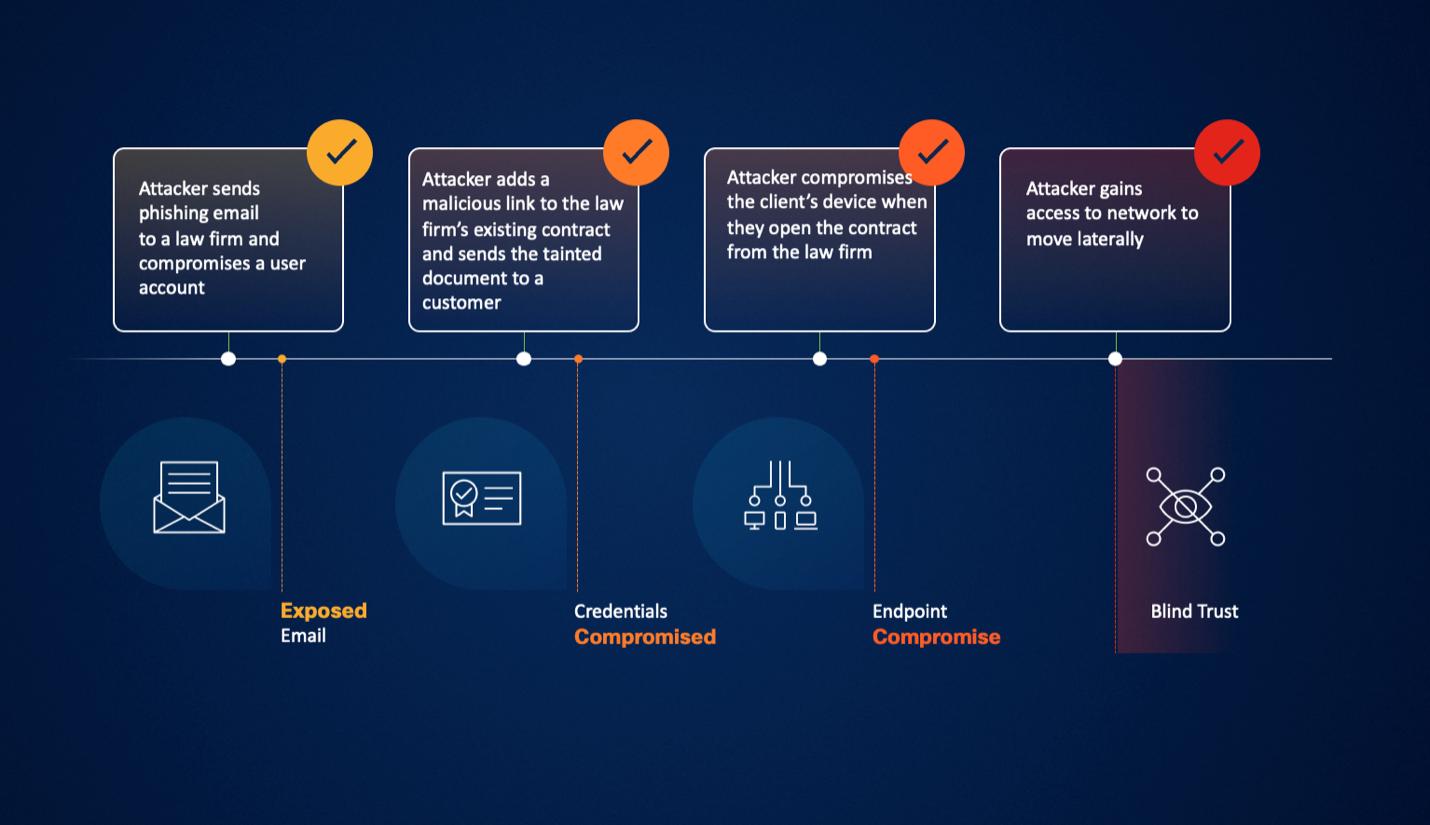
example of a law firm that leads to a compromised client(s)

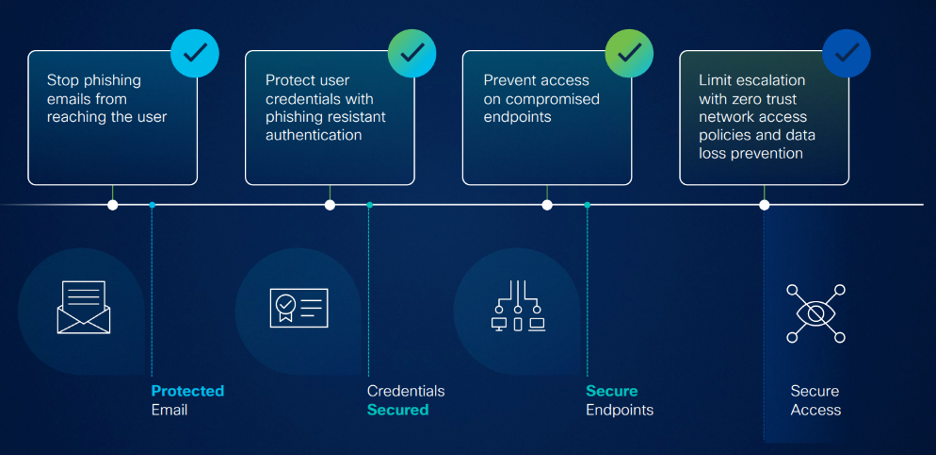
Cisco’s Consumer Safety Suite offers comprehensive protection to safeguard your organization’s people, assets, and supply chain from potential threats. The Consumer Suite offers robust email and identity protection, along with secure software installation, all within a safeguarded endpoint environment. Can a supply chain attack be prevented at crucial points?

  • Email Risk Protection utilizes advanced algorithms to detect malicious emails and blocks them from reaching the end-user. If someone in your supply chain becomes compromised and initiates a malicious email containing a phishing link or malware, subtle fashion technologies are designed to detect the threat and promptly quarantine the email. Even though the sender may be designated as trusted, the connected document remains one that you may have encountered previously?
  • If an advanced persistent threat actor gains unauthorized access to a corporation’s customer credentials through the compromise of a vendor’s database, implementing robust multi-factor authentication becomes paramount. By combining robust authentication methods with machine learning-driven security, your organization can effectively prevent unauthorized access. Duo provides cross-platform insights to bolster visibility, effectively addressing potential vulnerabilities in an organization’s identification posture.
  • Ensuring a safe and secure experience for customers as they access both website and personal features. By implementing Safe Entry’s zero-trust approach, the system ensures that users are granted access to resources on a need-to-know basis, thereby limiting potential vulnerabilities and maintaining a robust security posture. When a provided chain associate is compromised, their access to the network is automatically revoked and terminated.
  • Securely delivering critical endpoints enables organisations to effectively detect, respond to, and neutralise emerging threats. An instrument suite exists that incorporates sandboxing capabilities to identify and isolate suspicious data, integrating insights from Talos Risk Intelligence to provide valuable threat intelligence. Cisco’s advanced threat detection capabilities evaluate over 2,000 malicious samples per minute across its entire product portfolio, effectively blocking malware from ever reaching end-users? When a endpoint is compromised in a supply chain attack, Safe Endpoint’s seamless integration with Duo automatically blocks the user’s access until the malware is eradicated.

Secure Endpoint’s integration with Duo’s Trusted Endpoints automatically blocks that user’s access until the malware has been resolved

The cybersecurity threat landscape can be daunting. Customers face numerous types of assaults that disrupt their focus on work. We aim to equip customers with the tools they need to thrive, without the burden of security breaches weighing on their minds. Let’s let our customers get down to business, while we focus on mitigating the most significant risks to safeguard their teams.

To learn more about how the Consumer Safety Suite can protect your organization now, visit our webpage?


Share:

Uncovering the Seams in Mainframes for Incremental Modernisation

In our most recent initiative, we were entrusted with conceptualizing the transformation of
Mainframe systems paired with a cloud-native utility enable seamless integration and data-driven decision making. The construction of a comprehensive roadmap is crucial to ensure a smooth transition and optimal utilization of this powerful synergy.
Enterprise Case: Securing Funding for a Multi-Year Modernization Effort?
required. While exercising prudence regarding the hazards and risks associated with a Large-Scale Design.
Up at entrance, we suggested our shoppers to focus on a ‘sufficiently simple’ approach, and one that’s simply intuitive.
Upfront design of time, with a seamless integration of engineering throughout the initial phase. Our shopper
valued our approach and selected us as their trusted partner.

The platform was designed to provide information services for UK-based consumers.
customer-facing merchandise. This project was an exceptionally complex and challenging assignment.
the monumental mainframe, a behemoth built over four decades, featuring a
The number of applied sciences that have undergone considerable modifications since their inception?
first launched.

Our methodology hinges on the gradual migration of competencies from the
mainframe transition to the cloud, enabling a seamless and controlled legacy system phasing out rather than a
“Massive Bang” cutover. In order to accomplish this feat, we would have preferred to pinpoint precise locations.
Designing the mainframe – a location where you could potentially create seams? It’s the places that allow us to insert new…
Conduct updates with minimal changes to the mainframe’s software. We are able to
Then utilize these seams to generate duplicate capacities within the cloud, concurrent execution.
Verify their actions with the mainframe and then withdraw.
mainframe functionality.

ThoughtWorks had been concerned with the program’s first year before transferring responsibility to our client.
to take it ahead. Within that timeframe, we did not invest in manufacturing processes; instead, we conducted experiments with various prototypes.
Effective approaches to accelerate your Mainframe modernization journey and simplify the process. This
The article provides a backdrop to our efforts, detailing the context in which we worked, and outlines the methodology we employed for
Gradually shifting key functionalities away from the core Mainframe infrastructure.

Contextual Background

The Mainframe hosted a diverse range of
Companies that are integral to the shopper’s business operations. Our programme
What drives shopper behaviour?
in UK&I (United Kingdom & Eire). This specific subsystem on the
decades-long period by thousands of developers. This labyrinthine repository of software housed countless applications, systems, and utilities that had evolved to support the company’s sprawling global operations. Roughly 7 million strains of code were painstakingly crafted over time by teams of coders, each one meticulously designed to perform a specific function within the vast mainframe ecosystem.
span of 40 years. It supplied roughly ~50% of the capabilities of the UK&I
Property, accounting for approximately 80% of Million Instructions Per Second.
from a runtime perspective. The system’s advancement was considerable, boasting a multitude of innovative features.
The complexity of the situation was further compounded by the challenges presented by area-specific responsibilities and difficulties.
Unfurling across multiple strata of the richly textured legacy setting.

Several underlying factors prompted the customer’s decision to pivot away from
Mainframe settings are as follows:

  1. Adjustments to the system had long been hampered by sluggishness and proved costly. The enterprise subsequently had
    Challenges arise from maintaining tempo with the rapidly evolving market, necessitating
    innovation.
  2. Operating costs associated with managing the Mainframe system were prohibitively high.
    The consumer faced a critical threat to their purchasing power due to a significant price hike stemming from the company’s core operations.
    software program vendor.
  3. Although the designated operator possessed the requisite skills and expertise to manage the mainframe system.
    Finding experienced professionals in this technology proved painstakingly difficult.
    Due to a limited pool of expert engineers in this specific area, we are facing challenges in recruiting top talent. Moreover,
    the diminishing demand for mainframe skills has resulted in fewer opportunities for professionals with expertise in this area, leading to a smaller pool of viable career paths for those trained in mainframe technology.
    won’t be motivated to find innovative methods for creating and utilizing such technologies.

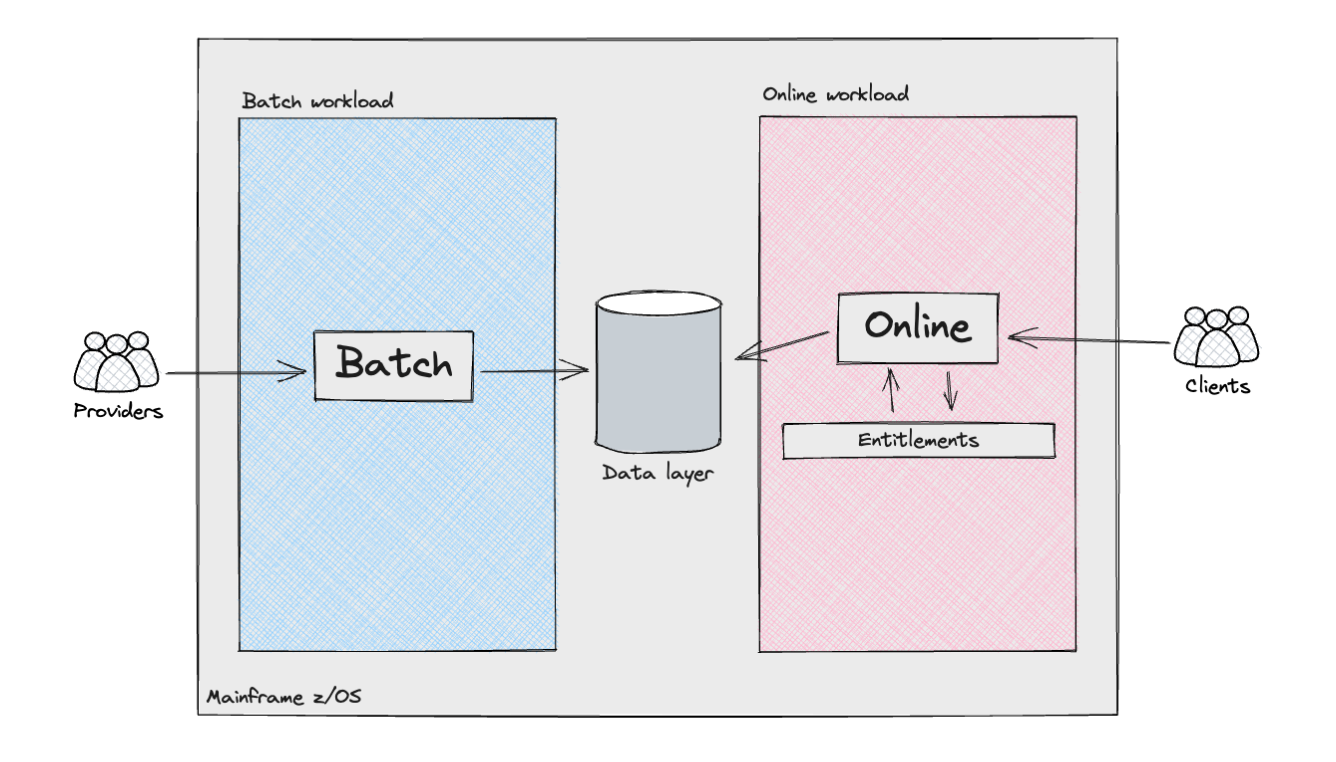
Excessive-level view of Shopper Subsystem

The following diagram provides a comprehensive overview of the various
Elements and Actors Within the Shopper Subsystem:

The Shopper subsystem comprises several elements that interact to enable seamless transactions. Key components include the User Interface (UI), which presents a user-friendly shopping environment, and the Product Catalogue, detailing available merchandise. The Shopping Cart manages items added by customers, while Payment Processing handles financial transactions.

Uncovering the Seams in Mainframes for Incremental Modernisation

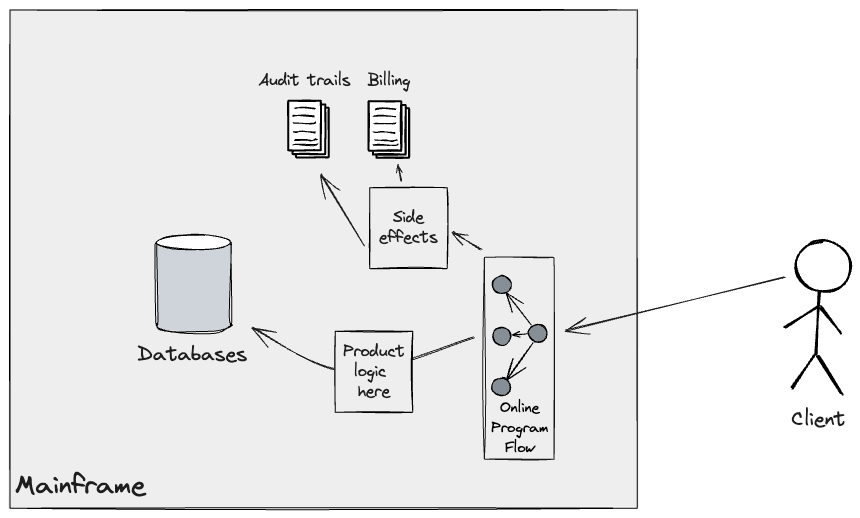
The mainframe system efficiently handled a diverse range of workloads by supporting two distinct types: batch processing and interactive transactions.
Processing and managing online transactions through the product’s Application Programming Interface (API) layers. The batch
Workloads bore a resemblance to traditional knowledge pipelines, wherein the seamless flow of information and insights was paramount. They
Carefully consider the processing of unorganized data from external sources.
Suppliers/sources, or various internal mechanisms within Mainframe programs, have adopted innovative technologies to efficiently manage and disseminate valuable information.
Data refinement processes are optimised to harmonise with the requirements of the Consumer.
Subsystem. These pipelines entailed a multitude of intricate complexities.
The identification of individuals at risk of homelessness: in the United Kingdom,
Unlike the USA with its comprehensive social safety net, there isn’t one in Germany.
universally distinctive identifier for residents. Consequently, corporations
working within the UK&I have to make use of customised algorithms to precisely
Which information would you like me to work with? Please provide the text, and I’ll help identify the person(s) mentioned. If it’s not possible to determine the person identity, I’ll return “SKIP”.

The introduction of a net workload brought forth significant complications that had to be navigated. The
Orchestration of API requests was efficiently managed by a suite of custom-built, internally developed tools.
Frameworks that dictate system execution movements through careful lookups are crucial.
Datastores, meanwhile, successfully navigate conditional branches by scrutinizing
output of the code. We should always recognize the vast extent of customization that this feature offers.
framework utilized for every buyer. Some instances of flow had existed.
Designed to accommodate unique requirements through flexible setup.
specific requirements or individual needs of the programs interacting with our customers
on-line merchandise. These initial configurations were distinctly unique, yet
As shoppers’ habits evolved over time, online retail norms shifted accordingly.
choices.

This entitlement was granted through a sophisticated Entitlements engine that functioned
Throughout multiple layers of complexity, ensuring seamless access for clients seeking to interact with merchandise at all levels.
Information had been authenticated and authorized to retrieve both raw and cooked data.
The aggregated information, potentially unmasked to users through an Application Programming Interface (API).
response.

Incremental Legacy Displacement: Strategies for Successful Change
Issues

What are the key implications of integrating the Shopper Subsystem?
We envisioned that the next innovative concepts would harmoniously align with our organization’s core values.
succeeding with the programme:

  • Early Threat DiscountWith a vast scope of engineering spanning from the
    starting, implementing a “Fail-Fast” method would significantly assist us in identifying and addressing errors promptly.
    determining potential pitfalls and uncertainties at the outset, thereby preventing unnecessary complications from arising later.
    Disruptions from a program supply perspective. These had been:
    • Consequence ParityThe customer underscored the importance of
      ensuring equivalent performance outcomes between the current legacy system and the new implementation
      The new system differs significantly from traditional methodologies in its approach to problem-solving.
      ). Within the shopper’s legacy system, multiple issues arose, necessitating a prompt resolution.
      Attributes had been meticulously generated for each individual client, necessitating a stringent
      Ensuring sustainability through continuity was crucial.
      contractual compliance. We aimed to take a proactive approach to determining
      Promptly identifying discrepancies in information at an early stage, tackle or clarify them to ensure accuracy and precision.
      Establish a strong sense of trust and confidence with each individual shopper through
      Establish strong relationships with clients from the outset.
    • Cross-functional necessitiesThe Mainframe is an exceptionally
      A high-performance machine has faced uncertain circumstances, leading to unresolved issues.
      The cloud infrastructure will seamlessly meet the cross-functional requirements.
  • Ship Worth EarlyCollaborating closely with the shopper would
    Can potentially identify a portion of the most critical businesses?
    Capabilities that could potentially be shipped ahead of schedule, thereby risking system instability?
    aside into smaller increments. These represented thin-slices of the
    total system. Our objective was to incrementally build upon these fragments, progressively shaping a cohesive whole.
    Consistently, this initiative is designed to accelerate our overall learning pace in the subject area.
    Moreover, working through a focused slice of information helps streamline the cognitive
    To alleviate decision-making inertia, loads of responsibility are shared among the team members.
    Ensuring consistent value delivery is paramount. To realize this, a
    Platform constructed across multiple mainframes to provide unified and centralized management.
    Purchaser migration methods play a crucial role. Utilizing patterns resembling
    and instantaneously place us at the helm of a meticulously groomed
    transition to the Cloud. What was our purpose? To execute a noiseless relocation.
    Throughout the course of their journey with your organization, clients would enjoy a seamless experience as they transitioned between various programs.
    with none noticeable impression. This possibility may exist solely
    Conduct thorough compatibility testing and sustainably monitor output results.
    from each programs.

Considering the abovementioned concepts and requirements, we chose to implement an
What drives organisational transformation? As companies navigate an ever-evolving landscape, they must confront the reality of outdated legacy systems and processes. That’s where the Incremental Legacy Displacement (ILD) method comes in – a carefully crafted approach that empowers businesses to simultaneously upgrade their technology stack while preserving the continuity of their operations.

By leveraging ILD alongside its trusted companion, the Twin method, organisations can seamlessly integrate new solutions with existing infrastructure, ensuring minimal disruption and maximum ROI. This potent combination enables companies to accelerate their digital transformation journey, ultimately securing a competitive edge in today’s fast-paced market.

As the pace of technological change quickens, the need for an effective ILD strategy has become more pressing than ever. By adopting this incremental approach, businesses can confidently migrate from legacy systems to modernised platforms without sacrificing operational stability or risking catastrophic data loss.
Run. As seamlessly as possible, each component of the system underwent meticulous reconstruction.
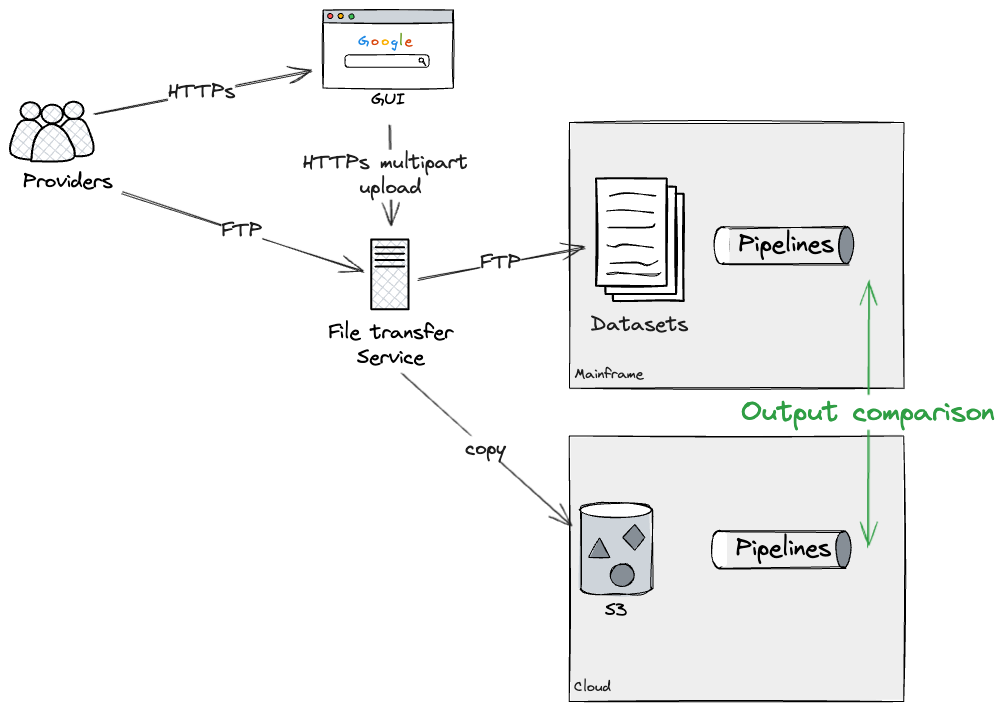
Cloud, we planned to deploy both the brand-new and as-is systems concurrently.
Run identical computational tasks in parallel to significantly improve processing efficiency and speed up results. This enables extraction of individual elements.
programs’ outputs are compared to determine whether they are identical or, at a minimum, within a tolerable margin of error.
acceptable tolerance. On this context, we outlined Incremental Twin
Run
Utilizing an architecture that seamlessly integrates and abstracts disparate components enables granular control over the slice-by-slice deployment of modularized functionalities.
Freed from legacy constraints, organizations can now focus on realizing strategic goals by leveraging the full potential of their existing applications.
to run simultaneously with speed and deliver value effectively.

We resolved to embark on this architectural project with a focus on achieving stability.
amidst cultivating value, identifying and navigating potential risks promptly,
ensuring precise parity in the outcome, and maintaining seamless continuity throughout our
Throughout the entire duration of the program, a dedicated shopper.

Incremental Legacy Displacement method

To effectively delegate capabilities and accelerate progress towards our strategic objectives.
The development team worked closely with subject matter experts from Mainframe to meticulously craft the structure?
Specialists) and our shopper’s engineers. This collaboration facilitated a
Obtaining a straightforward grasp of the current state of affairs, without requiring anything more than what is already evident.
Technical and Enterprise Capabilities; this expertise enabled us to craft a seamless Transition Plan.
Can a seamless integration of the existing mainframe infrastructure with a cloud-based system enable the efficient sharing and analysis of data?
the latter being developed concurrently by diverse supply workstreams within
programme.

Our methodology commenced with the rigorous decomposition
Shoppers are segmented across various enterprise and technical domains, encompassing
information load, information retrieval & aggregation, and the product layer
accessible via external-facing APIs.

Due to our shopper’s enterprise
Recognizing an opportunity to leverage a substantial technical advantage, we identified an early window to strategically reorganize our program’s structure. The
Shoppers’ cognitive load was predominantly focused on processing and analyzing external data.
To provide a perception that was brought to potential purchasers. We subsequently noticed an
What about alternative solutions to separate our transformation programme into two distinct components, with a clear boundary between the first and second rounds?
Information curation: a vital process that counters the overwhelming tide of digital data by organizing and presenting valuable insights, thereby fostering informed decision-making.
. The primary excessive stage seam identified was this one.

Following this, we sought to further dissect the program into
smaller increments.

On the information curation aspect, we noted that the pre-existing information units had undergone significant refinement.
operated largely independently of one another; whereas there have been
upstream and downstream dependencies, Throughout the curation process, there was no entanglement of the datasets.
The ingested information units had a one-to-one mapping with their corresponding record data.
.

Collaborating closely with Subject Matter Experts (SMEs), we meticulously worked together seams
Throughout the technical implementation, outlined below, we will deliberately plan how we might
ship a cloud migration for any given information set, finally to the extent
the items that may be delivered in any order are,
and ). As dependencies potentially share data
From this innovative cloud system, these workloads will likely undergo modernization.
independently of one another.

Upon reviewing your original text, I’ve rewritten it to enhance its clarity and readability. Here is the revised version:

We found that every single product utilized in our serving and product aspects.

Around 80 percent of the capabilities and information units that our shoppers had developed. We
Seeking to uncover an entirely novel approach. What implications might these findings have on our understanding of the underlying dynamics at play?
Were presented to clients, we found that we could potentially enter a “buyer’s journey”?
Approach to deliver the work in a phased manner. This entailed discovering an
A preliminary segment of customers who had purchased a relatively modest percentage of
Capabilities and information synergistically aligning, significantly reducing project scope and expediting delivery timelines to meet market demands.
first increment. Subsequent increments build upon existing foundations.
Enabling additional buyer segments to transition seamlessly from the as-is market to the targeted audience.
goal structure. To successfully complete this task, one needed to employ a specific array of stitching methods.
Transitional structures, which facilitate our understanding of how ideas unfold in paragraphs, are discussed throughout this tutorial.

Here is the rewritten text:

Successfully, we conducted an in-depth analysis of the factors that
operated as a unified entity from an enterprise perspective, yet its components were designed and built separately.
Distinct cloud-ready components that can be successfully migrated individually to the Cloud.
Developed this into a program of carefully staged advancements.

Seams

The development of our transitional structure was primarily driven by insights gleaned from exploring the Mainframe’s vast expanse. You
Can consider them as potential candidates for integration because the junction factor effectively combines the place code, applications, or modules.
meet. In legacy systems, these design decisions were often made with a deliberate intent.
Strategic locations for optimal modularity, scalability, and
maintainability. Those who do will likely stand out.
Throughout the code, however, when a system has been consistently below par.
After a great deal of years, these seams have a propensity to obscure themselves among the surrounding fabric.
complexity of the code. Seams provide significant benefits, as they will.
Be employed strategically to alter the behavior of functions, thereby
instances to intercept information flows throughout the mainframe, thereby allowing
Capabilities will be seamlessly offloaded to a newly designed system.

Uncovering subtle complexities in operational logistics and identifying strategic opportunities for capacity expansion was a
The intricate dynamics between symbiosis and technological advancements fueled a plethora of possibilities, shaping the trajectory of decision-making processes.
Which allowed us to plan and execute manageable increments, thereby driving successful transitions.
The company wanted to support the program. We take a crucial step forward.
In a technical framework for debating options, we deliberately design processes to facilitate
Shaping Seamless Transitions for Our Valued Customers These constants have been continually refined to ensure optimal performance.
As our partnership evolved and new insights emerged, certain individuals took the initiative to conduct thorough investigations.
Environments varied significantly, with some exhibiting a gradual slope and others featuring sharp spikes. As we embark on transforming our legacy mainframe applications to cloud-native architectures through a comprehensive modernization strategy.
Programmes, these approaches can be further refined through our most experienced and skilled hands-on expertise.

Exterior interfaces

We analyzed the external interfaces exposed by the mainframe system to process information.
Suppliers and our shopper’s Clients. The potential benefits of integrating multiple factors must be explored?
to enable seamless migration of externally facing workloads to the cloud, thereby
Migration could silently unfold from their vantage point. There have been two varieties
of interfaces with the Mainframe: a seamless file-based integration for Suppliers to
What shopping experiences do we offer to our customers, and what web-based APIs do clients use to facilitate their interactions with us?
Collaborate closely with the product team to ensure seamless integration.

Batch enter as seam

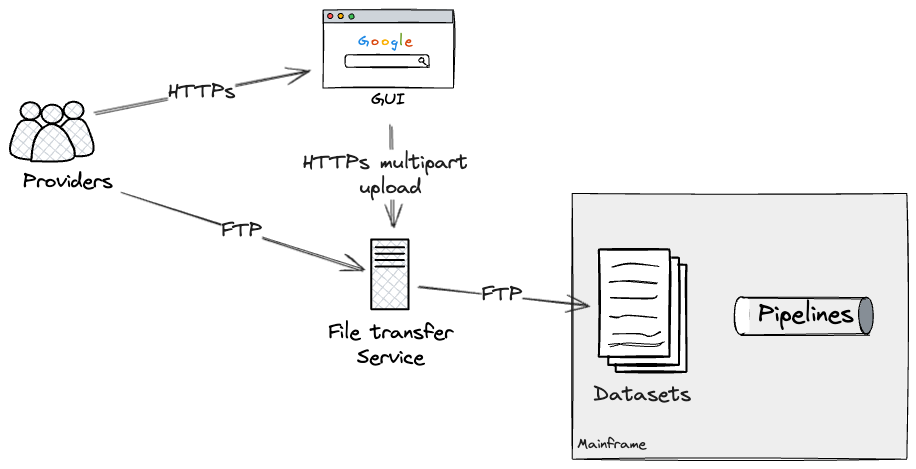
The primary exterior seam that we found was a file transfer vulnerability.
service.

Suppliers may transmit data comprising semi-structured information.
A seamless integration with users enables effortless navigation of routes through two formats: a web-based Graphical User Interface (GUI) for intuitive exploration and a mobile application for on-the-go accessibility, fostering seamless travel planning.
File uploads interacting seamlessly with the underlying file switch service?
A secure protocol enables direct access to files programmatically without a need for manual intervention?
entry.

The file switch service determined its allocation strategy on a supplier-by-supplier and file-by-file basis.
What datasets require timely updates on the mainframe? These would
execute related pipelines automatically via dataset triggers whenever data is updated.
Had been previously configured within the batch job scheduler.

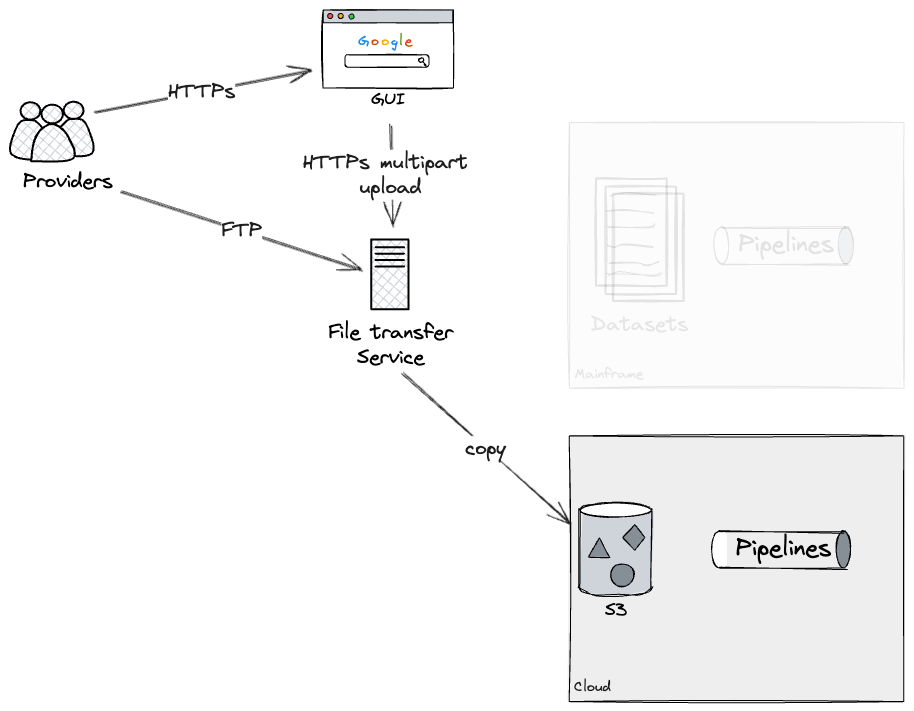
Assuming we might rebuild all our pipelines entirely in the cloud?
What specific aspects of the project are you looking to understand better?
pipelines into manageable workable chunks. Our approach was to construct these pipeline sections into self-contained units that can be easily implemented and maintained.
A specific individual’s pipeline is deployed on the cloud, and simultaneously it is replicated with the mainframe?
to verify that their respective results were identical in every respect. In our case, this was
Potential for enhanced performance lies in leveraging additional settings within the file.
Can we re route service forks for seamless uploads between Mainframes and Cloud infrastructure? We
would have had the opportunity to test this approach using a realistic file system.
The service operates seamlessly in check environments using placeholder data.

This capability allows for seamless deployment of pipelines to Cloud infrastructure, empowering seamless execution of Twin Run processes.
To ensure long-term stability and maintain unwavering trust, it is crucial that we verify the existence of a mainframe solution that meets our demands.
no discrepancies. To conclude, our approach would have entailed employing an effective strategy.
The file switch service has been stopped. Additional configurations are required to ensure seamless operation.
Subsequent updates to the Mainframe datasets were made with the intention of preserving existing configurations.
pipelines deprecated. Unfortunately, we were unable to personally verify this crucial aspect.
As we did not fully complete the rebuild of a pipeline from start to finish, however, our
Technical subject matter experts had a deep understanding of the specific configurations necessary for the
Deprecating a mainframe requires a strategic file switch service approach, involving careful planning and execution. The first step is to identify the mainframe’s current usage and determine which applications will be impacted by its eventual decommissioning. This information can then be used to develop a comprehensive migration plan, outlining the steps necessary to transfer workloads to alternative platforms.
pipeline.

API Entry as Seam

Furthermore, we applied a consistent approach to the exterior renovation process.
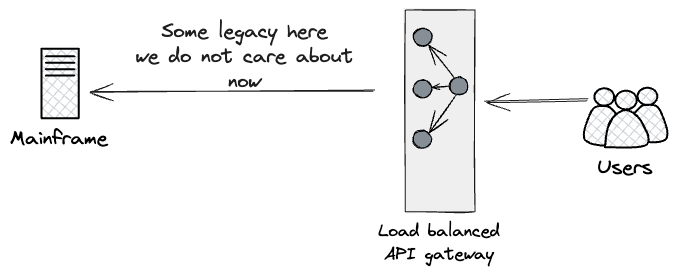
What issues arise when integrating multiple APIs through an existing API Gateway?
To valued clients, serving as their gateway to the Shopper.
Subsystem.

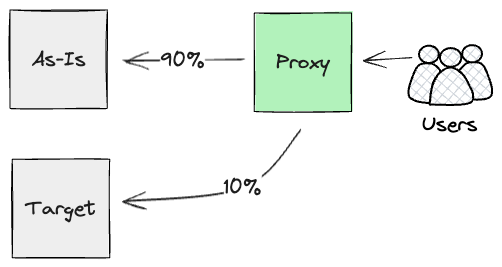
From Twin Run’s vantage point, our methodology involves situating a
Proxy excess traffic upwards along the HTTPS call chain to minimize latency and optimize performance for customers.
We had been seeking a solution to synchronize and harmonize our various streams, effectively creating a cohesive platform where all efforts could converge.
calls to both As-Is mainframe systems and newly constructed APIs on Cloud are being made, and the data is being reported
again on their outcomes.

Effectively, our team had planned to leverage the new product layer to gain early confidence.
Within the artefact’s inner workings, scientists engage in intensive and steady monitoring to track their
outputs. We initially failed to prioritize building this proxy during its first year.
To fully utilize its value, it’s essential that we achieve almost all of the expected performance.
rebuilt on the product stage. Notwithstanding our initial plans were to design and build it.
As soon as feasible comparability checks are executed on the API.
Layers, as this critical component would play a pivotal role in orchestrating the ominous atmosphere
launch comparability checks. Moreover, our evaluation highlighted we
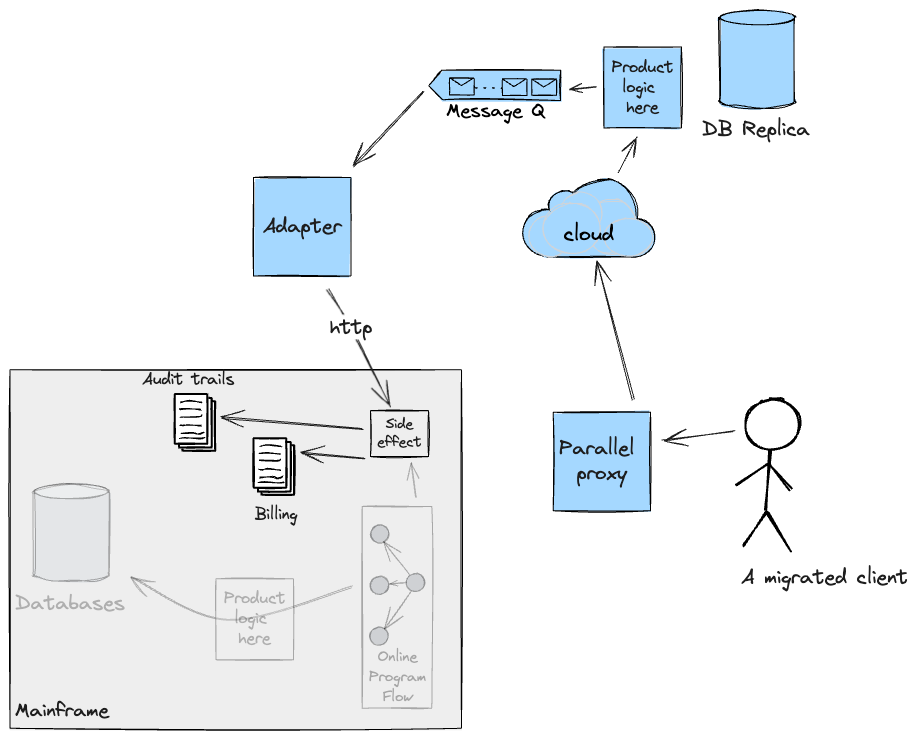
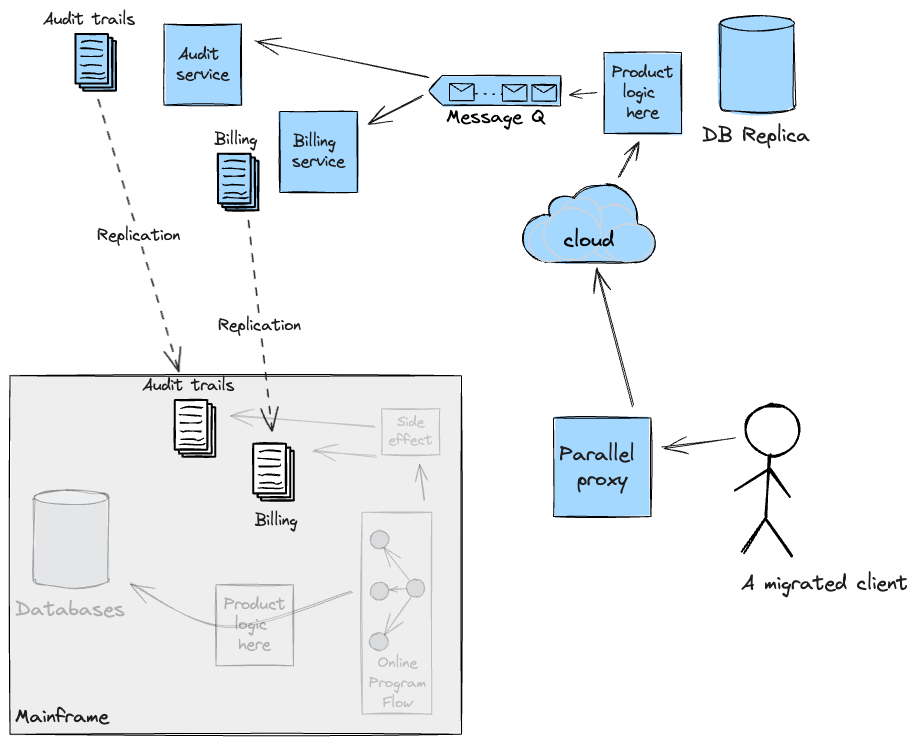
Carefully considered potential side effects stemming from the merchandise.
layer. The mainframe’s output exhibited unanticipated consequences, akin to
billing occasions. As a result, we would have needed to make significant adjustments.
Mainframe code refinements are implemented to eliminate redundancy and guarantee that
clients wouldn’t get billed twice.

While maintaining parallelism with the existing Batch enter seam, we may execute these demands within
Parallel processing continued seamlessly for as long as necessary. In the end although, we’d
use on the
Proxy layer enables on-demand access to cloud services, routing individual customers seamlessly.
Gradually reducing the burden of processing tasks on the primary mainframe system.

Inside interfaces

After conducting a thorough assessment, we analyzed the intrinsic components
Throughout the mainframe, pinpointing the precise seams where we could potentially leverage
Migrate complex, granular capabilities seamlessly to the cloud infrastructure.

The Coarse Seam between information systems and human interaction. It’s here that we find the interface, where technology meets the user, and the seam forms – rough around the edges, yet essential for effective communication. The seam is not just a point of connection; it’s a vital link between the digital realm and our own.

The overarching emphasis was placed on the ubiquitous and far-reaching database infrastructure.
accesses throughout applications. We commenced our assessment by identifying
The individuals who had successfully balanced multiple responsibilities – writing, studying, and pursuing other interests –
database. Treating the database as a seam allowed us seamlessly to integrate it.
Aside from those flows that relied on its being the connection between
applications.

Database Readers

Enhancing Database Readers for Seamless Integration with New Information APIs?
What are the primary requirements for seamless integration between the Mainframe and the Cloud systems in the Cloud setting?
entry to the identical information. The database queries executed by
The product we’ve selected as our top contender for upgrading the core
buyer phase; collaborated closely with customer segments to deliver actionable insights.
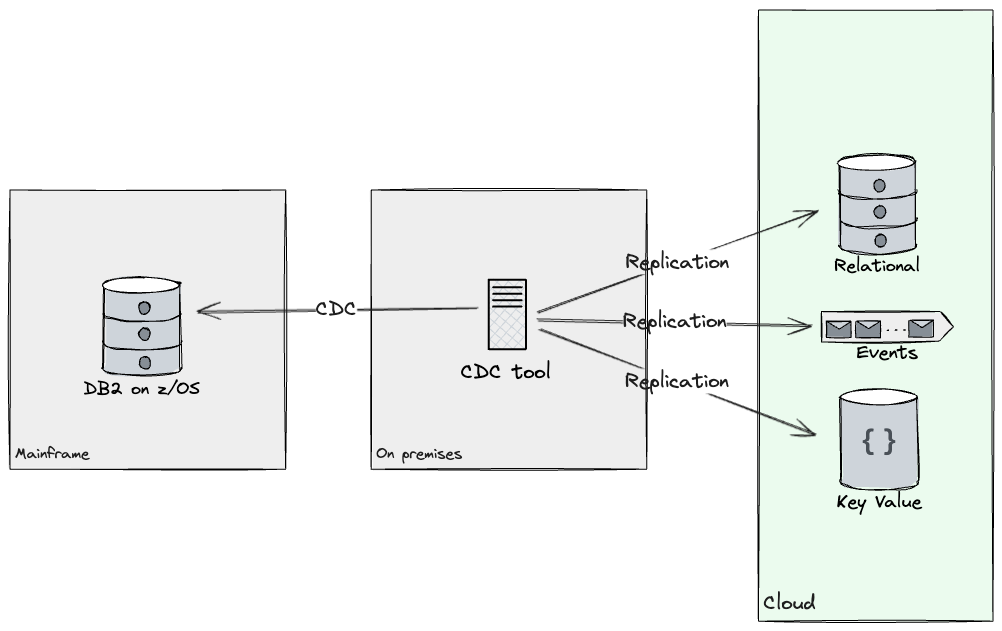
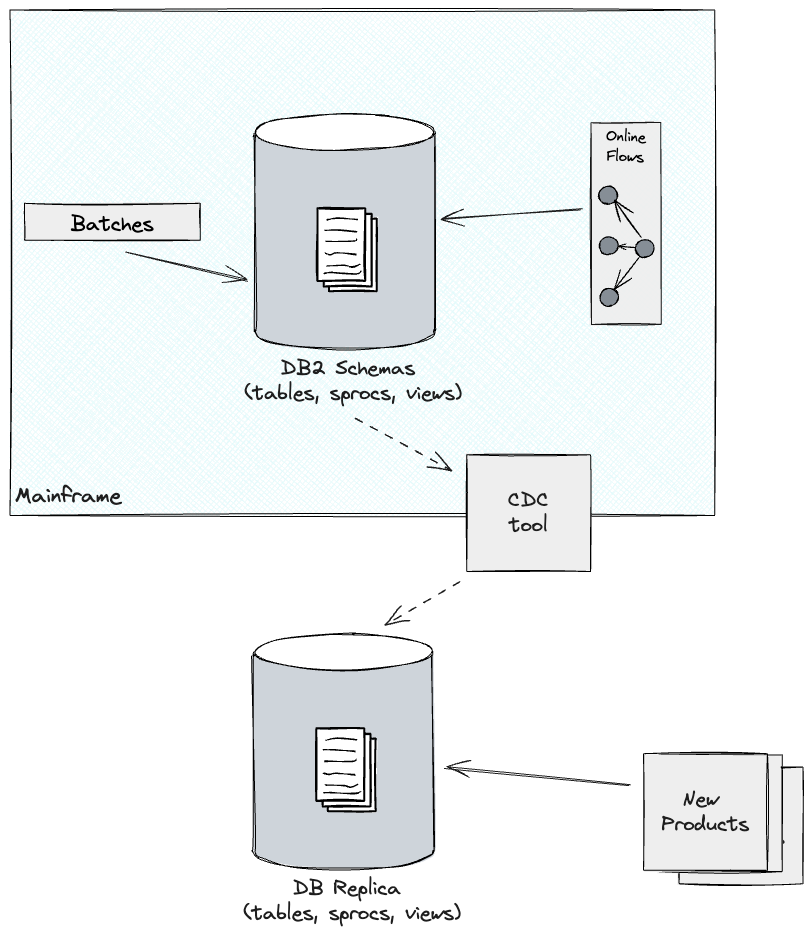
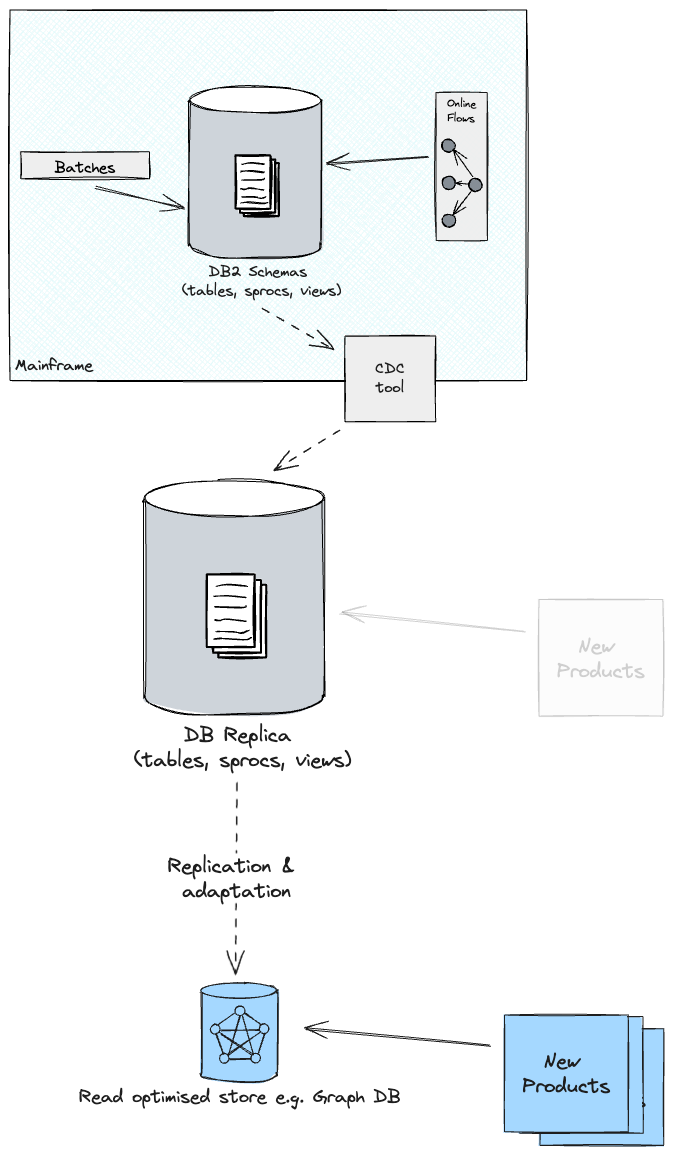
replication resolution. The data was successfully propagated to the cloud infrastructure using Change Data Capture (CDC).
Methods for synchronizing sources with targets using Information Seize (IS) from the Centers for Disease Control and Prevention (CDC). By
Utilizing CDC’s software capabilities, our team was able to successfully replicate the essential results.
Real-time insights into subset information are now readily available across goal-oriented shops.
Cloud. Furthermore, duplicative content provided opportunities to reinvigorate our
Mannequins, as our shopper would now have access to shops that weren’t previously accessible to them through the digital channels.
solely relational (e.g. What are some key occasions for which doc shops are worth considering?
had been thought-about). Criteria resembling entry patterns, assessments of understanding, and question complexity all contribute to the overall effectiveness of a quiz.
and schema flexibility enabled determining, for each discrete subset of data, what
tech stack to duplicate into. During our initial year of operation, we successfully built
Replication streams from DB2 to each of its corresponding Kafka and Postgres instances.

Capabilities are applied through software applications at this stage.
studying from the existing database, it’s entirely possible that a new one could be built and subsequently moved over.
the Cloud, incrementally.

Database Writers

With reference to database writers, who had primarily consisted of batch processors.
Workloads operating on the mainframe are processed with a high degree of scrutiny, following a meticulous examination of available data.
as we navigated these connections, we were able to investigate and decide
Separate the domains into isolated entities, allowing each to operate autonomously without interference from other domains.
As a key component of the overarching identical movement, its operational integration served merely to facilitate the larger endeavour.
might change).

Crafting precision-crafted components, seamlessly integrating their unique features.
allowed for various workstreams to commence reconstructing a limited number of these pipelines
On the cloud, evaluating the outputs in conjunction with the mainframe.

While overseeing the development of the transitional framework, our team also worked
liable to offer a diverse range of companies that have been employed by various entities.
Efficient workstreams are designed to craft robust information pipelines and optimize merchandise distribution. On this
In a specific instance, our team developed a set of batch jobs on the mainframe system, which were subsequently executed.
Programmatically, by uploading a file within the file transfer service, that
Would extract and reformat the journals that these pipelines have been utilising.
providing seamless access to data on the mainframe, enabling our colleagues to work efficiently
Suggestions loop through their own work via automated comparative testing.
Following careful consideration to ensure the preservation of original results, our approach ensured that outcomes remained unchanged.
The future would have allowed different groups to cut over seamlessly.
sub-pipeline one after the other.

The artefacts produced by a sub-pipeline may also need to be retrieved in order for the pipeline as a whole to function effectively.
Mainframe for additional processing (e.g. On-line transactions). Thus, the
when these pipelines will eventually be fully utilized?
and utilising the Cloud, aimed
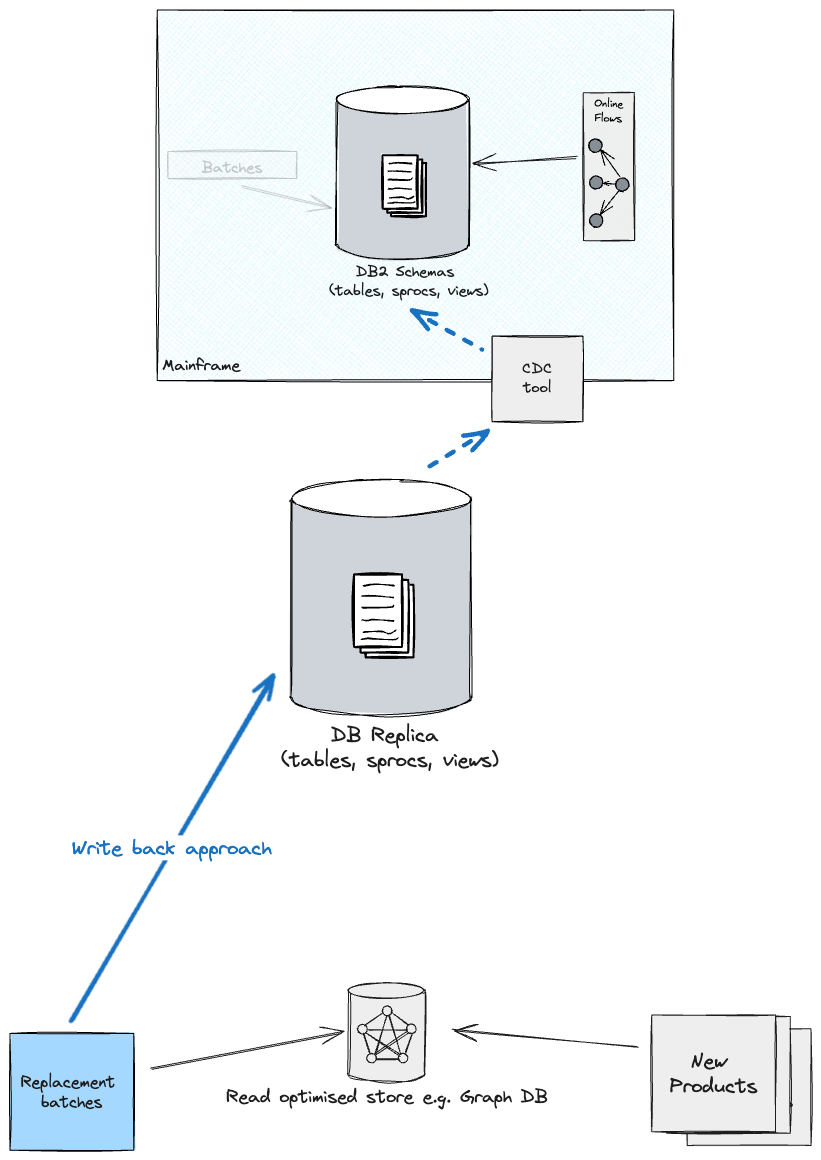
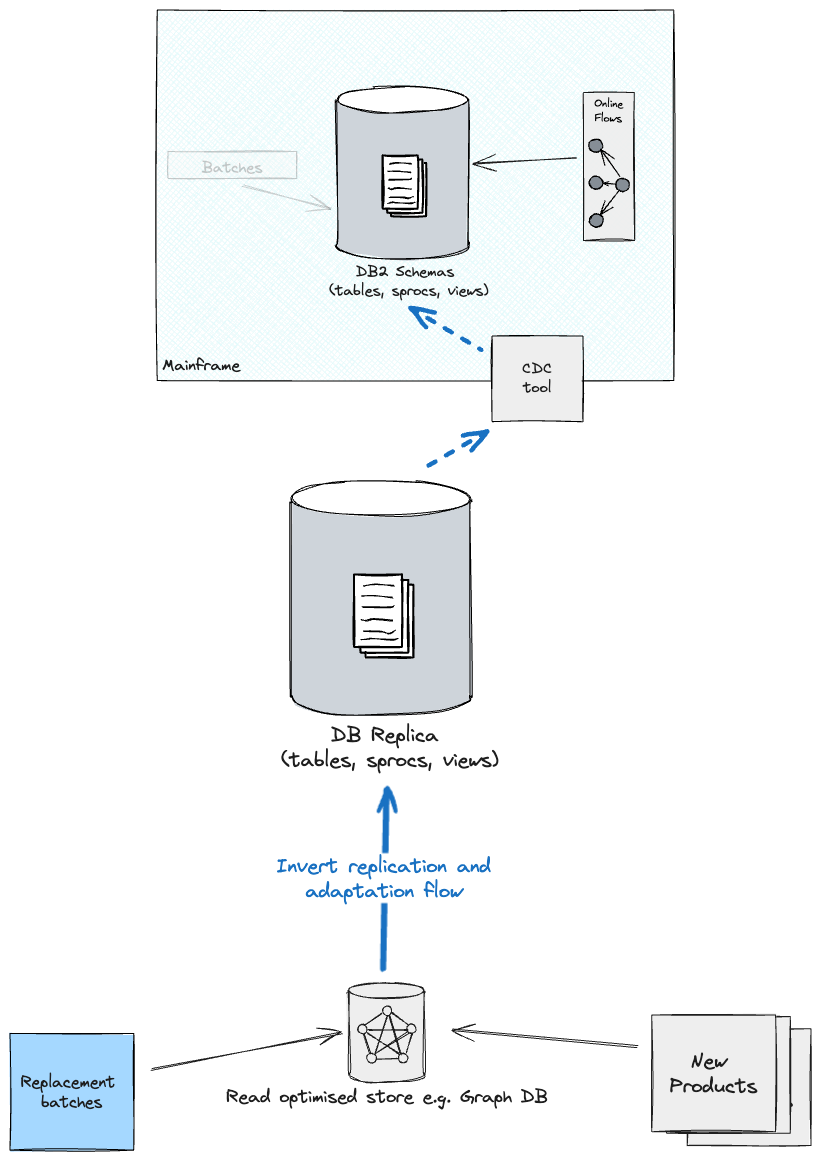
and replicate information again to the Mainframe until the potential dependants of this data are no longer reliant upon its accuracy.
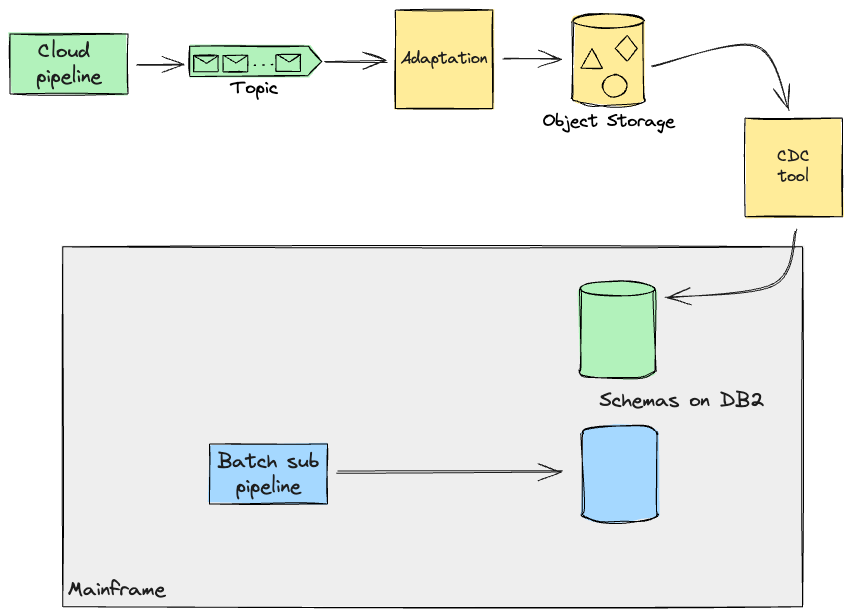
moved to Cloud too. To achieve this, we had been exploring the possibility of leveraging the same CDC software for replicating
Cloud. Data processed on the cloud can be saved in real-time as continuous streams of events. Having the
Mainframes rapidly consume this data stream, ensuring seamless processing, as they quickly construct and rigorously test the system for any potential regressions.
The legacy code required an additional, highly intrusive technique to accommodate its outdated architecture. In order to effectively address this peril, our team developed an
Adaptation layer that remoulds the data once more to conform to the format the mainframe would accept, mirroring that.
The information had been autonomously generated by the Mainframe itself. These transformation capabilities, if
However, simple replication software could also support it.
In this instance, we envisioned a tailored software solution being developed in tandem.
The replication software must accommodate additional requirements by
Cloud. In a common phenomenon, numerous organizations are observed to engage in the
Alternative approaches emerging from a complete rebuild of existing processes from the ground up.
to enhance them (e.g. into even more sustainable environments.

Working closely with subject matter experts from the client side has been instrumental.
The current execution of batch workloads poses several issues that hinder their effectiveness.
What are the key drivers of mainframe complexity?
information boundaries. Observe that the pipelines we had previously coped with didn’t.
Overlap of redundant data occurs due to the predefined parameters established.
the SMEs. In subsequent sections, we will delve into even more sophisticated scenarios that
We have had to contend with.

Seamless Integration: Pipelining Coordinated Handovers

Probably, the database will not be the one you typically work with? In
Our case involved information pipelines that persisted their
Outputs on the database have been serving curated information to downstream applications seamlessly.
pipelines for additional processing.

In scenarios where initial connections were established, we initially identified
pipelines. These datasets frequently comprise stored state retained in flat files or VSAM records.
Digital Storage Entry Techniques record data, or possibly short-term quantitative variables, in a systematic and efficient manner.
Storage Queues). The pipeline’s seamless transitions between exhibits are showcased in the following examples:
steps.

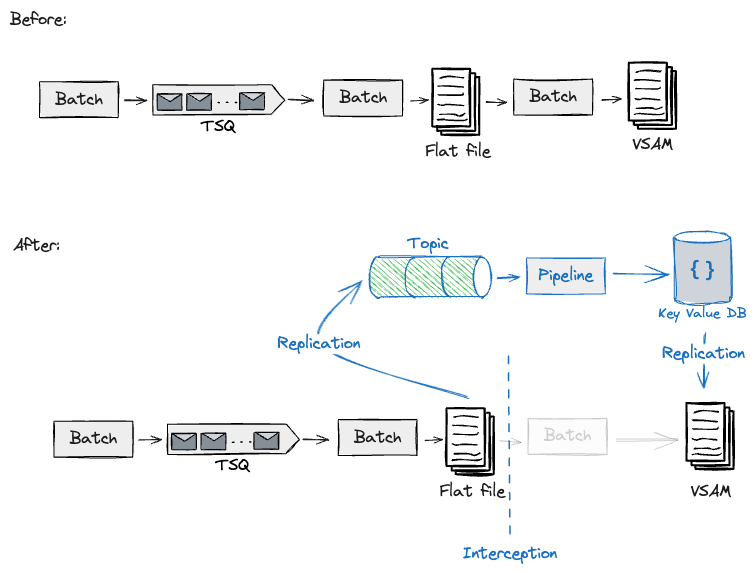
During our examination, we developed designs to seamlessly migrate a downstream pipeline, leveraging expertise in processing curated flat files.
saved upstream. This downstream pipeline on the mainframe produces a VSAM file, which can then be queried by
on-line transactions. As planned, we chose to construct this event-driven pipeline in the cloud.
utilize the CDC software to extract the necessary data from the mainframe, thereby converting it into a continuous
Scenarios that necessitate the Cloud’s data pipelines to consume. As previously noted, our team’s transition process remains unchanged since our previous update.
The organization intended to leverage an Adaptation layer (for instance, Can schema translation seamlessly integrate with CDC software?
Artifacts produced on cloud computing platforms are transmitted back to the mainframe infrastructure for integration and processing.

Through prearranged handshakes and nonverbal cues.
recognized, we had the opportunity to build and test this interception capability from scratch.
Exemplary Pipeline: Designing Additional Migrations to Enhance Operational Efficiency
Upstream and downstream pipelines can also be deployed on the cloud using an identical methodology.
utilizing
To replenish the primary system with the essential data necessary for continuation.
downstream processing. Alongside those memorable handshakes, we had been fostering
Non-trivial modifications are made to the mainframe to enable the extraction of relevant information and.
fed again. Notwithstanding our initial reservations, we had successfully mitigated risks by creatively repurposing existing resources.
Batch processing workloads are concentrated on the core infrastructure, while distinct job triggers govern operations at the edge.

Granular Seam: Information Attribute

In certain situations, alternative methods for identifying inside seam placements may be necessary.
The venture’s trajectory was irreparably altered.
due to the measurement of our workload, which had been a challenge we were striving to overcome.
Translating this strategy into increased dangers for the enterprise. Among one of our
In certain situations, our team had successfully integrated a self-contained module that drew upon available data.
load pipelines: Identification curation.

Shopper Identification curation was a
Innovative home designs were a key differentiator for our customers.
therefore, they may not be able to afford a definitive outcome from the new system.
much less correct than the Mainframe for the UK&I inhabitants. To
To efficiently migrate your entire module to the cloud, you would want
**Guideline 1: Person Identification**

* Database Requirements:
+ Name
+ Date of Birth
+ Address History
+ Employment Information
+ Criminal Records (if applicable)

**Guideline 2: Vehicle Identification**

* Database Requirements:
+ Vehicle Make and Model
+ License Plate Number
+ VIN (Vehicle Identification Number)
+ Registration Information
+ Insurance Data

**Guideline 3: Phone Number Identification**

* Database Requirements:
+ Phone Number(s)
+ Carrier Information
+ Usage History
+ Associated Accounts or Services

**Guideline 4: Email Address Identification**

* Database Requirements:
+ Email Address(es)
+ Domain Information
+ Account Activity
+ Associated Users or Profiles

**Guideline 5: IP Address Identification**

* Database Requirements:
+ IP Address(es)
+ Geolocation Data
+ Network Information
+ Connection History

**Guideline 6: Biometric Identification (Fingerprint, Facial Recognition, etc.)**

* Database Requirements:
+ Biometric Data
+ Matching Algorithms
+ Security Protocols
+ User Authentication Records

**Guideline 7: Social Media Identification**

* Database Requirements:
+ Social Media Profile Information
+ Post History
+ Engagement Metrics
+ Associated Accounts or Profiles

**Guideline 8: Financial Transaction Identification**

* Database Requirements:
+ Transaction Amounts
+ Payment Methods (Credit, Debit, etc.)
+ Merchant Information
+ Timing and Frequency Analysis
operations. Despite this constraint, we aimed to break down this concept further to sustain.
Modifying plans in small increments allows for steady delivery while maintaining risks at a low level.

We collaborated intensively with Subject Matter Experts (SMEs) and the Engineering team to ensure that our ultimate goal was achieved.
To identify and extract key characteristics from the given data and parameters, utilizing them as a foundation.
Seeming as it may, this incremental approach could potentially enable us to seamlessly cut over this module to the new architecture.
Cloud. Upon evaluation, we categorized these guidelines into two distinct categories:
teams: Easy and Complicated.
Programs should adhere to straightforward rules, ensuring consistency across all software.
consumed distinct, non-overlapping data sets separate pipelines
Upstream, however, they presented an opportunity to break away.
the identification module house. These companies accounted for approximately seventy percent of the total.
Activated by the ingestion of a file. These guidelines had been accountable
To establish a link between an existing identity.
Breaking News: Exclusive Report Uncovers Shocking Revelations
Despite being prompted by complex circumstances that had unfolded.
A knowledge report highlighted the imperative need for a name transformation, striking
creation, deletion, or updation. These guidelines necessitated a meticulous approach.
and couldn’t be migrated incrementally. It’s because an replace to
An identification could be prompted by various data clusters, thereby facilitating seamless communication.
These guidelines within each program’s framework may lead to identification divergence.
and information high quality loss. They demanded a unified currency production process.
Identities frozen in time at a single moment; thus, we crafted the universe with a Big Bang.
migration method.

What drives the functionality of the Identification module in our system?
The mainframe’s pipeline successfully ingested information, triggering modifications to the DB2 database.
In a modern perspective on the conceptions of individuality, data, and their
associations.

Furthermore, we have successfully identified a distinct Identification module and refined it.
This mannequin enables us to replicate a more nuanced comprehension of the system that we have.
found with the SMEs. This module feeds information from a variety of sources.
Pipelines were established, leveraging both simple and complex protocols to effectively interact with DB2 systems.

Now, we might apply the same methods we discussed earlier for
Information pipelines, though, necessitated an additional layer of granularity and incremental improvements.
method for the Identification one.
We aim to establish straightforward rules that govern every situation.
Programs functioning independently, yet operating on distinct data sets.
As we’d previously had to rely on a single system for identifying individuals.
information. We successfully implemented a design leveraging Batch Pipeline Step Handoff, thereby streamlining the workflow process.
Utilised Occasion Interception to swiftly intercept and fragment the data.
until we can confidently confirm that all information remains accurately transferred throughout the system’s interfaces.
Processing the Identification pipeline on the Mainframe. This enables us to
The efficient processing of data begins with strategic record segmentation, employing a divide-and-conquer approach to efficiently manage vast datasets.
Cloud-based scalability enables seamless parallel workload execution, effortlessly adhering to streamlined Easy guidelines.
Modifications will be applied to existing identities on the mainframe, and a new structure will be built
incrementally. Many guidelines failed to meet the threshold of being considered ‘Easy’
What kind of bucket features would you expect to see in an enhanced goal Identification module?
to recede once more into the Mainframe, in the event that a previously nonexistent rule becomes applicable
applied wanted to be triggered. This appeared just like the
following:

As new builds of the Cloud Identification module are released, we’d
Fewer guidelines from the ‘Easy’ category are being applied effectively.
the fallback mechanism. Finally, the most complex individuals alone can
observable via that leg. As previously discussed, these requirements
To mitigate the risk of identification drift when migrating a multi-functional device, one must endeavour to minimize the impact on user experience and perception.
What drives you to build complex rules gradually?
database reproductions are thoroughly validated to ensure the accuracy of their outcomes
comparability testing.

Once all guidelines have been finalized, we’ll deploy this code and de-activate.
In the event of an unexpected failure, a fallback technique is available to seamlessly transition operations to the reliable and robust Mainframe infrastructure. Keep in mind that upon
Upon release, the Mainframe Identities and Associations data transforms
What cloud-based retail solutions have successfully replicated the brand new main retailer’s offerings under their management?
Identification module. Due to this imperative requirement, replication must occur to sustain the
mainframe functioning as is.

In previous discussions across various departments, our team’s design approach had been shaped by…
What legacy mimic is there in ensuring a seamless translation of complex information into actionable insights within the anti-corruption layer?
Across the Mainframe to the Cloud infrastructure and vice versa. This layer
Comprising a suite of adaptable interfaces across various programs, this system ensures seamless data transmission.
Would the mainframe’s digital essence flow forth like a rivulet into the cloud, primed for consumption.
Utilizing event-driven information pipelines, data flows seamlessly from one process to another, ultimately transforming into flat records for easy analysis.
The mainframe allows existing batch jobs to run concurrently with other processes. For
Simplicity notwithstanding, the diagrams above do not depict these adapters, yet
Regardless of whether data was flowing through simple scripts or complex systems, this concept could be applied every time information moved throughout programs.
The level of precision exhibited by the seam’s texture. Regrettably, our efforts in this very location were primarily hindered.
The evaluation and design were incomplete, preventing us from moving forward.
Validate our assumptions finish to finish, aside from operating Spikes to
The CDC software and the File Switch Service may differ significantly.
Employed to facilitate seamless communication between mainframes by efficiently transmitting data both into and out of these systems as needed.
format. The time needed to erect the necessary scaffolding across the
Mainframes’ complex architectures require meticulous analysis; to optimize performance, reverse-engineer existing pipelines to comprehensively collect relevant data.
The project’s necessities were commendable, exceeding expectations well beyond the initial deadline.
part of the programme.

Granular Seam: Downstream processing handoff

Unlike the method employed for upstream pipelines to feed directly into refining and processing facilities, midstream pipeline systems primarily facilitate the transportation of crude oil and natural gas liquids across vast distances to various markets, thereby fostering global energy security.
Downstream batch workloads have historically relied on Legacy Mimic Adapters to facilitate seamless integration with existing infrastructure.
The Evolution of the Online Movement. Can seamlessly navigate the streamlined digital marketplace, effortlessly locating the ideal product to satisfy their exacting demands.
API name sparks a constellation of applications yielding tangible outcomes, mirroring
Billing and audit trails, which are persistently preserved in acceptable formats for thorough tracking and analysis.
Datastores – primarily journals – reside on the mainframe.

Effortlessly transitioning incremental advancements in net movements.
We would have liked to ensure that these potential side effects were adequately addressed.
By virtue of the newly implemented system, our scope within the Cloud is significantly expanding.
Present the newly configured adapters to the Mainframe for seamless execution and orchestration of complex processes.
Underlying program flows remain responsible for their performance. In our case, we opted
Utilizing CICS: The answer we constructed was
examined for purposeful necessities; cross-functional teams resembling those
Latency and efficiency, critical performance metrics, couldn’t be effectively validated due to the fact that it proved
Difficult to obtain production-like mainframe check environments within the confines of a tight budget and limited resources.
first part. As the following diagram illustrates
What are the key implications for a migrated buyer in implementing our Adapter?
would seem like.

It’s noteworthy that adapters were designed to be temporary.
scaffolding. What’s the purpose of their meeting in the Cloud? Would they have achieved anything concrete had they gathered there?
Could effectively manage the resulting implications at what point did
Duplicate the deliberate information on the mainframe, ensuring timely submission for as long as required.
required for continuity.

Data synchronisation enables seamless integration of fresh insights and novel developments, fostering a culture of continuous innovation within the organisation.

Organisations could harness the power of continuous improvement by leveraging the incremental method, allowing them to build upon existing initiatives and cultivate a culture of sustainable growth.
Products that leverage predominantly analytical or aggregated data.
Accessing data from the central repository of the organization, namely the Mainframe system. Typically found at these locations
The internet has made it much less necessary to stay informed through traditional media outlets, as the proliferation of online news sources and social media platforms provides users with immediate access to current events.
Summarizing information over varying intervals. In these conditions, it’s
Potential to unlock enterprise advantages earlier through judicious application of strategic innovation.
information replication.
When successfully executed, this may enable novel product enhancements through a
significantly reduced initial investment, thereby generating a sense of urgency.
modernisation effort.
As our first shopper embarked on this new adventure,
Utilizing a CDC (Change Data Capture) software to replicate core tables from DB2 databases to the cloud.

While this functionality had been useful in facilitating the introduction of fresh product offerings,
It wasn’t without its downsides?

Until you’re taking deliberate steps to summarize and validate the schema when replicating an existing database, you risk introducing errors that can have significant consequences.
Database integration enables seamless connection of your novel cloud products with existing infrastructure.
schemas are built at an accelerated pace. The development of a cohesive and effective strategy for implementing the new technology.
Innovative approaches to achieve your goals that you might consider implementing?
Now experienced an additional snag when modifying the fundamental component of the device.
However, this time it’s even worse – you wouldn’t wish to make another investment in attempting to alter the situation.
new product you’ve simply funded. Given the underlying circumstances, our conceptual design evolved.
The additional projections from the reproduction database are seamlessly integrated into optimized shop templates.
Blueprints for innovative products to emerge.

This will allow us to refactor the schema, and at times?
Transfer components of the information model into scalable, cloud-native stores such as Amazon S3, Google Cloud Storage or Microsoft Azure Blob Storage, which can accommodate large volumes of unstructured data and provide a high degree of scalability, reliability, and security.
Address patterns of inquiry with subject matter experts.

Upon
The migration of batch workloads, aimed at maintaining synchrony across all shops, may necessitate the consideration of several factors to ensure a seamless transition.
Are you considering rebranding and relaunching your main street with a fresh perspective?
The database, which in reverse reads “DB2” being fed back into itself.
on the mainframe although increased coupling between batches is possible
the previous schema), or revert the CDC & Adaptation layer path from the
As an optimised retailer becomes a trusted supply chain partner, what are the opportunities to revolutionise the retail landscape and become a brand new main player in the market?
In order to effectively manage replication, it’s likely that each information phase will require tailored handling, as opposed to adopting a one-size-fits-all approach.
Data flows seamlessly from Duplicate to Optimized Retailer, with another instance operating in tandem.
phase the opposite method round).

Conclusion

When considering the logistics of offloading from a vehicle, several key factors require careful consideration.
mainframe. Why the reliance on a specific system’s scale is paramount in your migration plans?
Off the mainframe, this work can take a considerable amount of time, thereby requiring a substantial investment of resources.
The incremental cost of running twin configurations, such as those in a data center setup, is substantial. The cost of acquiring this item will depend on various factors such as its quality, condition, and location.
is determined by a multitude of factors, but you cannot anticipate avoiding losses solely by
Simultaneously execute two programs concurrently. Therefore, it is crucial for the enterprise to conduct a thorough examination of
Producing value early enables you to secure buy-in from stakeholders, and funds a
multi-year modernisation programme. We perceive Incremental Twin Run as a
Enabler for rapid response by groups to meet the demands of the enterprise, facilitating prompt engagement.
In harmony with Agile and Steady Supply principles.

Initially, one must grasp the comprehensive framework and overall perspective of the system, encompassing its underlying structures, relationships, and dynamics.
The key factors entering your system are. These interfaces play a necessary
Positioning itself as a hub for seamless migration, this innovative initiative enables exterior customers and functions to seamlessly transition to the brand new…
system you might be constructing. Consider revamping your exterior contracts.
During this migration, it will necessitate an adaptation layer to facilitate a seamless transition.
the Mainframe and Cloud.

What are the core competencies that define the mainframe’s capabilities?
Determine the seams between the underlying applications.
implementing them. being held back by outdated assumptions about what you’re capable of.
Establishing a separate, intricate framework while upholding responsibilities and concerns.
separate at their acceptable layers. You’ll often find yourself constructing a framework for a new idea or concept.
collection of adapters that can both expose APIs and devour opportunities,
The data is being transmitted to the mainframe. This ensures that different programs
Operating on the mainframe can continue to function without modification. It’s best apply
to create these adapters as modular components, thereby allowing for their reuse
Several key regions of the system align precisely with your exact requirements.
have.

Thirdly, considering a stateful migration attempt, you may need to replicate your existing application’s state, as it will likely be disrupted during the transition process.
Access to the information that the mainframe possesses. A Centers for Disease Control and Prevention-developed software designed to replicate data might be leveraged in this instance to streamline the process. It is very important
Perceive the key Performance Indicators (KPIs) that facilitate information replication, as certain data may necessitate rapid dissemination.
The lane to the Cloud and your chosen software should seamlessly integrate to provide this. Today, numerous instruments and frameworks exist.
To thoughtfully consider and introspectively evaluate within the context of your unique circumstances. The Centers for Disease Control and Prevention (CDC) offers a diverse array of assessment tools.
We successfully evaluated Qlik Replicate for DB2 tables and focused specifically on the benefits of Exactly Join for VSAM-based environments.

Cloud service providers are increasingly introducing innovative options within this sphere.
Twin Run, a new product from Google Cloud, has recently been launched.
proprietary information replication method.

What’s the best way to orchestrate a diverse team to transport?
Discussion on a programme of labour of this scale would be best facilitated by referencing the comprehensive report authored by Sophie.
Holden.

At the culmination of the discussion, various concerns arise that demand closer examination, including
Discussions took place Amongst these, the testing technique
Will I play a pivotal role in ensuring that you effectively construct the…?
new system proper. Automated testing significantly streamlines the process of iterating through suggestion loops.
Effective supply chain management relies on well-defined goal systems that align with organizational objectives. To construct such a framework, consider the following strategic goals:

* Optimize logistics and transportation costs?
* Minimize inventory levels while ensuring timely delivery?
* Enhance supply chain visibility through real-time tracking?
* Improve procurement processes by streamlining vendor selection?
* Mitigate risks associated with supplier insolvency or disruptions?
* Leverage data analytics to drive informed decision-making? Comparability testing ensures each
Programs demonstrating identical technical behavior are expected. These
Methods utilised alongside artificial intelligence technology?
Developing sophisticated data encryption techniques, granting enhanced control over
Scenarios you propose to test and confirm their consequences. Final however not
Manufacturing’s comparability testing guarantees that the system operates seamlessly within Twin.
Over time, running yields the same outcome as its legacy counterpart on its own.
When desired outcomes diverge significantly from what an external observer expects.
What do you mean by “view at the least”?
Furthermore, we have the capability to investigate and analyze the consequences of the middleman system.

Let us reflect on the ideas that shape our existence.
As companies embark on a mainframe offloading journey, they often face significant challenges in modernizing their legacy systems to remain competitive and agile in today’s fast-paced digital landscape. Our engagement began in the initial few months of
The proposed multi-year program has several options to consider, including those that are still in their infancy.
Despite this, we learned a great deal from this project and discovered that these ideas are worth sharing. Breaking down your
While embarking on a journey to derive practical and advantageous actions, it is crucial to consider the relevant background information.
hope that your learnings and approaches will serve as a solid foundation to help you get started effectively.
Take the next step, all the way to production, and make your own business.
roadmap.


GPT-2 from scratch with torch

Are Massively Large Language Models really making a splash in the field of natural language processing? harmful? a short-lived vogue, like crypto? – they’re , . Understanding how these systems function is crucial to making informed decisions, and it’s essential to grasp this knowledge at an early stage in order to make deliberate choices. Today, I’m publishing something special for an audience beyond my usual readers. As we dive into the realm of deep learning practitioners, let’s take a walk through torch

The implementation of GPT-2, the second in OpenAI’s succession of increasingly larger fashion models trained on ever-growing textual content corpora. You’ll witness that a comprehensive mannequin implementation aligns perfectly in under 250 lines of R code.

Sources, assets

The code currently discovered within this repository is. This repository stands out for its unique individuality. As emphasised within the README,

Are a collection of minimalist implementations of deep learning architectures inspired by. All fashion designs aim to be standalone, self-sufficient entities with no external dependencies, allowing for seamless repetition and combination within personal projects.

Significantly, these resources render themselves as exceptional learning tools; yet, that’s only the beginning. Fashions also incorporate the ability to load pre-trained weights from Hugging Face’s extensive library of models. You can avoid the hassle of learning tokenization and simply obtain a pre-trained tokenizer from Hugging Face, which is conveniently matched for your needs. I will present how this works within the scope of this publication. As famous within the minhub The following amenities are provided through our carefully curated packages:

As realized in minhubThe original work is being ported to , largely, as a port of Karpathy’s. Consulted by Hugging Face with subtlety added. For a comprehensive step-by-step guide to Python coding, refer to . The text synthesizes links to esteemed blog posts and educational resources on language modeling, leveraging deep learning techniques that have already earned a reputation as “classics” in the relatively short period since their publication.

A minimal GPT-2

General structure

The novel Transformer architecture comprised an encoder and a decoder stacks, with a paradigmatic application in machine translation. As subsequent advancements unfolded, consideration of primary application led to a tendency to overlook one or more of the numerous stacks. The primary GPT model, with modifications distinct from GPT-2, retained only the decoder architecture’s nuances. Without the need for a separate attention mechanism at the encoder-decoder interface, with “self-attention” woven into each decoder block, along with an initial embedding step, this eliminates the problem – external input is essentially indistinguishable from successive internal representations.

Here’s the improved text: The following screenshot, taken from the preliminary GPT paper, provides a visual representation of the general architecture. It’s nonetheless legitimate for GPT-2. Tokens, combined with place embeddings, are fed into a series of 12 identical transformer blocks, each consisting of self-attention and feed-forward components, before being transformed by a task-specific linear layer to produce the final model output.

Overall architecture of GPT-2. The central part is a twelve-fold repetition of a transformer block, chaining, consecutively, multi-head self-attention, layer normalization, a feed-forward sub-network, and a second instance of layer normalization. Inside this block, arrows indicate residual connections omitting the attention and feed-forward layers. Below this central component, an input-transformation block indicates both token and position embedding. On its top, output blocks list a few alternative, task-dependent modules.

Based on my understanding of your request, I will improve the text in a different style as a professional editor.

“In its capacity as an international construction company, the organization’s scope and activities are comprehensively detailed within.” nn_gpt2_model(). The code is extra modularized – this note aims to avoid confusion between the code and its accompanying screenshot.

First, in initialize()Modules have been defined as


The two top-level elements on this mannequin are the torso and legs. transformer and lm_head, the output layer. The crucial nuances of this conceptual framework possess a profound significance, manifesting in two distinct aspects that warrant attention. First, and fairly instantly, transformerA key aspect of the Transformer’s architecture is its ability to effectively process and transform input data through self-attention mechanisms? What comes thereafter – lm_headIn our scenario, the outcome may vary.

Moreover, the excellence showcases a crucial underlying concept or operationally relevant aspect of pure language processing in deep learning research. Studying typically comprises two distinct stages: first, understanding the fundamental concepts through Large Language Models (LLMs) and subsequently adapting this knowledge to specific applications, such as query answering or text summarization.

To identify patterns and frequencies of issue occurrence, we examine the underlying causes. ahead():


All modules in transformer Known as, they are executed immediately upon being referred to, comprising h – however h Itself is a sequential module composed of transformers.

We’ll examine these foundational components next.

Transformer block

Right here’s how, in nn_gpt2_transformer_block()Each of the twelve blocks is meticulously outlined.


As the model reaches this juncture, it becomes evident that self-attention is recalculated at each stage, while the complementary component comprises a feedforward neural network. Moreover, the two modules computing normalization are employed in Transformer blocks. Normalization techniques, including layer normalization, differentiate themselves by their unique approach; one notable characteristic is that layer normalization operates on a batch-by-batch basis. There can be at most one implied and one customary exception for each unit within a module. All different spatial and channel dimensions represent the input for that item-wise statistics computation.

We will now delve into both the attention-based and feed-forward communities, examining their unique characteristics. Despite our familiarity with these concepts, we still need to clarify the terminology used for these layers. Here is what actually takes place when: ahead():


Two distinct bacterial strains warrant meticulous study. By avoiding straightforward chaining of consecutive layers based on their parent’s output, this instead introduces “skip” (alternatively referred to as) connections that bypass one of the preceding parent module’s primary stages every time. The consequence is that each submodule remains static, instead passively substituting received input with its own perspective on the matter.

Transformer block up shut: Self-attention

While many of the GPT-2 modules may appear complex at first glance, this particular module stands out as the most formidable in terms of its sheer scale and intricacy. While the core algorithm remains unchanged since its inception in a 2014 “dot product consideration” paper, it still relies on conceptualizing consideration as similarity and measuring that similarity via the dot product. The concept of self-attention in neural networks, specifically the notion of what constitutes “self”, remains a nuanced and potentially challenging aspect to grasp. The concept of this time period first emerged within the Transformer paper, featuring an encoder-decoder architecture. In the context of deep learning, “consideration” referred to the process by which decoder blocks allocated attention to specific parts of the message generated during encoding. Meanwhile, “self-attention” denoted the mechanism whereby these blocks interacted with one another within their respective stacks, determining how information was shared between internal components. With GPT-2, the original self-attention mechanism remains intact.

There are two main reasons why this may appear sophisticated: Here is the rewritten text:

The introduction of token tripling in the Transformer architecture, driven by the combination of question-answer and value keys. Additionally, the model introduces an innovative approach to processing information by deploying multiple, concurrent, and impartial attention-calculating processes within each layer, often referred to as “multi-head attention”. As they wander through the code, individuals will take notice of each one’s unique appearance.

We embark on module initialization once again. That is how nn_gpt2_attention() lists its elements:


Furthermore, two dropout layers are observed.

  • A novel linear module is designed to accomplish this triplication process efficiently. Given vastly disparate representations at onset, it’s unlikely these differences will persist once training commences.
  • A module, referred to as c_projWhich applies a remaining affine transformation? Let’s investigate utilization to determine the purpose of this module.
  • A crucial tensor in a module’s state, known as a causal mask, ensures the attention mechanism focuses on relevant information and avoids using previously computed outputs. This is accomplished by applying a lower-triangular matrix to mask out future tokens, thereby preventing the model from looking at output values that “lie ahead.”

As to ahead()I’m breaking it down into manageable chunks for seamless understanding.

As we embark on our strategic journey, the discussion unfolds. xThe input tensor is formed as expected, comprising batch dimensions, instance sequences of specific sizes, and an embedding dimension.

x$form

Following subsequent batching operations, data is first triplicated into queries, keys, and values, after which it is organized in a way that enables computation of spotlight for the specified number of consideration heads. After clarifying all items,


First, the decision to self$c_attn() Yield question, key, and worth vectors for each embedded entity token. cut up() Creates a comprehensive catalog of the elements within the matrix. Then map() Conducts the second stage of the batch processing to ensure seamless workflow and quality control. The three matrices are reshaped and extended to include a fourth dimension. Theoretically, this alleged “fourth dimension” purportedly governs the ocular orifices, a notion that warrants scrutiny and further exploration to substantiate its validity. While observing how, in contrast to the exponential growth of embeddings amplified by triplication, this process apportions the collective effort among numerous heads, each working with a decreasingly proportionate share corresponding to the number of heads employed. Lastly, map((x) x$transpose(2, 3) Permute head and sequence-position axes.

The subsequent calculation of consideration unfolds.


The similarity between queries and keys is initially calculated, leveraging the efficiency of batched dot products through matrix multiplication. While debating the remaining division time period in question, a key distinction between GPT-2 and its predecessor lies in this unique scaling operation. Upon examining the provided data, if applicable, the pre-processed inputs are then incorporated into the model. Next, the aforementioned mask is applied, subsequent scores are standardized, and dropout regularization is implemented to foster sparse representations.

Ultimately, the computed results must be transmitted to the subsequent layer. The site where worthy vectors reside – three entities yet to be fully experienced in harmony.


What the matrix multiplication effectively accomplishes is multiplying worth vectors by a set of weights and aggregating their values. When considering multiple heads simultaneously, this outcome arises at once, effectively encapsulating the algorithm’s comprehensive result.

After recalibrating the dimensional stabilizers and re-energizing the vortex core, the enter dimension was successfully restored to its original resonance frequency. Aligning outcomes for each head in sequence, following which, employing a linear layer. c_proj To prevent these outcomes from being treated uniformly and autonomously, instead combining them in a harmonious and supportive way. The projection operation, as alluded to here, comprises a mechanical step followed by a logical one.view()A clever transformation by and one that showcases my skills in creative problem-solving. c_proj()).

Transformer block upshot: The feedforward component (multi-layer perceptron, MLP)

Compared to its primary counterpart, the eye module, there isn’t much to discuss regarding the secondary core component of the transformer block,nn_gpt2_mlp()). It’s simply a basic multi-layer perceptron neural network without any nuances or complexities. Two issues deserve mentioning, although.

Here’s an improvement: You’ve likely encountered discussions about MLPs in a transformer block functioning “position-wise,” leaving you wondering what that entails? As data flows through a storage unit, complex transactions unfold.


The MLP receives its input nearly instantaneously from the eye module. However that, as we noticed, was returning tensors of dimensionality [batch size, sequence length, embedding dimension]. Contained within the Multi-Parameter Loop (MLP) – as its ahead() The concept of multiple dimensions does not undergo any alterations.


Therefore, these transformations are applied uniformly across the entire sequence.

Since this appears to be the sole instance of such notification, a notice regarding the activation process was implemented. The GeLU acronym refers to “Generalized Exponential Linear Unit” units, introduced in. By combining ReLU-like activation functions with elements of regularization and stochasticity, the goal is to create a novel approach that blends these disparate concepts into a cohesive framework. By assigning weights to each intermediate calculation based on its position within the Gaussian cumulative distribution function, we can effectively quantify how much larger or smaller it is compared to other computations. As evident from the module’s initialization, a close estimate is employed.

That’s all for now regarding GPT-2’s primary component, the iterative Transformer module. What transpires before, and what unfolds subsequently?

Token embeddings model language structures by mapping each word into a dense vector in a high-dimensional space. The resulting vectors capture semantic relationships between words, enabling natural language processing tasks like text classification and sentiment analysis.

In recent years, researchers have introduced the concept of place embeddings to capture geographic contexts. This approach leverages spatial information, such as latitude and longitude coordinates, to generate dense vectors that describe specific locations.

Upon tokenizing the entire dataset using the same Hugging Face tokenizer employed below, you won’t end up with exactly what’s needed. Notwithstanding its established status, a fundamental shift in visual representation is crucial for the efficient extraction of linguistic data from the mannequin. Like many Transformer-based models, the GPT family encodes tokens through two distinct mechanisms. For one, as phrase embeddings. Trying again to nn_gpt2_model()The initial code snippet for our top-level module, as we commenced this walkthrough, reads:

However, the illustration house that outcomes lacks explicit details about the nuances of semantic relations that may vary according to differences in syntactic guidelines, such as phrase pragmatics, among other factors? This type of encoding resolves this issue. Dubbed “place embedding,” this concept appears to nn_gpt2_model() like so:

One other embedding layer?

Embedded within these models are not tokens, but rather a fixed range of permissible positions – specifically, numbers ranging from 1 to 1024. The community is intended to grasp various formulations that convey the sequential significance of a particular spot. That’s a space where completely different styles could differ vastly? The unique Transformer utilised a form of sinusoidal encoding, a more modern refinement exemplified in, for instance, GPT-NeoX.

As soon as each encoding can be identified, they are readily incorporated. nn_gpt2_model()$ahead()):


The resulting tensor is subsequently passed to a sequence of interconnected transformer blocks.

Output

Once the transformer blocks are engaged, the last stage of mapping is finalized through lm_head:

A function that converts internal representations into discrete vocabulary indices, assigning ratings to each index in the process. With its final movement exhausted, it is left to the algorithmic process to interpret these results. The alternative course is free to select from a range of established options. We will explore a fairly common approach in the next section.

This concludes mannequin walk-through. If you’re unsure about specific details, such as weight initialization, seeking expert guidance is advisable?

Finish-to-end-usage, utilizing pre-trained weights

While few customers may wish to start from scratch and build their own GPT-2 models, Let’s quickly establish a framework for pattern recognition technologies.

Professional editor’s revised version:

Load pre-trained tokenizer to facilitate efficient processing of input data. Create a mannequin with adjustable weights to simulate realistic human-like movement and interaction. This setup will enable us to train our model effectively by leveraging the power of deep learning algorithms and linguistic patterns.

The Hugging Face library enables immediate access to and retrieval of all necessary data files (.csv, .json, etc.) directly from its storage. All record datasets are properly versioned and utilize the latest available iteration.


tokenize

The decoder-only transformer-type fashions don’t require an immediate response. Regardless of how frequently functions may desire to access a technology course. Due to tokTokenizing the input to easily track what you’ve typed?

 
torch.tensor([[2949, 7077, 318, 10893, 319, 262, 5527, 11, 2489, 286, 262],               [3595, 318, 257, 20596, 9546, 2644, 31779, 2786, 3929, 287, 10804],               [[13, 31428]]])

Generate samples

Pattern technology is an iterative process, with each model’s final prediction being appended to the previous one in a continuous and rising manner.


To see the revised output, simply use tok$decode():

The accountability for those with means remains non-existent, while the pleas for justice from the downtrodden fall on deaf ears, leaving them to languish in confinement without sufficient support or resources? Equality is over"

To leverage textual content technology, simply replicate the standalone file, and explore distinct sampling parameters for comparison purposes. (And prompts, in fact!)

Thank you for your appreciation of our efforts.

Photograph by on

Who are Ba, Jimmy Lei, Jamie Ryan Kiros, and Geoffrey E.? Hinton. 2016. .
Bahdanau, D., Cho, K., & Bengio, Y. 2014. abs/1409.0473. .
Hendrycks, Dan, and Kevin Gimpel. 2020. .

Radford, Alec, and Karthik Narasimhan. 2018. In.

Authors, Radford et al., namely Alec Radford, Jeff Wu, Rewon Little one, David Luan, Dario Amodei, and Ilya Sutskever. 2019. In.

Su, J., Yu, L., Pan, S., Wen, B., & Liu, Y. 2021. .

Vaswani, A., Shazeer, N., Parmar, N., Uszkoreit, J., Jones, L., and Nogueira, D. What kind of article or paper is this referencing? 2017. .

Autel Robotics EVO Max 4T introduced

0

At the 2023 Consumer Electronics Show (CES) in Las Vegas, DJI has unveiled its latest drone innovation, the EVO Max 4T. This innovative platform seamlessly caters to both residential and commercial aviation needs.

Equipped with a state-of-the-art 8K camera, the EVO Max 4T drone boasts an impressive endurance, remaining aloft for up to 42 minutes and covering distances of over 12.4 miles in a single flight.

One of the key benefits of the EVO Max 4T is its exceptional versatility, making it an ideal choice for business pilots who require a high-performance aircraft that can adapt to various flying conditions and scenarios? Capturing breathtaking 8K footage has never been more enjoyable, while the thermal camera feature elevates the drone’s capabilities to new heights, making it an attractive option for various inspection services.

Autel Robotics EVO Max 4T

The airframe’s design builds upon the innovative foldability introduced in earlier EVO drone iterations. The digicam boasts a significantly larger size compared to its predecessors, featuring numerous sensors suspended from a sophisticated 3-axis gimbal.

The integration of Real-Time Kinetics (RTK) enables the capture of high-quality images for various applications, including search and rescue operations, superior inspections, and regulatory enforcement purposes.

Autel Robotics EVO Max 4T

Autel Robotics EVO Max 4T

  • 42 minutes of flight
  • 8K digicam
  • 12.4 miles vary

A highly advanced, long-endurance, all-terrain-capable, and ultra-portable unmanned aerial vehicle.

The Autel Robotics EVO Max 4T is a robust, foldable quadcopter designed for versatility and portability. Designed to adapt to various situations, this device features a cutting-edge 8K primary camera, a versatile 4K wide-angle camera, and a thermal imaging camera for added situational awareness. With the integration of Real-Time Kinematics (RTK), your drone is now poised for deployment on demanding search and rescue missions, meticulous inspections, or even capturing breathtaking aerial photographs.

For those residing in specific regions worldwide, the extensive 12-mile connectivity range may prove highly beneficial. The A-Mesh 1.0 technology enables seamless communication among multiple EVO Max 4T drones. This feature enables a single pilot to seamlessly operate multiple drones simultaneously, or quickly transition between them to expand their command range.

Autel Robotics EVO Max 4T controller

The Autel Robotics EVO Max 4T is likely to become available for pre-order shortly. Stay tuned for further updates and expert insight from the cutting-edge floor of CES 2023.