Google has expanded its functionality on Android tablets and foldables to allow for seamless usage of multiple accounts across various app scenarios.
The feature is now being rolled out to Google Workspace accounts, alongside private ones.
The possibility of expanding this feature to iPads remains uncertain, with no clear timeline for its arrival.
In the past year, Google has expanded support for various app scenarios on larger-screen Android devices. This feature allows users to simultaneously access two separate Google Home windows, enabling seamless multitasking and improved workflow. To further enhance its capabilities, Google is incorporating multi-account support directly into the app, effectively transforming it into a more robust offering for both traditional and foldable devices.
Google is introducing multi-account support to its Hold app for compatible Android devices via a blog post. Prior to this change, users of Android pills and foldable phones were limited to just two instances of the same Google Play account simultaneously. The corporate explains:
“To further enhance functionality, we’re introducing multi-account access within Hold, allowing users to manage multiple accounts simultaneously on the same device.” Having multiple home windows open simultaneously enables a deeper understanding of your notes by providing additional methods to organize, display, and manage content across various accounts.
The feature is poised to significantly enhance multitasking capabilities on compatible Android devices, enabling users to seamlessly manage multiple Google Drive accounts simultaneously.
Ensure your Android device’s app is updated to leverage the latest Google Hold feature. The corporation is currently deploying this feature to Google Workspace customers in its Fast Launch and Scheduled Launch categories, as well as private account holders.
While iPadOS offers support for various apps, Google’s iPad app remains outdated and has yet to adapt to these improvements. Whether Google’s vision will come to fruition and provide a valuable enhancement to Apple’s tablets remains to be seen.
Send an email to all of our employees. Credit scores are calculated based on financial information from credit reports, and you may have a good credit score without sharing your personal details.
In early December 2013, a 2-year-old child in Guinea’s low-lying mountains experienced a sudden onset of abnormal symptoms, including high fever, bloody diarrhoea, and repeated vomiting. In the remote village of Meliandou on December 6, a young boy tragically lost his life within the confines of his own home. Tragedy struck Emile’s family when his 4-year-old sister, along with their mother and grandmother, succumbed to death, all displaying similar symptoms shortly after.
Scientists finally pinpointed the cause of the fatalities in March as the Ebola virus. By that point, another several fatalities had occurred. By the time the outbreak had spread to neighboring Guinea and Sierra Leone, the death toll was nearing 200.
In the earliest stages of what would eventually become the deadliest Ebola outbreak in recorded history, Between 2014 and 2016, the Ebola crisis devastated healthcare systems in Guinea, Liberia, and Sierra Leone, placing an unprecedented strain on already fragile well-being programs. Several countries beyond Europe and North America, including nations in Asia, reported Ebola cases, primarily affecting healthcare professionals and travelers who had recently visited West Africa.
More than 60,000 people lost their lives.
Unheralded, the pandemic swept across the globe, starkly revealing the planet’s vulnerability to contain and mitigate infectious diseases. The Centers for Disease Control and Prevention’s (CDC) Division of Preparedness swiftly coordinated with international partners and health organizations to launch a massive, unprecedented outbreak response effort, marking a significant milestone in global public health crisis management.
The Ebola crisis unexpectedly boosted long-term U.S. government funding for global health security, a comprehensive framework encompassing initiatives aimed at preventing, detecting, and responding to infectious disease threats, such as training healthcare professionals and establishing laboratories equipped to test for diverse pathogens.
Before the 2014 Ebola crisis, the CDC and various US authorities agencies were actively engaged in global outbreak response efforts. However, this unprecedented event solidified a more permanent and sustained approach to building long-term international capacity for responding to infectious disease threats. In 2014, the Centers for Disease Control and Prevention (CDC) furthered its commitment to global health security by establishing a dedicated division, the Global Health Security Division, focused exclusively on protecting the public’s health from infectious disease threats at home and abroad. US authorities joined over 70 countries in launching the, providing a framework for enhancing global health security worldwide.
Prior to joining Vox as a colleague, I worked as an epidemiologist specializing in infectious diseases and a global health safety advisor in Africa. There appear to be numerous inefficiencies in the US authorities’ program. It was disheartening to realize that we had been lavishing countless taxpayer dollars and missing a chance to revolutionize global health by combating infectious diseases effectively. To gather insights from professionals with extensive experience in global health safety, I conducted interviews with individuals who have made significant contributions to various sectors of this critical field, seeking to understand the root causes of challenges and identify opportunities for improvement moving forward.
Over the past decade, the US government has committed significant funding to the Centers for Disease Control and Prevention, the United States Agency for International Development, and the Department of Defense to support their global health security initiatives. The proposal excludes additional emergency funds allocated for Zika and Ebola outbreak responses, the Covid-19 pandemic, as well as support for various infectious diseases such as HIV, tuberculosis, and malaria, which were considered threats anywhere, implying that every country’s global health security capacity needed enhancement.
The Ebola crisis, along with previous pandemics like the 2009 swine flu outbreak, served as a warning sign for future health challenges: a resurgence in infectious diseases, including COVID-19 and other global health crises that would test the world’s preparedness and response capabilities. Despite adequate funding, the world remains woefully unprepared to respond effectively to emerging infectious disease threats.
Between 2017 and 2018, I worked as a contractor for the Centers for Disease Control and Prevention’s (CDC) Division of Global Health Protection. In the latter half of that period, I also filled a brief role as a global health security technical advisor with the United States Agency for International Development (USAID). Despite notable progress, the US has largely fallen short of achieving many of its intended goals.
While world wellbeing safety may be compromised by a shortage of unity. U.S. authorities have employed a traditional national security approach to wellness and safety, prioritizing domestic protection from external threats over addressing global issues comprehensively. US authorities and businesses often struggle to understand or engage with local needs, instead dictating how “partners” in foreign countries should develop health security capabilities without meaningful local input or ownership, thereby undermining the effectiveness of global partnerships and perpetuating a culture of domination rather than cooperation.
Last year, the Biden administration released a comprehensive plan outlining its global health security objectives for the next five years. Despite emphasizing the importance of collaboration, territoriality, and evidence-driven strategies, the methodology fails to explicitly outline how organizations can effectively adopt and implement these fundamental principles. While the unwavering commitment to global health security remains crucial, it is essential that the US government addresses fundamental flaws underpinning its programming to prevent infectious diseases from claiming hundreds of thousands of lives each year and wreaking havoc on economies.
What if Emile Ouamouno’s initial visit to a rural health clinic in Guinea coincided with doctors’ familiarity with identifying symptoms of Ebola infections? Wouldn’t it be likely that they would immediately isolate him in a designated area, separated from the other patients in his household, to prevent any potential transmission or contamination? What if the nurses had donned hazmat suits and gloves, gathered a blood sample from Emile, then dispatched it down the corridor for a laboratory technician to test for the presence of any potential viruses or microorganisms causing his affliction? Wouldn’t it be remarkable if, just hours after detecting Ebola in a patient’s blood sample, the lab technician had promptly notified healthcare officials nationwide, prompting an immediate response to contain the outbreak to a single village?
Countries need four essential components to swiftly detect and contain infectious disease outbreaks: according to Dr. Richard Hatchett, a renowned expert in infectious diseases epidemiology at the London School of Hygiene and Tropical Medicine, who has previously contributed to Ebola outbreak responses in Africa while working with the Centers for Disease Control and Prevention (CDC).
Regrettably, a majority of countries globally fall short across multiple dimensions.
A global research collaboration has led to the development of an innovative framework, capable of thoroughly evaluating a country’s capacity to prevent, identify, and respond effectively to infectious disease outbreaks. Despite significant investment and resources dedicated to combating COVID-19 in 2021, it was revealed that every country remains woefully unprepared to confront future epidemic and pandemic threats.
According to the index’s findings, it was revealed that out of the 195 international locations surveyed, nearly two-thirds (126) lacked a comprehensive national public health emergency response plan in place, while almost two-thirds (128) had no standardized protocol for testing novel pathogens during a public health crisis, and nearly three-quarters (169) failed to incorporate measures addressing zoonotic disease risks within their nationwide health safety plans. In countries with rapidly developing economies, healthcare programs often struggle with a severe shortage of skilled staff. In many African countries, severe shortages of healthcare professionals persist, resulting in limited access to quality medical care for millions globally.
Within the realm of global health security, a plethora of intricate transfer mechanisms exist. Generally the problem appears insurmountable. The Centers for Disease Control and Prevention (CDC) has publicly acknowledged that global public health is a collective endeavor, yet critics argue that their current approach remains paternalistic, ultimately marginalizing key partners in the process.
Global health security demands unwavering cooperation, which tragically remains elusive.
While the US government’s global health safety funding partially fulfills a humanitarian mission by improving lives and livelihoods worldwide, critics argue that it prioritizes an American-centric approach focused on keeping diseases out of the US rather than fostering genuine international collaborations and building capacity globally?
Examples of what exist numerous. Despite significant investment from US authorities in developing at least one FDA-approved remedy for Ebola, these medicines remain largely confined to US stockpiles for national security and biodefense purposes, unavailability being a hallmark during Ebola outbreaks worldwide.
The COVID-19 pandemic serves as yet another exemplar of Heymann’s principles in action. While global criticism mounted over the unequal distribution of COVID-19 vaccines between the US and Europe, African public health officials faced a distinct set of challenges. In 2021, Heymann sought input from African public health leaders to identify the most critical vaccine for their region. It was actually a malaria vaccine they brought up. Researchers attributed reluctance to receive the Covid-19 vaccine to a perceived lower risk due to the toll decreasing when compared to other illnesses, potentially related to the fact that African populations tend to be younger and have fewer underlying health conditions. The lack of testing undoubtedly led to a decrease in reported instances and deaths. Heymann’s officials perceived the vaccination drive as “a North initiative to safeguard its own interests by compelling us to get vaccinated,” he noted.
The prevailing perception suggests that global well-being security is often viewed as a United States-led initiative pursuing a distinctly American agenda, or more broadly, an endeavour primarily benefiting the Global North. According to a top official at the organization, native officers and organizations have little faith in the effectiveness of international health safety measures, including those from America and Europe.
The notion of limited resources and competing priorities is a significant motivator for why international governments often fail to prioritize global health safety, neglecting to allocate domestic funds towards initiatives supported by donor countries like the US. While many countries ranked highly in the 2021 International Health Security Index lacked domestic funding for epidemic threats. Competing financial priorities and a common dearth of disposable income also play a significant role.
In reality, you can only make investments pay off or build assets up to a point; beyond that, there are limits to what you can achieve until another country decides to join the game, saying, ‘You know what? We’re not just going to use this investment and asset base, but we’ll take it over and make it our national priority.’ “We’re committed to investing in this initiative and providing the necessary support,” said Madad, highlighting the ongoing struggle to ensure its success.
While the US government’s significant investment in global health security over the past decade may not yield tangible results immediately, it is establishing a crucial foundation for future endeavors. Developing comprehensive wellness and public health programs necessitates a sustained effort to proactively prevent, detect, and respond to infectious diseases in a continuous cycle of growth and improvement.
“The essential prerequisites globally for achieving significant advancements are considerable.” The vastness of the universe is truly awe-inspiring. According to the director of the Johns Hopkins Center for Health Safety, the situation is extremely susceptible to infectious disease transmission. However, transitioning to tangible readiness proves challenging.
The US authorities must establish genuine collaborations with international governments where ideas are shared reciprocally and both parties coalesce to build comprehensive health security capabilities. The US government must secure commitments from international nations for native buy-in and financial backing, thereby ensuring that the regions where American taxpayer funds are allocated are genuine priorities in those countries.
As Heymann explained, “Our primary task now is to dismantle our own colonial biases and prejudices.” “He emphasized that partnerships require a mutual commitment: ‘You don’t just get funding from us; you need to make a request for it, and then both parties contribute their portion.'” “Why should we invest in projects that don’t have buy-in from international locations?” They’re being coerced into doing something unnecessary.
The US government should consider allocating additional direct funding to frontline clinics and community-based organizations, already overwhelmed with epidemic response efforts, rather than channeling these resources through larger institutions like the Ministry of Health or the World Health Organization. She advocates for concentrated training at the primary healthcare level, such as rural clinics, where Emile Ouamouno received medical attention after contracting Ebola.
“Most healthcare initiatives start with primary care,” he emphasized. “When a robust primary care foundation is in place, backed by a well-trained workforce, the ability to rapidly identify and respond to emerging infectious diseases improves significantly,” she explained. “If we’re willing to invest in global primary care, providing the necessary resources and personnel to deliver it, we’d be significantly better off.”
As companies worldwide increasingly adopt container technologies, they are rapidly modernizing their legacy systems – driven by straightforward benefits that include boosting developer expertise, enhancing IT efficiency, and directly generating business value through enhanced customer experiences.
In September 2023, VMware launched TMC (TM Control Manager), a centralized hub designed to simplify multi-tenant, multi-cluster Kubernetes management for cloud service providers catering to high-security industries such as BFSI, healthcare, and government sectors that require robust data security and sovereignty controls.
With great excitement, we are pleased to officially introduce the. Service providers leverage our centralized plugin to deliver a comprehensive, scalable, and secure Kubernetes-as-a-Platform (K8s) service to tenants across regulated industries, thereby empowering them on their software modernization path.
This VMware Cloud Director plug-in delivers seamless integration with on-premises VMware Tanzu Mission Management, a feature natively embedded within VMware Cloud Director.
Sovereign cloud providers offering multi-tenant Kubernetes infrastructure as a service can now centrally manage and govern containerized workloads on air-gapped deployments of VMware Cloud Director Container Service Extension, effortlessly applying defined IT policies across all clusters using the VMware Tanzu Mission Control extension for seamless management.
This offers our companies’ suppliers a unique opportunity to address the challenging aspects of working with hyperscalers that have previously been difficult to tackle. They will offer a fully managed sovereign-compliant Kubernetes service for clients, allowing skilled users to provision their own K8s resources through self-service portals.
To successfully initiate your VMware Cloud Director extension for Tanzu Mission Management, start by ensuring that you have the necessary prerequisites in place.
To successfully utilize the plugin, one should first ensure they have the following:
TMC SM v1.1
VMware Cloud Director 10.4.3., 10.5.1
VMware Cloud Director Container Service Extension, version 4.2, provides a seamless integration of Kubernetes clusters with VMware vSphere environments.
The Kubernetes (k8s) Container Clusters UI plugin has been updated to version 4.2, introducing several key features and improvements.
These include the ability to view detailed information about container clusters, such as node counts, CPU usage, and memory consumption; support for customizing cluster names and descriptions; and enhanced error handling and logging capabilities.
The TKG variations that exist are: 2.1.1?, 2.2, 2.3.1, and 2.4.
Customers can access comprehensive details on setting up TMC Self-Managed and onboarding tenants to TMC Self-Managed via the VCD UI within the CSE 4.2 user interface.
Are you looking for further details about your medical discharge? Test our patient education resources and the relevant section of your healthcare provider’s website? You’ll be able to acquire the VMware Cloud Director Extension for Tanzu Mission Control, which includes support for additional assistance or simply leave a response; we’d be delighted to assist.
In a bygone era, did a stellar website truly suffice to secure online success? Today, people are seeking answers from a multitude of sources, including virtual assistants like Siri, concise search results on Google, and mobile applications, rather than relying solely on website content. Ahead-thinking organizations have adopted agencies whose mission is to connect with diverse audiences across multiple digital channels and platforms.
To successfully deploy a content management system (CMS), consider arranging it around a framework that integrates seamlessly with your existing infrastructure while providing flexibility for future growth. I discovered that by crafting a unified taxonomy – defining content types, attributes, and relationships – people and machines can effectively comprehend content – whereas drawing upon my familiar design-system thinking, I risk upending my client’s omnichannel content strategy entirely. To avoid this outcome, consider developing semantic content models that incorporate related content in a cohesive manner.
Recently, I had the opportunity to oversee the implementation of a content management system (CMS) for a prominent Fortune 500 company. Consumers were enthused about the benefits of a comprehensive omnichannel content strategy, which included features such as content reusability, multi-channel delivery, and designing content that was optimized for intelligent agents, Google data panels, snippets, and voice-enabled interfaces.
A well-established content model serves as the foundation for a successful omnichannel content strategy, requiring various types – specifically, those categorized based on meaning rather than presentation format. Our goal was to empower authors to produce reusable content that could be leveraged across relevant platforms. As the mission progressed, I realized that achieving the level of content material reuse my client demanded necessitated the collective adoption of a novel exemplar by our team.
Despite our best-laid plans, we inadvertently preserved the art form to which we had grown most accustomed. Unlike web-centric content strategies, an omnichannel content approach cannot rely solely on what-you-see-is-what-you-get (WYSIWYG) tools for designing and formatting content. Our habitual reliance on familiar design system thinking has consistently led us astray, causing us to overlook one of the primary purposes of a content model: effectively disseminating content across multiple marketing channels to engage target audiences.
Content material efficiency stems from harmonious alignment of two key ideas: simplicity and relevance.
How can we convey to our designers, builders, and stakeholders that our latest web project has marked a significant departure from their conventional approach, where content was seen solely as visual building blocks to be arranged within predetermined layouts? Initially, this approach felt more tangible and intuitive, as the designs seemed more concrete. By uncovering two key concepts, the team grasped the fundamental distinction between a content model and the traditional design approaches they were familiar with.
Content styles should prioritize semantics over format.
Content material formats should organize content that belongs together?
Semantic content material fashions
Data is used with sort and attribute names that reflect its meaning, not its display. In a non-semantic framework, entities might form categories such as , , and . While straightforward content creation tools might simplify the process, they ultimately fail to convey the content’s meaning to supply channels, thus limiting its potential to be effectively promoted across all marketing platforms. By contrast, a semantic content model employs standardized labels such as product, price, and category, allowing each supply channel to comprehend and utilize the content as deemed appropriate.
To develop a semantic content model, consider beginning with the types and properties defined by schema.org, a collaborative resource for standardized type definitions that can be understood by platforms like Google search, thereby enhancing discoverability and data consistency across various applications.
A semantic content model possesses several key benefits:
When teams lack enthusiasm for omnichannel content, a semantic content model allows them to adapt the website’s design without reworking its content. Content that can withstand a website’s redesign still exists.
By developing a semantic content model, organizations can gain a significant competitive advantage in the market. By leveraging primarily Schema.org’s structured data types and attributes, a website can provide implicit cues for Google to better comprehend its content, potentially featuring it in search results, snippets, or knowledge panels, while also facilitating accurate voice-assisted query responses. Without a doubt, potential guests may stumble upon your content without ever visiting your website directly.
Beyond those practical benefits, you’ll also need a semantic content model to effectively deliver omnichannel content seamlessly across all platforms. To maximize the efficiency of your marketing efforts by leveraging identical content across multiple advertising platforms. If the content model were designed to provide a list of questions and answers, it could easily be presented on a frequently asked questions (FAQ) webpage, but it could also be used in an FAQ or by a chatbot that answers questions.
By leveraging a semantic content model for articles, events, people, and locations, we can deliver well-structured information to search engines, enabling users to access the content seamlessly across the website, Google Data Panels, and future voice interfaces.
Content material fashions that join
After grappling with the concept of exceptional content models, I’ve gained insight that top-performing formats are those that integrate semantic relevance and correlate related content elements – such as a question-answer pair in a FAQ section – rather than fragmenting connected content across various sections. A superior content model effectively links related content so that multiple distribution channels can utilize it, eliminating the need for separate assembly beforehand.
What are the most effective ways to boost self-confidence and overcome self-doubt? By examining the strategies of successful individuals, we can gain valuable insights into cultivating a more positive self-image. The effectiveness of an article depends on all its components being preserved harmoniously. Without proper context and sufficient information surrounding the concept or idea being conveyed, even a seemingly self-contained heading or paragraph may lack clarity and significance. During our mission, our familiar design system considerations often drove the need to develop content models that could dissect content into manageable parts, tailoring it to fit the web’s demands. This had a profound impact on the article, much like a headline that has lost its connection to the content that follows. Given the complexity of managing varied content formats, we initially fragmented our content into standalone pieces based on their type, only to find it increasingly difficult to manage and nearly impossible for multiple distribution channels to comprehend.
Let’s examine how linking related information actually works in everyday circumstances. Our buyer’s design team unveiled a sophisticated webpage format for the software program product, comprising multiple tabs and sections. Our instinct has long been to align with the content framework. Couldn’t we design it to be straightforward and adaptable enough to accommodate various tabs at some point?
As our design system expertise grew, it became intuitive to desire a content type called “tab section” allowing multiple tab parts to be easily added to a webpage. The tabs feature diverse formats of information. The tabs may offer a concise summary of the software’s core features, technical specifications, and performance capabilities. The “Assets” tab could potentially display a comprehensive list of available resources.
Our tendency to dissect the content framework into “tab sections” might have resulted in an overly complex model and a laborious editing process, potentially producing content that would be incomprehensible to other distribution channels. Wouldn’t another system necessarily require implementing an intricate framework of tags, metadata, and conditional logic to accurately distinguish between product specifications and resource lists? If the tabs had been designed to be reordered, this might have precluded such a scenario, thereby eliminating the need for each supply channel to decipher the design system’s formatting. If the client hadn’t desired to display this content in a tabbed format, migrating to a new content model to match the revamped webpage redesign would have been laborious.
The notion of a content material model grounded in design elements appears overly complex, rendering it inaccessible to technical audiences.
Upon discovering our buyer’s deliberate objectives behind each tab – namely, to access specific information like the software product’s overview, specifications, related assets, and pricing – we experienced a significant breakthrough. As implementation began, our tendency to focus on what was readily apparent and familiar inadvertently veiled the true purpose behind the design concepts. With minimal effort, it became clear that the concept of tabs had no connection to the content model. What truly mattered about the content was the meaning conveyed through the tabbed sections.
Despite potential alternate designs elsewhere, the client may have deliberately chosen this layout without tabs for a specific reason. As a result of this epiphany, we developed a comprehensive framework outlining distinct content categories for the software product, tailored to the client’s specific requirements and objectives for presenting information online. The presence of such semantic attributes as similarity, dissimilarity, wealth, poverty, and neutrality, alongside other influential attributes like age, health, and size. The software program’s product data remained cohesive because it was not fragmented into distinct “tab sections” that stemmed from its presentation structure. All future supply channels may freely access and utilize this content.
On this omnichannel advertising endeavour, we discovered that maintaining our content framework in check was crucial; thus, we ensured that our content model stayed aligned – with taxonomy and attribute names reflecting the content’s essence – thereby preventing fragmentation. Two key concepts restrained us from developing the content framework initially based solely on the design principles. When designing a content model to support an omnichannel content strategy, or seeking to guarantee search engines like Google and other interfaces accurately comprehend your content, consider
A design system is not a content template model. To maintain the integrity of their content material strategy, group members must resist the urge to conflate content and design, ensuring that their content material model accurately reflects its intended purpose within the context of the overall design system. This allows each supply channel to easily consume and utilize the content without requiring a special decryption tool.
If your team is facing difficulties making this shift, you can still benefit from using Schema.org-based structured data on your website to unlock its potential. Although additional supply channels may not immediately emerge, the inherent profitability of SEO remains a powerful incentive in its own right.
By detaching the content framework from the visual design, your team can effortlessly swap out designs without being hindered by the cost of re-migrating existing content. With this freedom from compatibility constraints, they’ll unleash their creativity to craft innovative designs that seamlessly integrate with the content, positioning themselves for the next big thing.
By passionately championing these concepts, you’ll empower your team to effectively curate content that truly resonates with audiences, serving as a vital gateway to customer experiences and fostering meaningful connections with your target market.
What are the implications of rethinking PPO’s role in reinforcement learning hybrid frameworks?
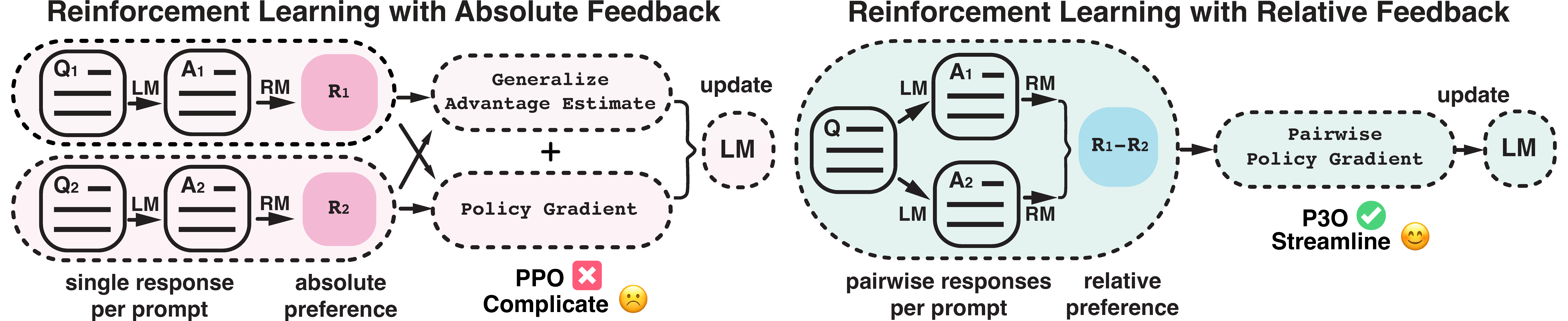
In the Reinforcement Learning Hierarchy (RLHF), a critical distinction lies between the reward-studying section, which leverages human preference judgments through comparative evaluations, and the RL fine-tuning segment, which optimizes a solitary, non-comparative reward signal. What if we employed a comparative approach to reinforce our RL endeavour?
Determine 1: The revised text is: This diagram illustrates the distinction between reinforcement learning and classical conditioning. absolute suggestions and relative suggestions.
A novel element, pairwise coverage gradient, enables seamless unification of the reward modeling and reinforcement learning stages, facilitating direct updates based on pairwise responses.
Massive language models (LLMs) have driven the development of increasingly successful digital assistants, such as Siri, Google Assistant, and Alexa. These cutting-edge techniques are capable of responding to intricate customer inquiries, crafting complex code, and generating artistic poetry with ease. The fundamental methodology driving these sophisticated digital assistants is Reinforcement Learning augmented by Human Feedback (). To achieve alignment with human values and mitigate potential biases from its massive pre-training dataset, RLHF aims to synchronize the model’s behavior with ethical standards, thereby reducing the likelihood of unintended outcomes arising from exposure to voluminous amounts of subpar information during its initial training phase.
Proximal coverage optimization, the dominant reinforcement learning (RL) optimizer in its field, has been documented to demonstrate notable improvements and robustness. Despite its emphasis on comparison-based learning in the training phase, the RLHF course exhibits a persistent anomaly: during fine-tuning, individual responses are optimized independently without any inter-response comparisons being made. The variability in terminology can significantly amplify difficulties, notably within the complex realm of language technology.
Can we develop an RL algorithm that learns through comparative evaluation? To address this challenge, we propose Pairwise Proximal Coverage Optimization (PPCO), a novel approach that synchronises coaching processes in both the reward shaping stage and reinforcement learning (RL) fine-tuning stage of RL-human feedback (RLHF).
A California state legislator, who introduced a bill to prohibit local law enforcement agencies from purchasing Chinese-made drones, now intends to relax the restrictions in the proposed legislation following opposition from police departments that currently operate such drones?
A bill, proposed by California State Senator Tom Umberg, aimed to prohibit law enforcement agencies from acquiring “military-grade” equipment, including drones, if similar items are restricted from purchase by the US military branches. armed forces.
The legislation aims to prevent law enforcement agencies from acquiring drones and related equipment manufactured in the People’s Republic of China, specifically DJI products. On June 19, Umberg announced the launch of new regulations, stating that existing state legislation allows law enforcement agencies to purchase DJI products despite growing concerns about potential cybersecurity risks.
Earlier this year, it was reported that cybersecurity researchers had uncovered evidence suggesting Beijing might leverage vulnerabilities in a drone control app to gain unauthorized access to substantial amounts of personal data, potentially posing significant risks to users. The Pentagon has effectively prohibited the use of DJI products and other drones manufactured in China.
Legislative Enforcement Response to the Proposed Chinese Drone Ban in California?
Despite this, during a DRONELIFE interview, Umber revealed that following his submission of SB 99, he received concerns from various law enforcement agencies regarding the bill’s potential negative impact on their drone operations. For many California-based law enforcement agencies, DJI products serve as the backbone of their drone programs.
“When law enforcement officials contacted me and entered my home, I believe they may have had legitimate concerns,” Umberg said. “I’m proactively addressing these concerns by implementing measures such as delaying deployment and providing opportunities to purge software containing rogue drones that could inadvertently transmit information to unauthorized locations.”
The law is slated to reconvene for discussion prior to the State Meeting’s Public Security Committee on Tuesday, July 2. Umbreg intends to submit a revised invoice proposal that could concurrently address two key concerns.
The proposed delay could extend the implementation timeline by 2-3 years; meanwhile, police agencies would still be able to utilise their existing DJI equipment, provided they update the software to prevent transmissions except to the police department itself.
According to Umberg, he expects law enforcement agencies that initially raised concerns about his proposal will ultimately accept the compromises he intends to offer.
I think they’ll find them satisfactory. The official does not expect widespread enthusiasm for the task ahead, but emphasizes that it is crucial to ensure the national drone fleet aligns with overarching safety concerns, stating, “I don’t anticipate at any level they’re going to be joyous; however, what we need to do is guarantee that our home fleet of drones is in keeping with our nationwide safety issues.”
Prior to acquiring military equipment, according to current state legislation, law enforcement agencies are mandated to obtain approval from a governing body – specifically, a city council in the case of a municipal police department. Under SB 99, the procurement of military equipment is permissible only if the US Armed Forces have not been explicitly prohibited from acquiring those supplies from a manufacturer or supplier due to applicable federal laws or regulations.
In 2018, the Division of Protection issued a blanket ban on the acquisition and use of all commercial-off-the-shelf (COTS) drones, regardless of manufacturer, due to concerns about cybersecurity vulnerabilities. In the coming year, Congress passed legislation that specifically prohibits the procurement and utilization of drones and components originating from China.
Senator Umberg emphasized the need for nationwide security by proposing legislation to bring state law enforcement agencies in line with Department of Defense requirements, effectively ending the procurement of Chinese-made drones.
Ultimately, law enforcement may be accepting of any legislation we pass, since they will have a stake in its success. “They’re not sending sensitive information, such as classified data, to China’s government.”
Learn extra:
Miriam McNabb serves as Editor-in-Chief of DRONELIFE and CEO of JobForDrones, a leading platform connecting experts in the drone industry. She is an astute observer of the rapidly evolving drone market and its corresponding regulatory landscape. Miriam has authored more than 3,000 articles focused on the business drone sector, establishing herself as a renowned global speaker and thought leader in her field. With a degree from the University of Chicago, Miriam boasts over two decades of experience in high-tech sales and marketing for emerging technologies. For specialized drone trade consulting or expertly crafted writing services related to the unmanned aerial vehicle (UAV) industry?
Biocomputing occupies a peculiar frontier in advancing knowledge, enabled by the fascinating fact that neurons interpret the world and respond to it through a language that computers can also comprehend – electrical signals. Synthetic neurons, cultured on silicon substrates, can acquire electrochemical signals from a computer, endeavour to decipher their meaning, and engage in subsequent deliberations.
Extra importantly, they’ll study. We first came across the concept during our studies at Monash University in Australia. In circumstances that should have felt like a ticking time bomb, the atmosphere was instead eerily calm. Dr. Frankenstein Secondly, scientists successfully cultured approximately 800,000 neurons on a microchip, which was then immersed in a simulated environment. Observed a cybernetic monstrosity rapidly learn to master the classic game of Pong within a mere five-minute span.. The venture moved swiftly, and subsequently spawned an organization known as Cortical Labs.
Cortical Labs has developed prototype computing modules inspired by the structure of human brain cells, and is poised to bring this innovative hybrid artificial intelligence to market.
Cortical Labs
When he advised us, it became clear that even at an early stage, human neuron-enhanced biocomputers appear to learn much sooner, utilizing significantly less energy than today’s AI machine learning chips, while demonstrating “more instinct, perception, and creativity.” Our brains, after all, consume only a tiny 20 watts to power nature’s most powerful neural networks.
We conducted assessments on reinforcing learning, and our findings reveal a stark contrast in the pace at which systems begin to demonstrate significant learning based on the number of samples they are presented with. Despite being rudimentary in nature, organic methods currently surpass even the most sophisticated deep learning models designed by humans. That is fairly wild.”
One potential drawback, aside from the obvious ethical concerns, is that preserving the “wetware” elements requires keeping them alive. Maintaining a sterile environment by keeping them fed, well-watered, at the optimal temperature, and safeguarded from bacterial and viral threats. Cortical’s 2023 report reflected a 12-month timeline.
Four human-mind-derived organoids, each comprising approximately 10,000 resident human mind cells, are integrated within a biocomputing array on FinalSpark’s Neuroplatform.
FinalSpark
Researchers at Indiana University have explored innovative approaches by allowing neural networks to self-organize prior to electrode insertion, while Swiss startup FinalSpark is pioneering the development of biocomputing chips that combine biomolecules with microelectronics.
If you’ve just learned about brain-on-a-chip technology, take a moment to collect yourself before exploring these links – the innovation is truly astounding. Chinese researchers are reportedly moving their AI-powered chatbots to the next level.
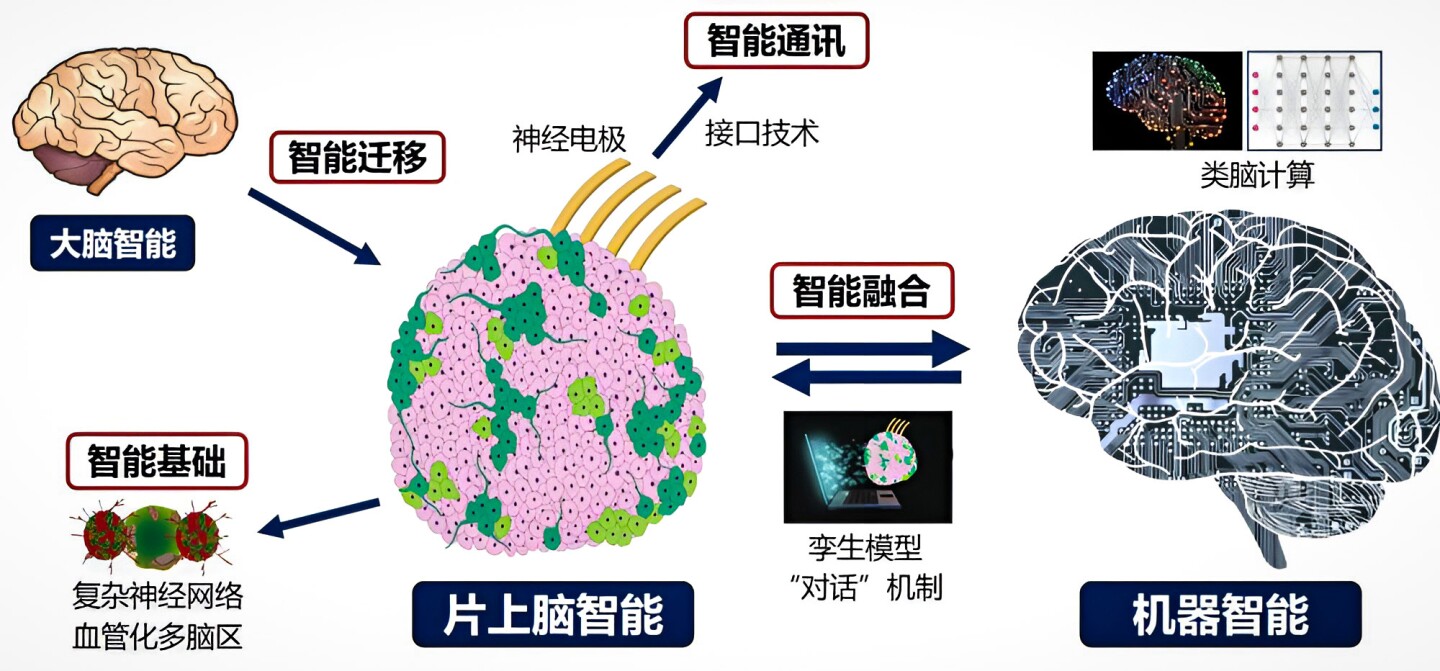
Tianjin University’s Haihe Laboratory of Brain-Computer Interaction and Human-Computer Integration teams up with other research groups from Southern University of Science and Technology in a collaborative endeavour called MetaBOC, which is actually brain-on-chip for short.
?Brain-on-Chip Applied Sciences:?
???Micro-Electro-Mechanical Systems (MEMS)?? ????Biological Microfluidics? ????Neuro-Inspired Computing? ????High-Density Nanofabrication? ????Bio-Inspired Signal Processing?
Note: The text is rewritten to provide a concise and clear overview of brain-on-chip applied sciences, with key elements helpfully labelled in Chinese.
Tianjin College
The open-source software enables seamless communication between brain-on-a-chip biocomputers and various digital devices, allowing the brain organoid to comprehend digital signals, operate according to controls granted access, and learn to perform specific tasks?
Researchers at Tianjin are leveraging spherical organoids, akin to those employed by Indiana’s Brainoware team, whose three-dimensional architecture enables the formation of more sophisticated neural connections, mirroring the intricate patterns found within human brains. These organoids have the potential to serve as a more robust foundation for further development.
The MetaBOC system leverages artificial intelligence to engage in a harmonious dialogue with the brain’s inherent organic intelligence, employing algorithms that intuitively respond to neural signals.
The Tianjin group’s mention of robotics as an integration goal is intriguing, but their accompanying visuals – a series of seemingly amateurish images – appear to be a deliberate effort to diminish the project’s legitimacy. Researchers have successfully developed a brain-on-a-chip biocomputer that enables the exploration of robotic control, allowing for the investigation of functions such as navigating around obstacles, tracking targets, and utilizing arm and finger movements to interact with various objects.
As a result of the mind organoid’s visual processing is limited by the electrical signals presented to it, it could theoretically learn to pilot its mini-Gundam in a simulated environment, thereby allowing it to refine its skills without compromising its biological intelligence.
While the initial size of organoids may not be massive, To function optimally, these devices will necessitate a range of support systems, including fluid and nutrient pathways, antimicrobial seals, thermal regulation, and shock-absorbing measures.
Tianjin College
To dispel any ambiguity, these supposedly transparent, bubblegum-pink mind-like structures in the robotic images are, in fact, conceptual models or “demonstrations of potential applications” rather than functioning brain-inspired prototypes. Here’s a possible revised version: The image from Cortical Labs provides a more tangible representation of what brain-on-chip architectures might look like in practical applications.
Cortical Labs’ proprietary “wetware” technology exhibits an intriguingly high level of moisture retention following a typical calibration session.
Cortical Labs
However, if you were to construct a small robot with applicable sensing and motor capabilities, there seems to be little reason why human neurons couldn’t rapidly adapt to drive it, effectively enabling the integration of biological intelligence into artificial systems.
This could be a pivotal moment for scientific innovation, as pioneering projects such as neural interfaces strive to seamlessly integrate high-bandwidth laptop connections directly into the human brain, while groundbreaking initiatives like MetaBOC successfully engineer human mind cells into computing systems; meanwhile, the burgeoning AI industry seeks to revolutionize organic intelligence by crafting an artificial analogue entirely in silicon.
As humanity’s grasp on scientific knowledge approaches its limits, science and technology are compelled to confront philosophical conundrums; do artificial intelligence systems, dubbed “dish-brains,” possess awareness of their existence? Are AIs aware? By harnessing advancements in AI and cognitive technologies, humans may potentially develop machines that exhibit behaviors eerily similar to those of conscious entities within the near term. As soon as that occurs, moral principles and values come into play, necessitating a thorough examination of the situation to determine the most ethical course of action. The fundamental nature of intelligence is a topic of ongoing debate among researchers. While there are distinct differences in the underlying mechanisms that govern organic and silicon-based systems, it is crucial to recognize that these distinctions may not be as stark as initially assumed. In reality, both types of intelligences share commonalities that can facilitate effective communication and even collaboration.
While this notion may seem far-fetched, the evidence suggests that these techniques can indeed cultivate greater awareness, rendering such skepticism unfounded. Is it truly ethically defensible to consult with them at all? Because of our efforts to monitor and care for conscious beings. While acknowledging the complexity of animal consciousness, you note that many people consume meat without trepidation, rationalizing this choice as acceptable.
As technological advancements increasingly blur the lines between human and machine, it’s difficult to conceptualize the notion that we’re actually engineering our own cognitive processes into cybernetic systems capable of intelligent control over machinery.
As humanity hurtles toward a technological singularity in 2024, the pace of progress accelerates at breakneck speed, with AI intelligence poised to surpass human capabilities and raise unforeseen challenges before we’re fully prepared. As technological advancements surge forward at an unprecedented rate, there is a risk that they will accelerate to a point where they become uncontrollable, spinning wildly out of control.
Is this a momentous epoch for sentient life, where we transcend our humble beginnings as a cluster of nascent cells? As far as our collective understanding goes.
Preliminary findings from the European Commission’s inquiry into Meta’s binary advertising option for European users of Facebook and Instagram since last autumn reveal a glaring disparity with the EU’s Digital Markets Act.
Failure to comply with the ex ante market contestability regulation, implemented on Meta and similar “gatekeepers” since March 7, could be extremely costly for the adtech giant. Companies found guilty of non-compliance may face penalties reaching up to 10% of their global annual revenue, with repeat offenders risking fines equivalent to 20% of their worldwide turnover.
As a last resort, Meta may need to abandon its privacy-hostile business model, which demands users pay the “price” of surveillance-tinged advertisements as the cost of using its social media platforms.
The European Union has launched a formal investigation into Meta’s “pay or consent” data supply model, following sustained pressure from privacy advocates and consumer protection groups that have long argued the scheme contravenes EU data protection and consumer safety regulations.
Again in March, the Fee mentioned its involvement in the binary alternative Meta was providing – a scheme where customers of its social networks were requested to conform to monitoring and profiling, allowing the platform to serve microtargeted ads or opt out by paying up to nearly €13 per month (per account) for ad-free versions.
To achieve its Digital Markets Act (DMA) goal, the EU aims to curtail dominant gatekeepers’ abusive practices by focusing on the multiple benefits they derive from their market position – particularly in the realm of knowledge.
As Meta’s dominance in social networking translates into the ability to gather additional data from internet users to create detailed profiles, its advertising arm is granted an undue advantage over competitors, a concern that has led the EU to take issue with this practice. It is a requirement within the DMA’s guidelines that gatekeepers obtain individuals’ consent before resetting their dynamic tracking devices for advertising purposes. Meta argues that the adtech giant is neglecting its responsibility to provide users with a genuinely free and transparent choice to opt out of tracking.
The UK’s Financial Conduct Authority reported on Monday that Meta’s binary choice “compels users to agree to the combination of their personal data, ultimately failing to provide them with a less targeted yet equally accessible version of Meta’s social media platforms.”
Ahead of the official announcement, senior Meta officials underscored that as long as the company’s social media platforms remain freely accessible to users, the same features and services offered to those who decline to consent to data monitoring must also be available at no cost to customers.
In accordance with Article 5(2), gatekeepers are mandated to obtain customers’ explicit consent before combining their personal data between designated core platform providers (CPS) and other parties.
Meta’s social media platforms, Facebook and Instagram, along with its advertising division, are now classified as Covered Privacy Services (CPS) since , implying that the adtech giant must obtain explicit consent from users to track and profile their behavior in order to deliver so-called “personalized” advertisements.
Customers who decline Meta’s monitoring are entitled to access an alternative that is less personalized but equal in quality, and according to the Fee’s preliminary view, after a three-month investigation, it appears that Meta is violating this requirement by offering a paid subscription that does not provide equal access to the same information as free entry.
The regulation further clarifies that gatekeepers cannot conditionally offer services or functionality to users based on their consent.
In response to the EU’s findings, Meta’s spokesman, Matthew Pollard, issued a press statement via email, crediting the organization’s spokesperson. As the CJEU ruling in Weltimmo explicitly validated the use of consent-based subscription models, stating that “the processing of personal data without consent is only permitted if it is necessary to protect an important interest of the controller or of another natural person,” Meta’s defence can be bolstered by highlighting the EU courtroom’s precedent. “We look forward to engaging in further constructive discussions with the European Commission to bring this inquiry to a thorough conclusion.”
During today’s press briefing, senior fee officers were asked about this defense. The European Union clarified its stance on the issue, stating that any proposal to introduce a paid version of a service in lieu of monitoring ads must only do so “if necessary” and only charge an “acceptable fee”.
In the Digital Markets Act (DMA) framework, proponents of gatekeepers emphasize that these entities must justify the relevance of a pricing decision within the broader regulatory landscape. The EU has determined that Meta’s provision of an equal alternative to a fully consented service offering ads that do not rely on processing personal data, thereby ensuring contextual advertising.
Meta’s decision to withhold a free contextual ads option from users remains unclear, opting instead for a binary “pay or consent” approach that leaves many questioning the reasoning behind this choice.
The European Union appears poised to compel Meta to provide a non-binary, privacy-protected alternative in the near future.
“To ensure compliance with the Data Marketing Act, customers who refuse consent should still have access to a comparable service that utilizes significantly less of their personal data, specifically for personalized advertising purposes.”
Fees officers note that Meta may still offer a subscription option; however, they stress that any paid tier would need to be an additional offering (i.e., separate from the existing free service). There are a number of alternatives On top of unpaid data, there exists a type of surveillance that does not require customer consent to monitor their activity.
The European Union’s investigation into the matter has yet to conclude. Meta will have the opportunity to formally respond to our preliminary findings. Despite the urgency, the EU’s scrutiny timeframe is capped at 12 months, targeting a completion date of either March 2025 or earlier.
The BEUC, a prominent European consumer advocacy group, cautiously applauded the initial results, yet persisted in calling on the EU to swiftly implement the necessary measures for effective enforcement.
The European Fee has taken a significant step by launching an enforcement action against Meta’s controversial pay-or-consent model, following its failure to comply with the Digital Markets Act regulations. Following allegations regarding Meta’s model for breaches of consumer regulation and data security regulation,
According to Agustin Reyna, director general of BEUC, “It is imperative that Meta complies with existing legal guidelines designed to protect consumers.”