Home Blog Page 2135

Vital Flaws in CocoaPods Expose iOS and macOS Apps to Provide Chain Assaults

0

Three critical vulnerabilities have been discovered in the dependency supervisor for Swift and Objective-C Cocoa projects, which could be exploited by attackers to compromise software supply chains, posing an extreme risk to downstream targets.

Thousands of unclaimed Apple devices’ security vulnerabilities, allowing malicious actors to claim possession and inject malicious code into numerous popular iOS and macOS features, according to a report by E.V.A. Information Security researchers Reef Spektor and Eran Vaknin published today.

As of October 2023, the Israeli software safety agency has confirmed that the three points were subsequently addressed by CocoaPods. The changes also automatically reset all personal timers across the platform following the public announcements.

One significant vulnerability, identified as CVE-2024-38368 (CVSS rating: 9.3), allows attackers to exploit the “unvalidated path traversal” mechanism, enabling them to gain control of a package and manipulate its source code, potentially introducing malicious changes. Notwithstanding this, it was essential to ensure that all previous maintainers were completely disconnected from the project.

The root cause of the problem dates back to 2014, when a migration effort left thousands of packages with unknown or unresponsive owners, creating an opportunity for attackers to exploit a public API claiming pods and utilize an email address (“[email protected]”) within the CocoaPods source code to seize control.

The second vulnerability, designated CVE-2024-38366 with a CVSS rating of 10.0, poses a significantly more severe threat as it exploits an insecure email verification process, enabling attackers to execute arbitrary code on Trunk servers and potentially manipulate or disseminate packages.

The additional vulnerability identified within email handle verification (CVE-2024-38367, CVSS rating: 8.2) exploits a recipient’s trust by luring them into clicking on what appears to be a harmless verification link, which instead redirects the request to an attacker-controlled domain, thereby granting access to a developer’s session tokens.

Without proper email security configurations in place, malicious actors can actually exacerbate problems by transforming these attacks into zero-click account takeover exploits via clever manipulation of HTTP headers – specifically, tampering with the header subject – thus capitalizing on unsuspecting vulnerabilities.

Researchers revealed that almost every Pod owner has registered their organisational email on the Trunk server, leaving them vulnerable to a zero-click takeover exploit.

CocoaPods, a package manager for iOS and macOS projects, has faced scrutiny on multiple occasions. In March 2023, Checkmarx detected a potentially compromised subdomain connected to its dependency supervisor (“cdn2.cocoapods.org”) that may have been hijacked by an attacker via GitHub Pages for the purpose of hosting malicious payloads.

Discovered this text fascinating? Observe our platform on a regular basis to discover new and exclusive content that we publish.

Harnessing Enterprise AI: Improvements & Wins at Databricks

0

Can generative AI unlock immense value? While organizations recognize the potential benefits of embracing technology, they remain cautious in their decisions regarding its implementation, seeking to optimize its adoption for maximum impact. With a dizzying array of styles, suppliers, and strategies to choose from, the sheer scope of options can be daunting. Investors naturally demand tangible returns on their investments, making it crucial for funds holders to identify practical ROI strategies that can justify the significant costs and organizational changes associated with embracing GenAI.

With a rich legacy of leveraging enterprise AI, Databricks has consistently harnessed its internal capabilities to drive innovative applications in areas such as fraud detection and financial forecasting. Our system ingests knowledge from multiple sources, integrating seamlessly with Salesforce and Metronome, and funnels it into our centralized logfood structure, where it is processed, refined, and made accessible to diverse personas, including data scientists and software engineers, for informed decision-making and actionable insights. This infrastructure comprises more than 10 petabytes of data and spans across 60 multi-cloud and multi-geographical locations, enabling us to manage over 100,000 daily tasks for our more than 2,000 weekly customers. As we work alongside clients on their AI development and journey, understanding how we leverage AI within our own organization becomes crucial; this enables us to uncover the tools, techniques, and best practices we employ.

A key approach to developing our AI methodology involves first implementing a robust AI governance framework, which involves close cooperation with designated teams of engineers, safety experts, and other relevant stakeholders. As we establish ourselves, we adopt a hybrid approach that combines tried-and-tested third-party solutions with internally developed AI-powered applications, rigorously testing their efficacy against traditional methods through A/B experimentation.

This framework and resolution methodology offers valuable insights for AI practitioners, as it showcases tangible achievements that can serve as a foundation for expanding into new use cases.

Databricks showcases its multi-step Generative AI vision in practice through compelling examples of clear wins and innovative approaches, highlighting its implementation in real-world applications.

Clear Wins

The adoption of GenAI by both internal and external community groups has been a resounding success for Databricks, with numerous organizations also capitalizing on its expertise to drive innovative outcomes. Initially, enhancing a company’s support operations is a crucial first step in implementing an AI strategy, whereupon we focused on empowering our support teams with more comprehensive documentation, enhanced information flow, increased autonomy to drive velocity or mitigate support issues, automated performance metrics, and further self-service capabilities for our customers. More than 40 engineering channels currently utilize our in-house Slackbot to streamline operations, alongside a community of over 3,000 active users. Across our organization, we’ve successfully automated responses to around 40,000 internal queries related to challenging topics such as difficulty assessments, script and SQL assistance, error code explanations, and architectural guidance.

The same Slackbot, boasting a vast and engaged user base, has successfully responded to over 1,200 queries in its external capacity. With regards to IT support, we have integrated GenAI with cutting-edge technologies to enhance our assistance and learning capabilities. Collectively, artificial intelligence (AI) chatbots and human-assisted help systems have successfully addressed an increased volume of inquiries, achieving a remarkable 30% deflection rate – a significant improvement from zero just two years prior. By the end of 2024, our ultimate goal is to achieve a success rate of at least 60%. Meanwhile, our BrickNuggets chatbot, now integrated with Area Sidekick, has introduced bite-sized learning modules tailored specifically for our gross sales team. Our general third-party chatbot is utilized globally by our teams to facilitate collaboration and provide tailored solutions to pressing questions, serving more than 4,700 active monthly users within our community.

The second compelling use case for GenAI lies in its application within software development programs. Through the strategic deployment of copilots, we have successfully enhanced the productivity of our engineers, thereby fostering the development and acquisition of valuable engineering intellectual property. The introduction of Copilot technology yields profound efficiency and productivity benefits, with an early adopter survey revealing that 70% reported increased productiveness, 73% achieved task completion more quickly, and 67% attributed time savings to focus on higher-priority tasks.

At Databricks, we harness the power of GenAI copilots to rapidly build instruments, dashboards, and machine learning models, including complex designs that would previously have required significant expertise or extensive development time. As a valued customer of Databricks IQ, we serve as trusted assistants to accelerate the development of knowledge engineers, streamlining tasks such as knowledge ingestion, reporting, and various data-related responsibilities. Extensive use of co-pilots enables the lengthening of language migration, ensuring case growth and promoting code clarity? Noteworthy improvements in productivity have resulted in significant gains, with increases of up to 30% in certain instances.

A spirit of experimentation

Databricks has demonstrated a proactive approach to experimenting with our AI technology, while simultaneously implementing necessary safeguards to ensure the integrity of our innovation efforts. From numerous Databricks hackathons, innovative concepts have evolved into prototypes or manufacturing-ready products, echoing the spirit of revolutionary thinking and acknowledging that we’re not simply integrating AI features but also building AI-driven infrastructure.

“One instance relates to the email era for our internal sales team.” Automating email efforts offers a convenient and eco-friendly approach to manage sales team workloads, yet executing this strategy can be challenging due to the need for contextual understanding of a specific industry, product, and customer base. By leveraging the intellectual capital within our organization’s knowledge repository, housed in our lakehouse, we’ve optimized its usage through the facilities of. We can seamlessly integrate open-source AI frameworks with our intelligence platform, which combines a knowledge warehouse, Databricks’ Unity Catalog governance, model-serving capabilities for execution, RAG Studio for augmented era, Mosaic AI, and unified knowledge units to refine structured and unstructured data, ultimately delivering high-quality response rates. The Role Alignment Gateway (RAG) plays a crucial role in our strategy, as it enables seamless integration of large language models (LLMs) with business knowledge while striking a perfect balance between quality and speed, thereby expediting the learning process effectively.

The outcome is a sophisticated email era feature that seamlessly integrates contextual information, including the purpose of the contact, the industry they represent, and relevant customer references, with email generation assistance, encompassing phrase count, tone, and syntax, as well as effective email best practices. We collaborated meticulously with our experienced enterprise growth specialists to craft tailored prompts, which served as a vital training ground for the models. This strategy has consistently delivered impressive results; AI-generated emails sent through our model demonstrate a response and engagement profile comparable to that of a seasoned sales or business growth consultant, yielding click-through rates ranging from 30% to 60% and reply rates between 3% and 5%. The price per email has dropped significantly, from $0.07 to just $0.005, thanks to the adoption of a refined, open-source model that has streamlined operations. Prior to sending emails to prospects, our Sales Development Representatives (SDRs) have complete creative control over the content. Our proprietary technology and meticulous editorial process incorporate robust safeguards to eliminate hallucinations and irrelevant information, guaranteeing that our email initiatives are laser-focused and impactful.

One highly promising software solution for inside gross sales representatives is our innovative AI-powered sales-based agent language model. By leveraging the ‘hover’ chatbot’s capabilities, this solution provides data-driven insights to sales teams regarding potential product offerings and usage scenarios for a specific company, enabling informed decision-making. Customers in Salesforce leverage the software to stay informed about the latest changes within an organization prior to a meeting, thereby enabling them to develop targeted and relevant interventions, such as migrating to a cloud platform or building a new data warehouse using structured insights from related firms. The key aspect of the mannequin’s performance lies in its ability to seamlessly integrate both structured Salesforce data and unstructured information from internal and external sources, while ensuring controlled access management and adhering to strict guidelines on knowledge confidentiality?

We are also exploring innovative methods in contract administration by developing a GenAI software tool that streamlines contract summarization processes. The organization may take into account unconventional expressions and scenarios that contradict established wisdom in Salesforce, thereby determining the scope of liability and permissible risk associated with a specific agreement. The implementation of auto-summarization capabilities enables expedited contract processing, thereby reducing the burden on our internal authorized teams. This initiative is underpinned by a comprehensive AI governance and security framework, jointly developed with our safety and privacy experts to ensure robust protection.

Key issues

Regardless of whether you’re navigating experimental use cases or building upon successes, several key considerations must be taken into account when developing GenAI.

  • We leverage a blend of structured and unstructured knowledge, utilizing RAG-based frameworks to deliver actionable insights and mitigate hallucinations; increasingly, we rely on our dedicated Databricks RAG Studio platform to validate fashion efficacy, ensuring optimal return on investment (ROI) and minimized costs. By leveraging tailored prompts and combining them with business knowledge using the Databricks Intelligence Platform, organisations can streamline experimentation and accelerate learning from results.

    These approaches provide stability to pace and ensure high-quality performance, which can be fine-tuned or integrated into a language model’s pre-training process. Measuring efficiency against distinct campaigns and styles underscores the profitability benefits for the corporation and its various stakeholders.

  • Regularly assessing and refining employee expertise from the outset to throughout the technology’s lifespan guarantees optimal utilization and fosters seamless integration of the innovation. Collaborative efforts across various teams can lead to sustained and widespread changes throughout the organization. Establishing standardized protocols ensures that expertise is utilized consistently and effectively.
  • As organisations scale their use of AI, challenges arise in complexity, but these are far from insurmountable. While acknowledging that knowledge can be chaotic and testing a challenge, many organizations can mitigate these issues by implementing various strategies. By harnessing the capabilities of lakehouses, implementing an incremental approach to database scaling, and developing a framework for evaluating organisational impact following process validation, key milestones can be achieved. Ensuring seamless transitions between ML Ops tiers, strategically allocating resources for focused intervals to deliver top-notch prompts, and ensuring that solutions yield tangible, data-driven insights are crucial considerations.
  • This encompasses IT and governance capabilities, both of which can inform considerations around ROI.

Going forward, Databricks is driving innovation by applying GenAI to a wide range of high-value use cases within the company, including but not limited to: enhancing enterprise operations through AI-powered deal desk and IT support; boosting productivity with features like account alerts, content discovery, and meeting preparation; streamlining marketing efforts via AI-generated content and outbound prospecting; optimizing HR processes with ticket deflection and recruiting effectiveness; revolutionizing legal services with contract knowledge extraction; and unlocking business insights through self-serve, ad-hoc analytics queries. Notwithstanding, we’re not discounting the value of GenAI for our external customer base.

JetBlue leveraged its knowledge intelligence platform in tandem with sophisticated open-source large language models (LLMs) to develop a chatbot, empowering employees to access customized key performance indicators (KPIs) and data relevant to their specific roles. The impression of this answer has been to reduce coaching necessities and accelerate turnaround times for feedback, thereby simplifying access to insights across the entire team. EasyJet, a European provider, developed a conversational AI solution designed for non-technical users to ask voice-based questions in their natural language and receive insights that can inform the decision-making process. This answer has not only helped enhance the group’s knowledge techniques, but also provided customers with seamless access to information and LLM-driven insights, thereby sparking innovative concepts around various revolutionary GenAI use cases, including resource optimization, chatbots focused on operational processes and compliance, as well as personal assistants that offer tailored travel suggestions.

As organizations deploy General Artificial Intelligence (GenAI) solutions, it’s crucial to balance safety, governance, and ROI considerations, our expertise reveals that when companies harness GenAI’s cross-functional capabilities through iterative experimentation, the potential effectiveness gains can yield a significant competitive advantage for both themselves and their customers.

Searching for extra sources

A number of phrases on taking notes

0

Illustration of taking notes

As the upcoming planning conferences for 2024 draw near at AWS, I’ve been reflecting extensively on my approach to note-taking. In a similar vein, the process of curating a Re:Invent keynote requires meticulous planning over several months, allowing me to collaborate with numerous intelligent individuals driving innovation and crafting remarkable products. At every assembly, I meticulously take detailed notes – many of them.

The earliest memories I have of taking notes date back to my main college years. I may copy word-for-word what the instructor would say or write on the board. Mathematical concepts I would then head home, conduct thorough research on the material I had copied, and subsequently verify my findings. Previously, I was engaged in learning how to process, disseminate, and retain information. Considering it in hindsight, similarities to Season 3 emerge.

While this was indeed memorization rather than true understanding?

As my instructional journey progressed and the subject matter became increasingly complex, I found myself compelled to reexamine my note-taking strategies. It was more about the art of active listening, absorbing every detail, and intuitively grasping the essence of the lesson being imparted. As a young learner, I may have memorized the next definition word-for-word: “The fundamental role of mitochondria is oxidative phosphorylation, which produces ATP by harnessing energy from the oxidation of the food we consume.” Yet, in my early days of learning, I might have stored this away without fully grasping how it functioned. That would have helped solidify the concept in my mind, like: “Mitochondria are the powerhouses of the cell.” The photosynthetic machinery generates considerable chemical energy to fuel the cell’s intricate biochemical reactions, with elaborate diagrams possibly illustrated in the margins to clarify the complex methodology. That is synthesis. This denotes understanding.

There is evidence to support this claim. Particularly, that .

Pen and paper

Today, I still take many of my notes by hand. Taking a few minutes each day to review and reflect on key information helps me maintain concentration and solidify important concepts within my mind. As people converse at an unprecedented pace, it’s challenging to capture the essence in writing; therefore, I’m compelled to prioritize recording my key takeaways or pose questions about concepts I struggle to grasp.

A stack of notebooks
As I gaze out at the compacted files and documents stacked neatly within my reach, the archive’s contents unfold like a miniature landscape before me.

The Cornell Methodology

Over the past several months, I’ve dedicated a considerable amount of time to exploring various note-taking methods and refreshing my understanding of them. Creativity flows effortlessly through the entire process: outlining, thought mapping, and charting. What has laboriously worked well for me is the Cornell Method.

An effective approach involves dividing a notebook page into four sections: title, notes, key phrases or questions, and abstract. It’s not because I spent several years at Cornell, but rather because this approach fosters documenting thought processes (asking questions), synthesizing learned material in real-time (taking notes), and summarizing everything afterwards (writing a concise summary).

By employing this method, I am left with organized notes that are easy to comprehend, review, and revisit, owing to their capacity to facilitate inquiry, question, and assumption analysis beyond mere note-taking.

Illustration of the Cornell Method
Credit score: https://www.flexcil.com/suggestions/cornell-note-taking/

According to recent research by Kuniyoshi Sakai, findings have conclusively demonstrated that note-taking using pens and paper yields significantly higher retention and recall rates compared to digital alternatives such as keyboards or touchscreens with styluses? Notwithstanding widespread agreement, the notion that taking notes – regardless of form or format – fosters encoding, retention, and recall is widely accepted as a valuable learning strategy.

With reference to the accompanying image, I am a devout enthusiast of traditional handwritten note-taking methods. Analog tools help facilitate the processes of memorizing, synthesizing, and summarizing information for me. The moment I jot something down by hand, it simultaneously materializes in my thoughts – a phenomenon that doesn’t happen when using digital tools. When preparing for conferences, I employ the Cornell method to optimize note-taking; by condensing key points from the briefing document into a concise summary within my notebook, its significance becomes instantaneously more concrete. As the desire to engage with the written material surpasses mere comprehension, this process unfolds.

Utilizing ML and generative AI

Actively engaging with information by taking notes fosters a wealth of understanding and insight. In today’s world, we’re inundated with an unprecedented amount of information, far exceeding what we could reasonably sift through. As the digital landscape continues to evolve, the role of machine learning (ML) and generative AI is poised to become increasingly crucial in this space? Several instances that spring to mind are:

  • Using a transcription service that incorporates speaker identification to enhance your note-taking experience during meetings or gatherings.
  • Using PC-based image processing and Optical Character Recognition (OCR) technology, effortlessly convert handwritten notes into editable documents that can be easily shared or stored in a centralized location. Are you just not already utilizing something like Kindle Scribe?
  • Close to-instant summarisation.
  • Analyzing a comprehensive collection of notes through Large Language Models (LLMs) to identify prevailing themes, underlying trends, and influential figures across a multitude of conference proceedings, lectures, doctor’s opinions, site visits, and related documents.

As I pore over this terrain, I sense a connection between the act of studying and mapping out a path. For individuals who had spent 20 years honing their skills, the art of studying a map was a reasonably commonplace proficiency. Without consulting a map, you’d chart your course, jot down key details, and then endeavour to find your way. When you’ve taken a particular route on multiple occasions, you’d inevitably remember it? You’d remember a fountain’s soothing sound or the colour of a specific house alongside the most effective approach. When navigating unfamiliar areas, you’d intuitively sense when and where potential bottlenecks may arise, along with alternative paths to circumvent them. In recent times, we have increasingly relied on our mobile phones for communication. We adhere to precise directions, navigating from one street to another without exhausting mental resources.

It’s useful. It’s simple. It’s widely accepted that this statement isn’t open to discussion. Despite advancements in technology and visualization tools, studying a bodily map still proves to be an invaluable skill. When venturing off the grid, there will undoubtedly be instances where cell service is unavailable, whether due to losing your phone or the need to disconnect from technology; in such situations, having a grasp of your surroundings and knowing how to navigate to your destination becomes crucial. By writing things down by hand, you can filter out distractions and focus on the essential information.

As I ponder the trajectory of analysis over the next decade and beyond, I’m eager to discover how it will adapt to the ever-changing needs of digitally savvy individuals.

Take notes, numerous them

I’ll depart you with a quote from the author : “[…] one of many worst emotions I can consider, [is] to have had a beautiful second or perception or imaginative and prescient or phrase, to know you had it, then lose it.” My recommendation: take notes, numerous them.

Now, go construct!

CISA report highlights have to transition to memory-safe languages

A new report from CISA, the FBI, the Australian Cyber Safety Centre (ACSC), and the Canadian Centre for Cyber Safety (CCCS) analyzed 172 vital OpenSSF tasks and located that 52% of them include code written in a memory-unsafe language.

The report additionally discovered that 55% of the whole strains of code for all tasks have been written in a memory-unsafe language. 

In line with the report, memory-unsafe languages — similar to C or C++ — place the accountability of managing reminiscence use and allocation on builders, which may result in memory-safety vulnerabilities like buffer overflows and use after free in the event that they make a mistake. Reminiscence-safe languages shift that accountability to the compiler or interpreter and may considerably scale back the chance to introduce memory-safety vulnerabilities, which have led to vulnerabilities like Morris Worm, Slammer Worm, Heartbleed, and BLASTPASS. 

“Through the use of memory-safe languages, programmers can deal with producing higher-quality code slightly than perilously contending with low-level reminiscence administration,” stated Omkhar Arasaratnam, GM on the OpenSSF.

This new report follows the White Home Workplace of the Nationwide Cyber Director’s (ONCD) name earlier this 12 months on expertise leaders to undertake memory-safe languages. 

“We, as a nation, have the power – and the accountability – to scale back the assault floor in our on-line world and stop complete courses of safety bugs from coming into the digital ecosystem however which means we have to sort out the exhausting downside of shifting to reminiscence secure programming languages,” stated Nationwide Cyber Director Harry Coker on the time.  

In line with Chris Hughes, CISSP, chief safety advisor at Endor Labs and Cyber Innovation Fellow at CISA, one of many explanation why so many tasks are written in memory-unsafe languages is that for a few years these languages have been broadly adopted and it’s solely been just lately that there’s been a transfer to encourage builders to make the most of memory-safe languages. 

He defined that it will likely be troublesome to transition current tasks to memory-safe languages due to the sources, effort, and experience required, which maintainers of the tasks could not have.  

“That stated, there are additionally alternatives for organizations to assist facilitate the transition by sources together with financial incentives, in addition to doubtlessly improvement assist to facilitate the transition,” stated Hughes. “After all, there nonetheless stays points with third-party and transitive dependencies as mentioned within the report, that means even when the tasks have been re-written, they would want to conduct dependency evaluation and be sure that transitive dependencies are additionally accounted for in terms of reminiscence security. Lastly, efforts would have to be made to make sure the builders and maintainers implement safe coding practices to make sure reminiscence security safeguards aren’t undermined.”


You may additionally like…

White Home recommends software program be written in reminiscence secure languages to enhance cybersecurity

Are builders and DevOps converging?

High quality Assurance, Errors, and AI – O’Reilly

An article recently published makes a declaration that is worthy of study; its argument merits consideration. As generative AI assumes the role of creating an escalating quantity of software programmes, concerns arise regarding its propensity for errors and the uncertainty surrounding a future where such mistakes are eradicated. Consequently, if we desire software that operates seamlessly, the importance of High-quality Assurance teams is poised to escalate. “While ‘Hail the QA Engineer’ might elicit a chuckle, there’s little disputing the notion that as technology evolves, the importance of testing and debugging will only continue to grow.” While advancements in generative AI may alleviate some concerns, the perpetual problem of identifying the elusive “final bug” remains a persistent challenge.

Regardless of this, the proliferation of QA prompts numerous queries. One cornerstone of quality assurance (QA) is undoubtedly testing. Generative AI can effortlessly produce assessments, including unit assessments that are remarkably straightforward. Integration assessments, which evaluate multiple modules simultaneously, and acceptance assessments, which scrutinize the overall effectiveness of an entire system or process, present particularly challenging hurdles to overcome. Although unit assessments exist, we still face the inherent limitation of AI: it can potentially produce a test suite, but that test suite may not accurately evaluate its own capabilities. What assumptions do we make about testing’s reliability when our test suite might contain latent defects? Testing is notoriously challenging because excellent testing requires going beyond simply verifying specific behaviors.

Study quicker. Dig deeper. See farther.

As complexity escalates, so does the problem’s magnitude. Integrating multiple modules often leads to the daunting task of identifying bugs that arise from their combination, which becomes increasingly challenging and troublesome when testing an entire utility at once. The AI could potentially leverage a test automation framework such as Selenium or Appium to mimic user interactions and simulate clicks on the consumer interface. To prevent misunderstandings and misuse, we should consider how users might misinterpret or exploit the system.

Bugs are often complex problems that require meticulous debugging to identify and resolve. A critical outcome of misinterpretations is the unintended consequences of a bug, arising from misunderstandings: failing to accurately implement a requirement that does not align with the customer’s intended goals. Can a highly advanced artificial intelligence system accurately and efficiently generate detailed, comprehensive, and unbiased assessments of patients suffering from complex medical conditions such as diabetes, hypertension, or heart disease, taking into account the intricacies of human physiology and the nuances of clinical data? While an AI may possess the ability to learn and decipher a specification, its capacity is significantly enhanced when the specification is written in a machine-readable format—a distinct form of programming. However, the prospect of an AI discerning the link between a specification and a customer’s distinct requirement – what they truly desire – remains shrouded in uncertainty. The AI-powered writing assistant purportedly enables users to streamline their content creation processes by offering suggestions for sentence structure, tone, and syntax.

Can an AI system safely and effectively engage in red-teaming an utility, identifying vulnerabilities and potential threats? While acknowledging AI’s potential to excel, I question whether its ability to perform admirably in certain domains necessarily translates to tackling increasingly sophisticated tests. The more complex the evaluation, however, the greater the challenge lies in distinguishing between issues with the test itself and those inherent in the software being tested. Debugging is notoriously twice as arduous as writing the initial code. For developers struggling with code beyond their grasp, self-awareness dictates they are insufficiently skilled to debug it effectively. This implies a significant challenge for codebase maintenance and scalability, as existing features may not be easily extensible or maintainable without the development of new, un-written code. Developers regularly face the daunting task of scrutinizing and rectifying code authored by others, a process known as “sustaining legacy code.”

Programming’s traditional emphasis on individual innovation? At my initial two workplaces, roles in quality assurance (QA) and testing were traditionally viewed as low-profile positions with limited prestige. Being assigned to QA was often perceived as a demotion, typically reserved for programmers who struggled to collaborate effectively with their colleagues. The tradition has undergone significant modifications over time. While cultures do undergo gradual evolution, sudden and profound transformations are also possible in response to significant historical events or technological advancements. Unit testing has become a widespread practice. Despite seeming effortless, crafting a comprehensive test suite that provides robust protection on paper alone is insufficient, as it fails to account for the complexities and uncertainties of actual implementation. As software development professionals recognize the value of unit testing, they increasingly invest in crafting comprehensive and robust test suites. However what about AI? Will artificial intelligence succumb to the temptation of generating subpar evaluations, compromising its objectivity and reliability?

While prioritizing quality assurance may alleviate some concerns, it does not eliminate the fundamental problem in programming: developers often lack a thorough understanding of the issues they’re tasked with resolving. The benefits of meditation for mental health and wellbeing are widely acknowledged. Research has shown that regular meditation practice can reduce symptoms of anxiety and depression, improve sleep quality, and increase feelings of calm and relaxation.

We all start programming with enthusiasm for learning a new language, often working from a design template that only the most knowledgeable individuals comprehend.

As we embark on our first actual project, a fresh perspective unfolds before us.

The language is the simplest aspect. The issue area is tough.

I’ve programmed industrial controllers. I’ve gained the ability to converse about manufacturing facilities, precision industrial control systems, programmable logic controllers, and expediting the safe transportation of delicate goods.

I spent countless hours playing PC video games. I can discuss the intricacies of physique dynamics, normalize complex matrices and manipulate quaternions with precision. A bit.

I labored in advertising automation. You can discuss gross sales funnels, double opt-in, transactional emails, and drip feeds.

I spent countless hours immersed in cell phone games. I can discuss degree design. Techniques for Encouraging Participant Movement: Of stepped reward techniques.

Must we consider the company we’re coding for in our studies?

Code is actually nothing. Language nothing. Tech stack nothing. No one offers us anything, but we’re all capable of making an effort like trying this.

To develop a successful app, it’s crucial to identify the reasons why it will resonate with users. What drawback it solves. In what ways does this concept apply to our everyday lives? Observe the environment with varying descriptions.

Precisely. Programming is indeed all about crafting instructions that computers can understand and execute precisely. While AI may significantly boost a programmer’s productivity by up to 50%, it’s essential to note that this figure is subject to some uncertainty. Programmers actually dedicate around just 20% of their overall work hours to writing code. Achieving a 50% increase in the allocation of 20% of one’s time requires incremental efforts, but ultimately lacks transformative impact. To truly revolutionize the process, let’s focus on developing a more comprehensive approach that goes beyond simply expending additional time on writing check suites? That’s where Mellor’s understanding of the character of software programs becomes absolutely crucial. Writing endless lines of code doesn’t necessarily make a software program excellent; that’s just the basic part. Rather than laboriously generating test suites, one can make substantial progress without sacrificing testing standards. To effectively improve software, one must first identify and understand the problem they’re trying to solve – a crucial aspect of the process that demands careful consideration. Writing effective test cases without identifying the root cause of the issue being tested is a futile exercise that fails to deliver meaningful results, ultimately undermining the credibility of the QA process.

Developers may benefit from dedicating additional resources to rigorous testing and quality assurance procedures. That’s a given. However, when AI merely amplifies our existing capabilities, we’re witnessing a diminishing returns phenomenon in innovation. To triumph, it’s essential to excel at grasping the complexities that need resolving.

Business Heavy-Carry RC Drones for Cargo Transportation & Logistics

0

The FlyingBasket’s FB3 is an all-electric, compact multirotor platform that can be easily transported in a standard van or trailer without the need for disassembly, allowing for rapid deployment at a moment’s notice. The cutting-edge UAS boasts advanced capabilities, engineered to operate beyond visual line of sight (BVLOS) up to 10 kilometers, seamlessly transmitting vital flight data and telemetry through a robust information hyperlink. The FB3 is equipped with an in-house designed remote-controlled hook featuring a cargo sling capable of handling payloads up to 100 kilograms. Alternatively, the cargo field offers a payload capacity of 33 kilograms, measuring 81 centimeters long, 35 centimeters wide, and 30 centimeters high. View the video at this link: Throughout its development, the FB3 has successfully transported tools to wind farms, delivered construction materials to high-rise buildings, navigated challenging terrain to reach remote areas, and enabled the deployment of critical communication infrastructure for Huawei. The FlyingBasket features an advanced flight termination system that automatically activates whenever the aircraft approaches a designated purple zone, thereby allowing safe and regulated operation within urban environments. Real-time data is obtained through an ADS-B receiver, allowing the drone to effectively avoid mid-air collisions with nearby aircraft. With regulatory nods from both the Federal Aviation Administration (FAA) and the International Air Transport Association’s (IASA) Worldwide Aviation Security Evaluation, FlyingBasket has secured coveted approvals for its FB3 model. As the market for heavy-lift drones expands, our company has begun working on the FB4, scheduled to launch in 2024 with a payload capacity of 200 kilograms.

Commercial Heavy-Lift Drones for Cargo Transportation & Logistics

Commercial Heavy-Lift Drones for Cargo Transportation & Logistics

Commercial Heavy-Lift Drones for Cargo Transportation & Logistics

Commercial Heavy-Lift Drones for Cargo Transportation & Logistics

Commercial Heavy-Lift Drones for Cargo Transportation & Logistics

Commercial Heavy-Lift Drones for Cargo Transportation & Logistics

bh_new-w-1px.gif

Gene-Edited Animal Organ Transplants May Assist Finish the Organ Donor Disaster

0

Each year, thousands of people perish while waiting for an organ transplant. Xenotransplantation pioneers are cautiously optimistic that breakthroughs could soon make significant strides in overcoming past hurdles.

In the United States, a staggering 100,000 individuals currently await placement on the organ transplant waiting list, with a distressing 17 lives lost each day prior to receiving a life-saving organ. Despite the chronic shortage of organ donors, medical professionals have long explored the possibility of xenotransplantation – a procedure that involves transplanting tissue or organs from animals into humans.

While early research was marred by ethical concerns, the idea persisted as an outsider in mainstream medicine. The fear of rejection looms large, leading to this outcome. Despite posing challenges for human transplants, the risks are significantly higher when using organs from other species.

As genetic engineering techniques continue to advance in precision and effectiveness, they are increasingly bringing the concept into the mainstream. Researchers have expressed optimism that the technology to edit donor animals’ DNA, thereby preventing the production of biomolecules known to trigger immune responses in humans, could be effective in all circumstances.

Recently, groundbreaking studies have shown that genetically modified pig organs can function temporarily and seamlessly within the human body. Despite the challenges posed by medical complications, organ rejection, and mortality, recent advancements in this field have yielded encouraging results.

At Massachusetts General Hospital, over 1,400 patients languish on the waiting list for a life-saving kidney transplant, a stark reminder of the dire need for innovative solutions.

As a dire consequence, some unfortunate patients will tragically succumb to their illness or become too frail to undergo transplantation due to the prolonged wait endured on dialysis treatment. Xenotransplantation offers significant promise in addressing the pressing issue of organ scarcity.

In 2021, a groundbreaking medical breakthrough took place when doctors successfully transplanted a genetically engineered pig organ into a patient who had been brain-dead for some time. Researchers successfully silenced the gene coding for alpha-gal, a molecule responsible for triggering organ rejection, within a donor pig’s workforce. Although the surgery initially appeared successful, with the kidney producing urine and showing no signs of rejection, the patient’s life was only prolonged for 54 hours.

A patient with terminal cardiac disease, who initially showed promise but unfortunately succumbed to their condition 60 days later. While investigating the cause of his death, medical professionals found that prescreening tests failed to detect porcine cytomegalovirus, which was later discovered in his heart and may have played a role. Additionally, he received an experimental antibody treatment that unexpectedly triggered a severe gastrointestinal reaction.

Two individuals living with kidney disease, previously deemed unsuitable for traditional transplant eligibility, received genetically modified pig kidneys from a herd of donor pigs cultivated by the innovative biotechnology company eGenesis. Using CRISPR technology, the company achieved a remarkable 69-edition gene modification, successfully eliminating certain pig genes, incorporating human counterparts, and significantly reducing the risk of dormant viruses reactivating and causing harm to the individual receiving the organ transplant.

The procedures unfolded with apparent smoothness. Even though the primary patient’s kidney function was determined to be normal, he still didn’t want to undergo dialysis. Despite having received a new lease on life two months prior, he struggled with underlying health concerns that ultimately overshadowed the success of the transplant. The hospital’s investigation found no conclusive link between the organ donation and his eventual passing, suggesting other factors contributed to his demise.

A complex medical case required a kidney removal after 47 days due to “unique difficulties” arising from her recent mechanical heart pump implant, making the transplant procedure particularly challenging. While there were no signs of rejection, the kidney’s function started to decline due to the heart’s inability to pump blood at a sufficient pressure.

Recently, scientists made headlines by introducing the latest breakthrough: transplanting a genetically engineered pig’s liver into a 71-year-old man diagnosed with liver cancer in May. Despite confidentiality constraints surrounding the procedure, the employee reported that the individual in question had made significant progress more than two weeks post-surgery, with the workforce commenting that they were “doing very well”.

While most studies in this field have had limited duration, the fact that only two instances recorded a failed transplant, with one instance attributed to external factors, is an encouraging indication. Physicians have traditionally been limited to conducting experiments on patients with already compromised chances of survival for the sake of moral principles.

While acknowledging the potential of xenotransplantation, it is crucial to consider whether this approach can truly provide a sustainable solution for patients in the long term. While there are concerns about xenotransplantation’s potential risks, one pressing issue is the possibility of interspecies pathogen transmission, which could lead to unforeseen consequences.

Researchers are exploring the possibility of cultivating human organs within pigs as a potential alternative to traditional organ transplantation from pigs into humans. In late September, researchers successfully transplanted human stem cells into pig embryos, which subsequently developed into primitive kidney structures.

While this method still has a significant gap before it can be tested on humans, xenotransplantation appears to be a highly promising approach for reducing transplant wait times in the meantime. As initial results show encouraging signs, it appears unlikely that we’ll be shut out of a future where custom-made organs can be grown with ease.

The Startup Journal 5 Steps to Beginning a Dwelling Renovation Enterprise

0

Your reworking enterprise operates independently, relying solely on your expertise to oversee renovations of kitchen, bathroom, bedroom spaces, and property expansions for both residential and commercial properties? Consider developing a customized business model by taking on the role of a prime contractor, hiring personnel or subcontractors to enhance project efficiency and scalability? Uncover the potential of revitalizing your business venture and assess its alignment with your entrepreneurial aspirations?

Start As a Subcontractor

While the housing market’s demand is surging, launching a business from scratch is far from easy. To successfully launch and sustain a lucrative entrepreneurial venture, prepare yourself for a well-defined progression. Commence your professional journey by acquiring hands-on experience and cultivating connections within the industry through a stint at a reputable residential or commercial construction company.

Subsequently, develop a comprehensive grasp of the financial implications underlying the transaction and conceptualize a strategic exit strategy. Start with smaller, more manageable home renovation projects in addition to your regular work. As your reputation grows and you receive recognition for your exceptional work, you’ll be grateful that satisfied customers will enthusiastically recommend you to others.

Effectively manage your workload by prioritizing tasks, leveraging the skills of trusted assistants, and optimizing your work schedule to maximize productivity. As your side hustle reaches the point where it surpasses your current income, consider a seamless exit from your full-time role, then establish your own home renovation business in its stead.

Authorized Necessities and Licensing

Although the second job may seem unremarkable at first glance, its significance cannot be overstated. In order to operate a professional enterprise, one must register the business with the relevant governing bodies. Depending on the services offered by your company and the specific geographic area where you operate, securing necessary permits and licenses may be essential for a successful home renovation venture.

It is equally crucial to confirm that your treatment is covered by your insurance provider. Professional liability insurance for construction projects guarantees financial protection against unforeseen claims of property damage or personal injury arising from the scope of renovation work. Simultaneously, specialized legal liability insurance provides a safeguard against claims of recklessness or subpar performance.

Plan Your Funds in Advance

While most home renovations often require relatively straightforward financial management? Despite appearances, effortless cruising is by no means guaranteed. Given the competitive landscape of many entrepreneurs, the crucial initial step is ensuring you have sufficient funding to cover your initial expenses.

Costs should comprise compensation for personnel (direct labor), overhead expenses (entire invoices for resources utilized in the project), and direct materials. As you’ve calculated preliminary prices, exploring accessible financing options becomes a critical consideration.

Conduct meetings with multiple financial institutions to explore options for obtaining business loans that offer terms conducive to our company’s financial situation? What specific grant programs do governments offer to small businesses, and how can they effectively navigate the application process? Although you may currently be ineligible, gaining insight into alternative funding options for future reference remains beneficial. Consider financing options as a means to successfully manage your renovation expenses.

Collaborators and Suppliers

Treat your suppliers and collaborators in your house renovation venture with the same level of care and respect that you would extend to a member of your own family, for it is only by fostering strong relationships built on trust and mutual understanding that you will truly succeed. Despite being a knowledge-based partnership, it must be founded on shared trust and collaboration.

A fundamental principle to consistently adhere to is ensuring timely payments to your vendors and partners. As such, personal dynamics are intricately woven into the fabric of this connection, mirroring the intricate ties that bind our experiences together. Streamlining payment processes through online invoicing enables swift receipt of funds and enhances operational efficiency for your small business. These tools streamline business processes, fostering a healthy cash flow and promoting a collaborative environment that is both environmentally friendly and highly effective.

As a dedicated professional, you must prioritize your clients’ needs and satisfaction above all else.

Today, numerous effective advertising and marketing channels are readily available for businesses like yours to engage with potential clients seeking online home renovation services within their existing time frame. Establishing a website and online presence through social media platforms proves to be an economical strategy for businesses. Amplify brand exposure through targeted Google Ads campaigns and strategic Facebook advertising initiatives.

Despite boasting a robust online presence, self-employed home renovation entrepreneurs should bear in mind that recommendations from satisfied customers remain their primary source of referrals.

Endnote

The house renovation market presents significant opportunities for numerous startups to capitalize on. While achieving recognition as a seasoned entrepreneur in this sector requires significant effort and dedication, it offers numerous opportunities for growth and self-improvement, both personally and professionally. Consider launching a personalized home renovation business by taking the plunge.

Methods to watch films with associates

0

Key Takeaways

  • Hulu now offers a Watch Together feature, designed to enhance the group viewing experience.
  • To start watching a watch party on Hulu, simply follow these straightforward steps:
  • Up to eight members can participate in a Hulu Watch Party.


What’s more enjoyable than spending quality time with loved ones, indulging in a shared passion for movies or TV shows? Among the vast array of streaming services, including Netflix, Amazon Prime Video, and Hulu, there’s almost nothing you won’t be able to access with just the click of a button. Notwithstanding this challenge, a single obstacle is that everyone simply wants to collaborate on the same digital canvas to fully appreciate the content together. While that’s a viable approach in some instances, it’s not always feasible or practical.

A watch party function that allows all subscribers to simultaneously view a program or film within a group chat room, thereby simulating the experience of a movie night. While some third-party services offer similar features, having this integration with Hulu as a built-in option provides a convenient and seamless way to enjoy the streaming experience with your friends and family. To understand this effectively, you need to grasp certain essential points.

The Walt Disney Company’s streaming services, Disney+, Hulu, and ESPN+ (formerly known as Max), are reportedly combining to offer a bundled subscription option. Until I see those three changes implemented, the payment is not forthcoming.

To host a successful Hulu watch party, consider the following methods:

? Invite friends over and have them bring their favorite snacks and drinks. This will create a fun and relaxed atmosphere where everyone can enjoy each other’s company while watching their favorite shows.

? Plan ahead by choosing a show or movie that everyone is interested in watching, and make sure to send out invitations well in advance so that everyone can clear their schedules.

? Create a cozy viewing area with blankets, pillows, and snacks. This will help guests feel comfortable and at ease while watching the show.

? Encourage discussion and participation by asking guests to come prepared with questions or topics they’d like to discuss during the show.

? Consider offering rewards or prizes for guests who participate in discussions or bring their favorite snacks.

Get the occasion began

Methods to watch films with associates

Hulu


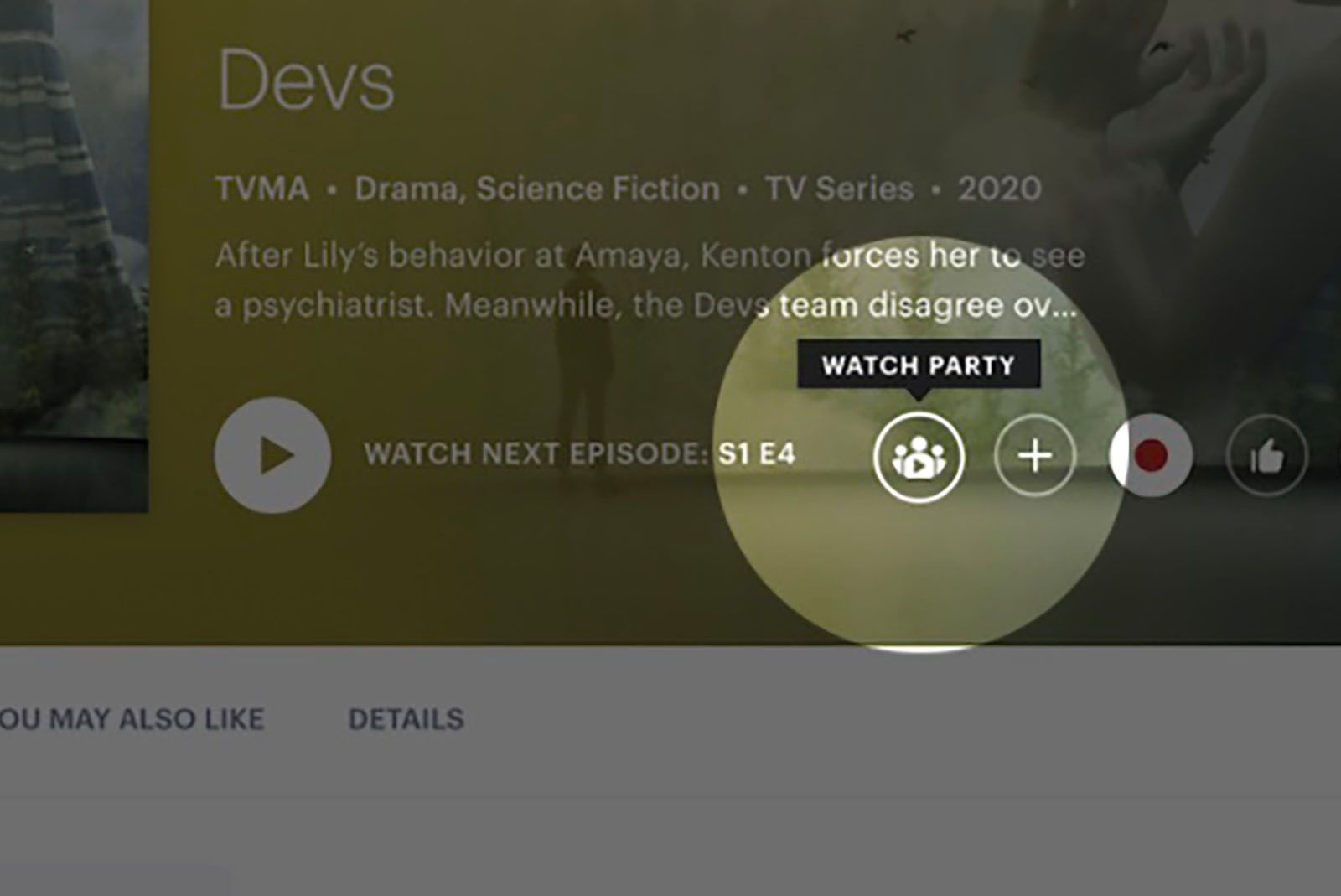
To seamlessly utilize Hulu’s Watch Together feature, follow these intuitive steps:

  1. Visit our website using a compatible internet browser.
  2. Access the online platform featuring the movie or television show you wish to examine.
  3. Explore our curated selection of unique gifts on the Particulars web page.
    • What’s your favorite TV show?
  4. Click on
  5. Let’s amplify the momentum: Join our collaborative network by sharing the link and empower others to contribute.

On Hulu’s platform, the Watch Party feature enables users to engage in real-time discussions via a group chat while simultaneously streaming the same video content. Each participant has the ability to manage their individual playback. You’ll have the ability to pause your viewing and then seamlessly jump back in with a single click, allowing you to pick up exactly where the group was previously watching.


Here’s how to get Hulu content without a web connection:

Is Hulu with no ads a free service?

Is there an entry payment?

Sure. Accessible to all subscribers, regardless of their plan type, including those who don’t pay for the ad-free option. Wouldn’t having a Hulu subscription make hosting or participating in a watch party so much more enjoyable?

If you prefer staying entertained through live television but don’t feel the need to commit to traditional cable, Hulu with Live TV might be just what you’re looking for.

The number of individuals that can participate in a watch get-together (also known as a watch party or gathering) is largely dependent on the hosting space and the level of comfort desired by participants. Typically, a watch party for 5-10 people is considered ideal, as this allows for meaningful social interaction and conversation among guests while still allowing everyone to comfortably view the screens.

The extra the merrier

A family watching a Sci-Fi movie on Sony's new Bravia TV .

Sony

Up to eight individuals can participate in a single Watch Together session. Invited guests seek to utilize the specific link provided by the host in order to participate and join in. For users sharing the same Hulu account, it’s essential to join a Watch Party through individual profiles.


Tired of the same old routine with your television provider? Transform your flat-screen TV into a premium viewing experience with Amazon’s sleek Fire TV streaming sticks, effortlessly accessing a vast library of Prime Video content.

Watch Together offers a vast array of content, including popular TV shows, movies, and documentaries. You can stream the latest hits from top networks like NBC, ABC, CBS, and FOX, as well as browse through various genres such as drama, comedy, action, and more. With Watch Together, you can also discover new favorites through curated playlists, recommendations based on your viewing history, and user reviews.

Is the whole lot accessible?Hulu Watch Party photo 2

The Watch Together feature operates seamlessly across hundreds of titles within Hulu’s extensive on-demand catalog. To verify whether a title is supported, conduct a quick search for the Watch Together icon.

Stream multiple broadcasts or video games simultaneously on a single TV by leveraging the power of YouTube TV’s innovative multiview feature. This is how.

Providers offering video conferencing services?

Or is it simply Hulu?

Amazon Prime Video Watch Party comes to the UK photo 1
Amazon

Sure. Manufacturers such as Apple, Samsung, Fossil, and others offer their unique smartwatch features.

Pluto TV offers a wide range of free content, curated by humans who provide personalized recommendations. Here is what you need to know about it, and a valid assessment of its quality.


Apple The Change TRX opens Saturday, June 22, in Kuala Lumpur

0