Home Blog Page 2134

New AWS re:Invent Bulletins: Dr. Werner Vogels Keynote

0

is nearing the top. This yr’s Keynote by Dr. Werner Vogels, as always, did not disappoint; but if you’re looking for groundbreaking news, read on at your own risk – I’ll explain why momentarily. 

Werner’s exploration of value administration began with a nod to the familiar tropes of “The Matrix,” before delving deeply into the complexities of the topic. I strongly recommend this keynote to traditional IT professionals possessing software development or infrastructure management expertise. You’re in for a steal!

Let’s delve into the finer details.

Despite initially being unaware that the entire presentation would revolve around cost management in the cloud, I was piqued by the author’s frequent references to “The Frugal Architect,” a book that explores designing applications that utilize resources efficiently to conserve computing power, memory, and ultimately, operational expenses, thereby saving on costs. It appears that no such eBook exists, according to a quick Amazon search. Extra on that later.

As he announced the focus of his talk, all the pieces clicked into position. As he delved deeper, he started to focus on specific variables that then unfolded into more nuanced observations. Right here’s a style.

Align value to Enterprise

I actually cherished this level. In the Amazon Web Services (AWS) ecosystem, enthusiasm often runs high when discussing cutting-edge features like high availability, auto-scaling, and serverless computing capabilities. 

While it’s crucial to consider cost-effectiveness in certain scenarios, we must not overlook that if our company’s revenue hinges on low-cost computing, then it may not be wise to opt for a costly 4xlarge EC2 instance when a cluster of smaller, spot instances could achieve the same objective.

As a company expands, it’s crucial to anticipate and manage expenses effectively to avoid unexpected billings that can significantly impact revenue.

As a result of my software development background, I always keep costs in mind – not just monetary costs, but also computational resources such as CPU cycles, memory usage, scalability considerations, and server requirements?

While I concur with Werner that Amazon Web Services is an exceptional platform for all computing needs, it’s crucial not to allow the monthly bill to spiral out of control through automatic payments or overspending.

Observability
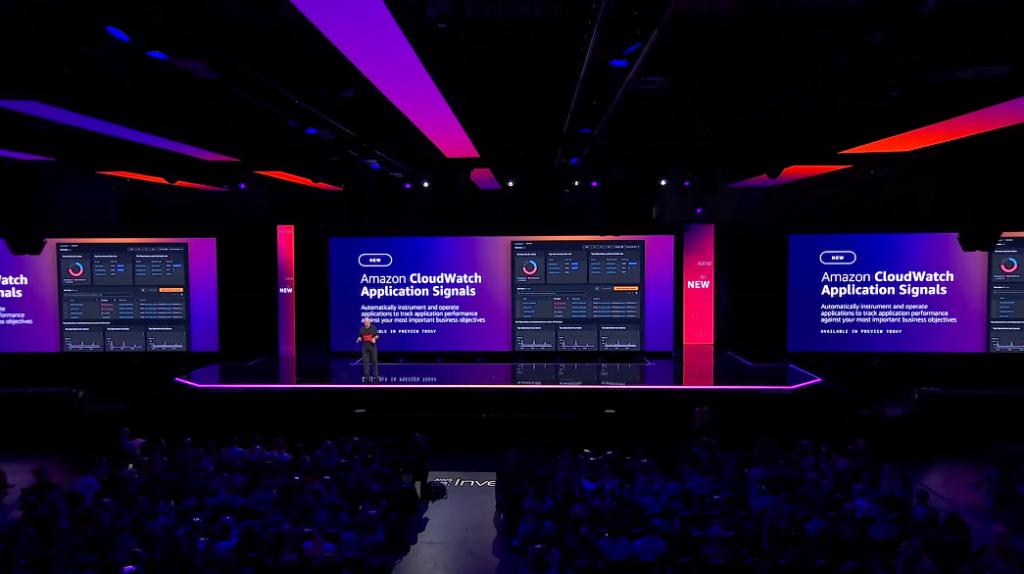
One factor stood out: the importance of tracking and measuring an unmonitored utility, which can lead to unexpected costs. This realization provided a natural segue to introducing a novel feature that tracks application-specific value and utilization, allowing for more informed decision-making.

Languages
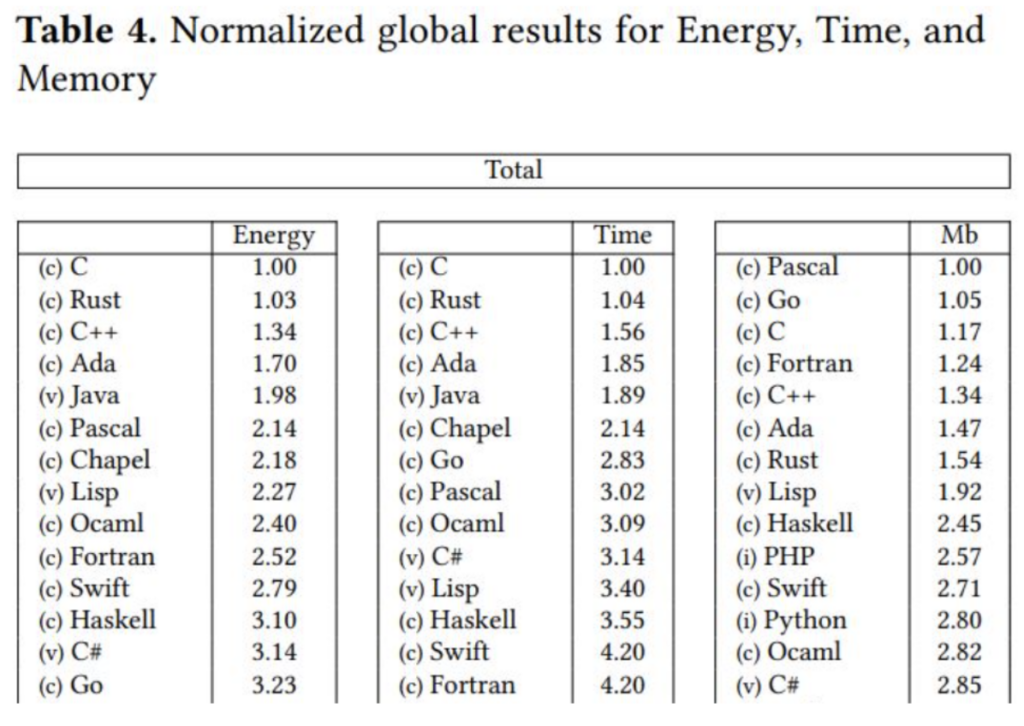
He was meticulous about programming languages, scrutinizing their entire impact on code velocity. The advent of eco-friendly languages often led to faster, more efficient coding outputs. I strongly advise against advocating for a specific programming language without proper justification; instead, consider highlighting the benefits of exploring various languages, including Rust, and fostering a culture of experimentation and adaptability within your team? This is due to its effectiveness and velocity. While some may advocate for this approach,

Python, Java, and .NET languages tend to be resource-intensive due to their supporting infrastructures, rendering them less suitable for short-lived or transactional applications. While he initially overlooked crucial factors such as Growth Prices, long-term maintenance, and Time-to-Market, finding skilled Python and Java developers remains relatively straightforward due to their widespread popularity worldwide. Discovering Rust builders? Uncertain about what exactly?

Ultimately, let’s reassess his contribution at the operational level.

While a program in Rust, C, or C++ might initially execute within a 100-millisecond timeframe, the identical program written in Python, Java, or C# will inherently outperform it owing to the prolonged initialization time inherent to these languages’ runtime environments. He is entirely suitable in terms of both financial value and environmental sustainability.
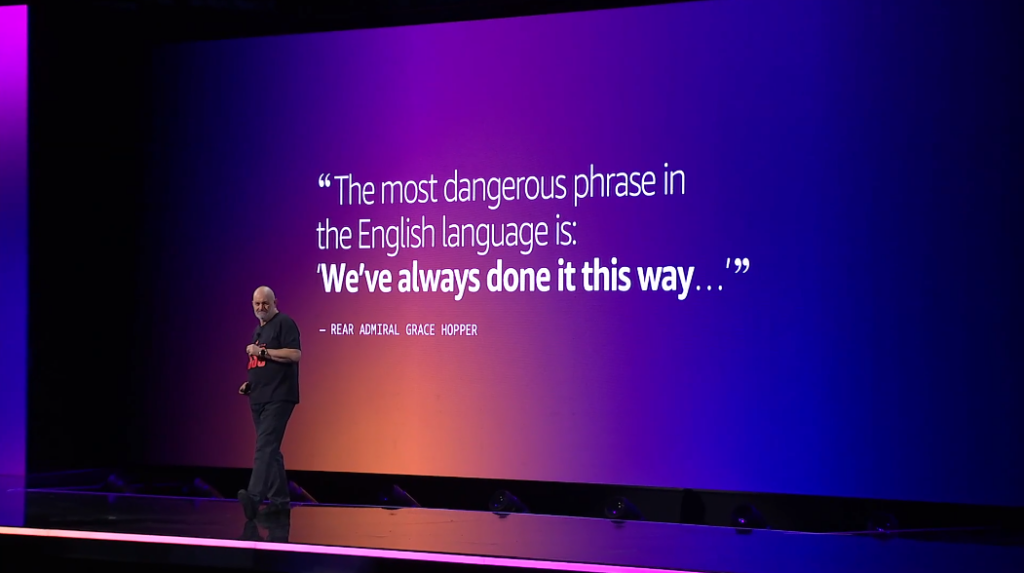
He also highlighted the importance of embracing innovative approaches, specifically cautioning against an aversion to new programming languages or technologies simply because they differ from traditional methods, instead encouraging their adoption for enhanced efficiency and sustainability. While sharing similar sentiments, it’s essential to acknowledge that not every organization can reasonably expect their senior Python developers to become junior Rust experts overnight. As such, performance variability is likely to occur.

Gen AI

As soon as we reached this stage of the conversation, I thought, “Oh boy, here we go!” and was expecting the discussion to veer off-topic into tangents about language trends, pop culture, or even Amazon recommendations – but no! The reality was a stark contradiction to my initial expectations.

As a substitute, he illustrated the practical applications of conventional AI (Machine Learning, SageMaker, Computer Vision) in resolving real-world challenges, such as interpreting radiology scans with precision, accurately identifying grains of rice for optimal germination and analyzing image data to locate and support victims of child abuse.  

In terms of how Dr. Vogel transitioned from his healthcare background to developing software for x-ray image analysis, it’s worth noting that he initially wrote the program’s initial code in Python before delegating tasks to others. This code has evolved significantly to become even more powerful and packed with innovative features. 

He remained steadfast in his stance, eschewing the hype surrounding Generative AI to maintain a more measured approach. I adore it!

While I’m a strong proponent of harnessing the power of Cloud-based technologies, my colleague astutely pointed out that novel frameworks have emerged, specifically designed for GenAI, which will enable us to rapidly deploy tailored solutions catering to our unique needs.

AI predicts, people resolve

Additionally, he stressed that AI predicts but ultimately humans make the decisions, suggesting that machines won’t supplant our labor, replace our documents, or create sustenance for us, yet they will undoubtedly aid in helping us cope with an increasingly populous world? 

As part of his conclusive address, he suggests reviewing his concise e-book, “The Frugal Architect”, to help solidify the key takeaways from their discussion.

That’s a start. Clearly intended for seniors from the outset. As he browsed the exhibit for just 60 seconds, his eyes landed on a display screen and he quipped, “Is that a PERL script?” – my involuntary snort was all I could muster in response to this unexpected question.

After a spirited discussion, it was nonetheless amusing: “Hey Werner, can I scan my container builds for vulnerabilities in my CI/CD pipeline?” “Now you can!” – cleverly inserting yet another innovative feature that piqued my interest immediately, given my affinity for DevOps initiatives.

Now, go construct one thing!

Helpful assets from this presentation

He casually released an e-book summarizing the key takeaways from his presentation. This data remains valuable regardless of cloud computing involvement. Even though you’re not currently within the cloud, it’s still a good idea to give it a try.

In fact, this learning tool is remarkably easy to grasp, making it an absolute must-try. Take just a few minutes to give it a go – we assure you’ll be glad you did!

CDK
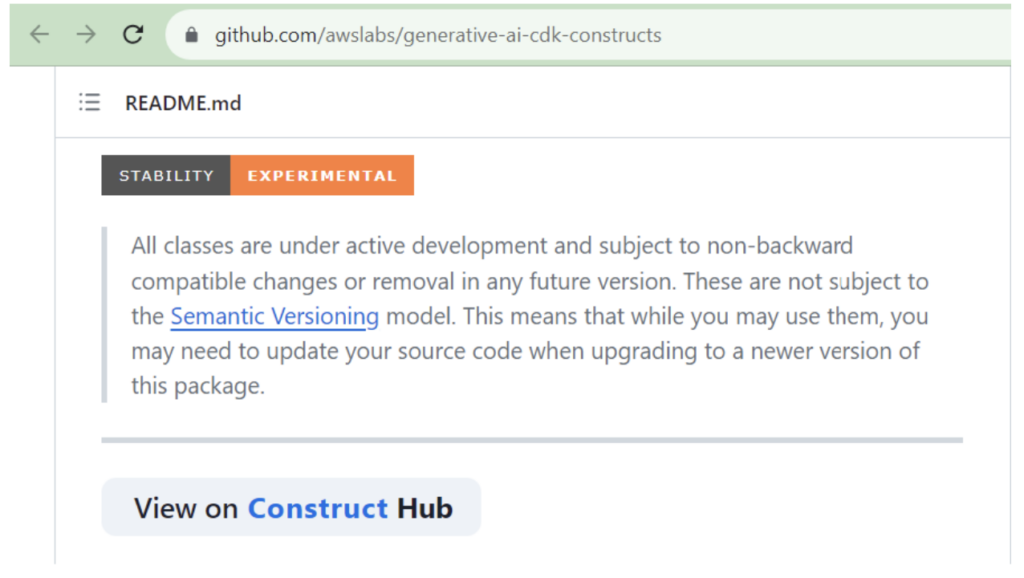
The following constructs are required to create a Gen AI model using CDK:

• **Intent**: This is the main entity that captures the user’s intent. It acts as an umbrella term that encompasses various sub-intents.

?**Sub-Intents**: These are more specific entities that capture distinct aspects of the user’s intent. For instance, “book a flight” can be broken down into sub-intents like “search for flights,” “compare prices,” and “make a reservation.”

• **Entities**: These represent specific data points or concepts relevant to the user’s query. In the context of booking a flight, entities might include destinations, travel dates, and flight numbers.

• **Actions**: These denote the desired outcome or action that the Gen AI model should perform in response to the user’s intent. For instance, “book a flight” can be an action that involves searching for flights, comparing prices, and making a reservation.

• **Slots**: These are placeholders for specific information required to fulfill the user’s intent. In the context of booking a flight, slots might include traveler names, dates of travel, and credit card details.

• **Follow-up Questions**: These represent potential follow-up questions that the Gen AI model can ask the user to gather more information or clarify their intent. For instance, “What is your preferred destination?” or “Do you have any travel preferences?”

These constructs serve as the foundation for building a comprehensive Gen AI model using CDK.

Introducing a groundbreaking set of constructs designed for expedited deployment of tailored, generative AI solutions, ideal for those seeking to quickly leverage customized AI capabilities.

AutoGrow Textareas with CSS

As digital landscape evolutions unfold and developers pioneer novel customer interactions, the imperative to augment native language capabilities grows. Our presentation layer, CSS, has performed exceptionally well in amplifying functionality, often exceeding expectations despite initial slow pace. Native support for regularly expanding? textarea Components have finally been thoroughly identified and are now available.

To permit textarea Components that enable vertical development and horizontal expansion are crucial for businesses to succeed in today’s rapidly changing market. field-sizing property with a worth of content material:

 textarea {   width: auto;   height: auto; } 

The default worth for field-sizing is mounted, signaling present habits. The brand new habits, content materialWill continue to grow and expand as much as possible. To constrain the dimensions a textarea can develop, use conventional width/max-width and top/max-height properties.

  • Shoppers now have seamless access to identical APIs across both cellular and desktop devices. As mobile devices initially gained access to select APIs, they are now gradually migrating to the desktop platform. The getUserMedia API, a type of API, enables developers to access users’ media devices, such as cameras and microphones.

  • As soon as an idea that I’m extremely enthusiastic about comes to fruition, I find myself absolutely captivated by the concept of lazy loading. Lazy loading enables the postponement of source material, typically images, until they are actually required. Don’t burden yourself with unnecessary weight when you can avoid it, right?

    Introducing LazyLoad, a highly customizable MooTools plugin that…

  • I’m not a fan of jQuery’s component creation syntax either. Quite honestly, it’s utterly frustrating to type HTML code within a JavaScript string – an ugly necessity. Fortunately, Basil Goldman has developed a jQuery plugin that enables the creation of components using MooTools-like syntax, streamlining the process for developers familiar with both libraries. Commonly, creating jQuery aspects resembles writing straightforward JavaScript code…

Individuals can transfer this bionic leg simply by serious about it

To successfully integrate a neural interface into one’s daily routine, akin to adapting to a prosthetic, requires a deliberate and methodical approach, comprising two distinct stages. First, sufferers endure surgical procedure. After a lower limb amputation, residual portions of shin and calf muscle often remain. The gastrocnemius and soleus muscles of the calf are connected to the tibialis anterior muscle in the shin, enabling the ankle to flex upwards while the calf muscles resist this movement. The prosthetic device will be carefully fitted and secured at this precise level to ensure optimal functionality. By reattaching and rehabilitating the residual muscles, the prosthetic can exhibit enhanced agility and movement capabilities. Additionally, it has been shown to effectively reduce phantom limb pain, resulting in fewer falls and injuries for affected individuals. 

“The pioneering surgery was a game-changer for me,” remarks Amy Pietrafitta, a trailblazing para-athlete who underwent the groundbreaking procedure in 2018. Despite the prosthetic’s advancements, true control remains elusive as long as it’s not connected to the nervous system, leaving even the most dedicated users feeling frustratedly stuck in a cycle of limited mobility: “I really feel like I’ve got my leg back.” 

During the second stage, floor electrodes detect neural activity from the brain to the calf and shin muscle groups, suggesting an intention to move the lower leg. Within a prosthetic leg, a miniature computer translates neural signals into precise movements, allowing individuals with mobility impairments to control their artificial limbs with greater ease and dexterity. 

You likely possess fully functioning organic appendages, effortlessly navigating stairs or walking up and down steps without ever giving it a second thought. It’s involuntary,” says Herr. “That’s the case with our patients whose prosthetic limbs are made from a combination of titanium and silicone.” 

Researchers compared the mobility levels of seven patients equipped with a neural interface to those of individuals who had not undergone the surgery. Individuals using a neural interface experience a significant boost in mobility, with walking speeds increasing by 41%, enabling them to tackle steeper inclines and navigate stairs with greater ease. They might also navigate obstacles with increased agility and possess greater equilibrium. For many amputees, the prosthetic becomes an integral part of their body, rather than just a tool they use to navigate daily life. 

What is the Finest GPS Module for FPV Drones (Betaflight Rescue Mode, iNav Return to Dwelling)

0

The integration of GPS technology has revolutionized the realm of First-Person View (FPV) drones, thanks to significant advancements in features such as Betaflight’s Rescue Mode and iNav’s Return to Home capability. I’ll be testing a range of the most popular GPS modules from Flywoo, HGRLC, Beitian, GEPRC, and FlyfishRC, assessing their performance and offering my recommendations.

Some links on this webpage function as affiliates. For each purchase order placed by an individual following a click-through from these affiliate links, I receive a fee of no additional value to the user. This feature supports providing quality content to the local community within our website. Learn from us to gather more information.

The latest Betaflight iteration has significantly enhanced the GPS Rescue Mode, rendering it both more reliable and accessible to users. This development makes it an absolute given to integrate a GPS module into every one of your quadcopter constructions. Notwithstanding, the issue persists in identifying a reliable GPS module that harmoniously blends cost, size, and weight without sacrificing precision.

What are some key takeaways from using Rescue Mode in Betaflight? 

In this comprehensive roundup, we’ll explore a diverse range of options to find the most budget-friendly, compact, and high-performance GPS modules available.

Here are the GPS modules I’ve examined: You’ll discover these GPS items through the affiliate links provided below.

The HGLRC M100 Mini GPS module distinguishes itself through its exceptional value proposition, boasting a minuscule form factor and feather-light construction that even surpasses the BN180 in terms of compactness and portability.

Despite its compact dimensions – just 15x15mm – and a mere 0.8g weight, this module still leverages the powerful U-blox M10 chip to deliver global positioning capabilities via GPS, GLONASS, Galileo, and BDS satellite signals.

Without requiring any in-field calibration or adjustments, the HGLRC M100 Mini surpasses its BN220 counterpart in performance. Priced similarly to the BN220, this exceptional GPS module has become my top choice for five-inch freestyle quad builds, offering a reliable and efficient solution.

While the M100 Mini’s larger sibling boasts enhanced efficiency and comes equipped with a compass.

Get it right here:

Unfortunately, the GPS relies on an outdated M8 chip, which led to my experience with a defective unit – rendering it unusable for testing purposes. While the newer model is indeed larger and heavier, it fails to offer any tangible advantages over its predecessors, making it unclear why one would opt for this version when the M10 counterparts are available.

The HGLRC M80 Professional builds upon its predecessor, the M80, by incorporating the advanced M8 chip. While it may not match the capabilities of its M10 counterparts, this device’s modest price tag and added compass make it an attractive option for budget-conscious builders.

Get it right here:

This is one of the smallest M10 GPS modules available on the market, manufactured by FlyfishRC.

Get it from AliExpress:

Although its efficiency is unreliable and notoriously slow in securing a GPS lock, While the GOKU Nano V3 from Flywoo may be small, its exceptional efficiency makes it a standout, eclipsing the BN220 performance even with optimized U-Middle settings. With its identical performance value and significantly downsized yet featherlight build, the Flywoo GOKU Nano V3 proves itself an ideal choice for even the most compact micro builds.

Despite being a relatively small module, I’ve had the opportunity to operate it numerous times, consistently launching up to 26 satellites at once, an impressive feat considering its size. To ensure seamless operation of the tenth-generation Ublox GPS chip, utilize Betaflight model 4.3 or later.

Additionally, they provide a model equipped with a compass, greatly enhancing its versatility.

The GOKU GM10 Nano’s bigger sibling offers enhanced reliability and boasts a built-in compass, making it an ideal choice for enthusiasts assembling iNav projects.

Acquire the Flywoo GOKU GM10 Professional V3 drone for a thrilling aerial experience.

As newer GPS modules featuring the advanced M10 chip enter the market, it’s becoming increasingly challenging to justify the continued use of older BN220 models. Avoid getting mismatched – the BN220 has stood the test of time, boasting a reliable reputation as a trusty GPS that consistently delivers solid performance with Betaflight, especially when optimized via U-Middle.

For owners of the BN220, rest assured that this device will continue to provide reliable service. Despite initial reservations, I strongly recommend opting for newer M10-based GPS modules for those considering a purchase. The data consistently trends upward at a consistent rate for a given value.

While the BN180 was initially a viable option, its appeal has waned in light of more affordable, feature-rich alternatives that also offer improved size and performance. While the BN180 module excels at acquiring a GPS signal, it’s worth noting that it can take significantly longer to achieve a lock compared to its M10 counterparts, which often yield faster results. Furthermore, this module tends to detect fewer satellites than its peers, potentially impacting overall performance.

When seeking a reliable GPS for larger drones, the GEPRC M1025Q is a formidable option to consider. It may seem enormous at first, yet it undeniably provides remarkable efficiency, justifying its size. This kit also includes a compass, an excellent feature that adds to its versatility in iNav projects. If budget and practicality don’t pose a challenge, go for it.

While browsing AliExpress, my attention was drawn to the VK2828U7G5LF GPS module, boasting an astonishingly low price point of just $4 – arguably the most budget-friendly GPS option available for FPV drone enthusiasts. I had to find my inner drive. Despite initial doubts, this GPS system surprisingly delivers results.

The GPS device typically operates at a default setting of 1 Hz refresh rate and 9,600 baud rate. I tuned the settings on my U-Middle device to 5Hz and 57,600Hz to enhance its performance. Regrettably, I was unable to alter certain settings on this GPS module. You may also configure it using U-Middle by following this tutorial:

A global positioning system device acquired a three-dimensional repair within two minutes of my room’s window view, posing no risk whatsoever for just $4; yet, I was unable to secure more than eight satellites despite waiting for a full five minutes. At a budget-friendly price point, this GPS module provides excellent value for its affordability. Regardless, I would not recommend relying on it for your most valuable possessions.

While FlyFishRC asserts its device utilizes a UBLOX10 GPS module, I must confess that, based on my technical knowledge, it operates with significantly enhanced capabilities akin to those of the esteemed M8 GPS. The GPS device features a built-in compass, utilising the QMC5883L magnetometer chip, which provides enhanced route accuracy for users seeking precise navigation.

Compact, measuring similarly in dimensions to the BN180, thereby rendering a highly condensed design. Notwithstanding its size, the device is substantial, tipping the scales at 9.4 grams and boasting dimensions of 20x20x11 millimeters in length, width, and height respectively.

The latest GPS offering from Beitian, launched in 2024, shares a similar profile and weight with its predecessor, the BN180. Despite my efforts, I was unable to successfully implement the feature in Betaflight 4.5 despite spending several hours troubleshooting. The device appears to be using the B101 chip according to its specifications, rather than the typical M-series component. It’s possible that this is the reason it’s currently unsupported. Given this reality, I am hesitant to recommend it at present.

You’ll find this GPS device located at:

Beitian’s latest GPS launch in 2024 boasts a design identical to its predecessor, the BN220, yet with added functionality, including an integrated compass. Despite my best efforts, I was ultimately unsuccessful in getting it to function with Betaflight after a frustrating several hours of trial and error. The board utilizes the B101 chip according to its datasheet specifications rather than an M-series component. That being said, possibly this is why it’s not currently supported. Despite this consideration, I do not currently recommend it.

Discover a reliable GPS device from Banggood:

Beitian’s latest GPS offering, released in 2024, boasts a sizeable upgrade over its predecessor, the BH222Q, with the added advantage of an integrated compass feature. Despite my best efforts, I was ultimately unable to make it function properly with Betaflight after an exhausting several hours of troubleshooting. The device appears to rely on the B101 chip according to its specifications, rather than the more common M-series chip, which might explain why it is currently unsupported. Given this constraint, I do not recommend it at present.

Discover a reliable GPS device from Banggood.

The following abstract presents the performance outcomes, featuring the time required to acquire 8 satellites (recommended by Betaflight for a reliable Rescue mode) under both hot-start and cold-start conditions, as well as the maximum number of satellites captured after powering up for five minutes.

Definitions:

  • The GPS device has remained inactive for a period of at least twelve hours.
  • What a journey begins: The GPS unit has remained dormant for less than an hour.

Testing Circumstances: The performance of these GPS devices was evaluated under overcast conditions in a suburban setting, where it can be expected that they will operate more efficiently due to reduced atmospheric interference and improved signal strength on a clear, cloudless day.

GPS Module Chilly Begin Scorching Begin 5 Minutes (no. of sats)
BN180 4:10 1:27 9
BN220 3:15 1:55 11
FlyfishRC M10 Mini 1:14 1:02 15
FlyfishRC M8QMC 2:02 1:35 11
Flywoo GM10 Nano V3 1:21 0:42 12
Flywoo GM10 Professional V3 0:56 0:36 14
GEPRC M1025Q 0:32 0:31 16
HGLRC M100 Mini 1:40 1:14 12
HGLRC M100 5883 0:46 0:40 16
HGLRC M80 Professional 2:19 1:55 10
VK GPS 4:04 2:17 8

For Pure Efficiency

Regardless of dimension or scale, my top choices for efficiency lie with the GEPRC M1025Q, the HGLRC M100 5883, and the Flywoo GM10 Professional V3. Equipped with an onboard compass, these devices offer exceptional versatility.

For Compactness and Micro Quads

What lies between us? While well-suited for smaller, lighter UAVs, these options remain a viable choice.

For Finances GPS

These ETFs and mutual funds are excellent investment options, available for just $13 each. The VK GPS is an affordable option at just $4, but its reliability isn’t convincing enough for me to recommend it strongly?

All recommended GPS modules are plug-and-play compatible with Betaflight. The module demands merely four cables: power supply (5V), a floor connection, and an additional UART transmitter/receiver wire linked to your flight controller. Compass modules typically necessitate an extra pair of wires to function effectively. Please confirm your setup details to proceed.

Now’s the ideal moment to integrate a GPS module into your FPV drone, especially for those who haven’t yet taken this crucial step. GPS modules have grown increasingly more affordable and user-friendly. For a minimal investment of just $4 (or around $16 for a high-performance GPS), you can safeguard against the costly mistake of losing your drone’s signal, making it an affordable insurance policy. Mount a GPS module on your FPV drone and savor the tranquility that comes from knowing exactly where you’re headed, even at the most dizzying altitudes.

Edit Historical past

  • 2023 – Assessment posted.
  • By July 2024, re-testing was conducted to refine the selection of GPS modules, which now includes additional options in the comprehensive round-up.

Prime 10 robotics tales of June 2024

0

Take heed to this text

By mid-2024, the pace of innovation in the robotics industry has remained steadfast, with significant advancements made over the preceding half-year period.

In June 2024, a plethora of stories emerged from novel deployments and humanoid robotics advancements, alongside significant partnerships forging new connections. 

Here are the top 10 hottest stories from last month: Stay informed by subscribing to uncover the most compelling robotic stories.


ABB launches OmniCore, a unified AI-powered platform to manage and integrate its entire robotics portfolio across industries.

Thanks to advancements in cloud computing, notion expertise, and artificial intelligence, industrial and other robots have become increasingly intelligent and capable. ABB Robotics unveiled its cutting-edge OmniCore platform, empowering the control and integration of a wide range of automation solutions across its portfolio.


9. Mitsubishi Electric and Realtime Robotics mark milestone in robotics innovation as they bring motion planning capabilities to next-generation industrial automation.

As manufacturers seek to accelerate automation efforts in their factories and warehouses, they require assurance that multiple robots can consistently execute complex tasks with precision, reliability, and safety. Real-time Robotics has created a hardware-agnostic software program that effortlessly coordinates and controls industrial workcells without the risk of errors or collisions, streamlining manufacturing processes.


8. Nvidia’s Omniverse and Isaac platforms have gained traction among leading players in the robotics industry.

Alongside its synthetic intelligence offerings, NVIDIA Corporation At COMPUTEX in Taiwan, NVIDIA founder and CEO Jensen Huang showcased a range of innovative robotics-related technologies during his keynote address. The corporation claims that numerous manufacturers are developing a novel generation of “AI computer systems” leveraging its semiconductors to enable Omniverse capabilities for modeling and business workflow integration.


7. As Beep deploys its autonomous shuttle fleet at Honolulu’s Daniel K. Inouye International Airport, passengers can now travel in comfort and safety alongside their new ride-sharing companions – friendly service robots designed to enhance the journey experience.

As millions begin their summer vacations in the Northern Hemisphere, a small but growing number are opting to travel by autonomous vehicles for part of their trips. Beep Inc. Working closely with the Hawaii Department of Transportation (HDOT) and Sustainability Companions, we are undertaking an 18-month autonomous shuttle pilot project at Daniel K. Inouye International Airport. Inouye Worldwide Airport, previously HNL.


6. GrayMatter secures $45 million in Series B funding to streamline robotic programming for manufacturers.

Companies in various industries across the United States must adapt to shifting consumer preferences and technological advancements to remain competitive. Producers are grappling with increasingly severe labour shortages and seek automation as a means to help bridge this growing gap? GrayMatter Robotics announces a significant milestone: securing $45 million in funding to propel its innovative robotics solutions forward. The Carson, California-based company intends to leverage the funding to scale up and better meet customer needs.


5. Vecna Robotics secures over $100 million in funding and appoints a Chief Operating Officer to accelerate the company’s mission to revolutionize warehouse automation.

Despite a 12-month slump in robotics funding, suppliers with proven products and business models are still finding investment. By mid-2024, Vecna Robotics completed a Series C round of funding, securing $140 million in investments comprising $100 million in equity financing and an additional $40 million in fairness and debt. Following a significant Series B funding round, the company’s valuation has nearly doubled.


4. The Institute of Electrical and Electronics Engineers (IEEE) has established a research group dedicated to uncovering the needs and specifications for humanoid robots.

As humanoid robots gain increasing public attention, they must also contend with enhanced security and efficiency demands. IEEE’s Robotics & Automation Society shaped a brand new research group that may look into the present humanoid panorama after which develop a roadmap for future requirements that varied organizations can observe.


3. Robotis and Realbotix strengthen ties as official innovation partners?

Robotic systems, often in conjunction with humanoid counterparts, rely on complex supply chains that necessitate collaboration with multiple vendors to source necessary components. Realbotix, formerly Tokens.com Corp., has forged a strategic alliance with ROBOTIS Inc. The companies have designated robotics and AI developer Realbotix as an official partner to facilitate seamless integration with ROBOTIS’s cutting-edge technologies.


2. Robotics investments fuelled a whopping $2.1 billion in May?

Robotics investments in May 2024 reached a staggering $2.1 billion, with funding secured by 38 pioneering firms.

The $2.1 billion represents the highest monthly funding amount in 2024, surpassing the trailing 12-month average of $1.2 billion. By May 2024, robotics funding had totalled approximately $5.7 billion.


1. Digit, the groundbreaking humanoid robot developed by Agility Robotics, has officially started its career with a prestigious gig. The robot, which boasts advanced grasping and manipulation capabilities, will work alongside humans in various settings to perform tasks that require dexterity and precision. This milestone marks a significant step forward in the evolution of robotics and AI.

Agility Robotics maintains its leading position in the development of human-like robots. By June 2024, the corporation inked a multi-year agreement with GXO Logistics to integrate its Digit robots into diverse logistics operations.

Breaking Via the Silicon Ceiling: The place There Is an Opening, Go for It!

0

I’ve always remained skeptical about the notion of being “in fashion” in both business and personal life. I find myself growing increasingly disenchanted with the conventional discussions surrounding markets, entrepreneurship, and investment opportunities that everyone else seems fixated on. It seems to me that when everyone else is already doing something, any inherent value initially present gradually diminishes as a mounting crowd of people fragment and dissect the opportunity, only to fiercely compete for the remaining fragments. I’m undeniably passionate about uncovering hidden treasures or unconventional solutions that others might have overlooked yet to capitalize on. Moments of unbridled momentum in my career and personal journey have unfolded as I’ve relentlessly pursued and capitalised on the vast, untapped territories of uncertainty and the unknown, driving innovation and growth with each bold foray into the uncharted.

Following my epiphany that automating the chip-testing process held immense potential for dramatic enhancements, I enthusiastically seized the opportunity with both feet. Without hesitation, I began designing and building a prototype, venturing to my local RadioShack to procure the necessary components – a cassette recorder and tapes. As soon as I had my prototype, I threw myself wholeheartedly into persuading the engineers of the merit of my innovative concept, which quickly gained momentum and took off with remarkable speed and fervor. Areas of white, swiftly and effectively acted upon, always hold a thrill. As I seized the opportunity presented by an early challenge, my standing within IBM rapidly escalated. As someone once perceived as a trailblazer, I was known for my ability to think innovatively outside conventional boundaries, willing to venture forth independently to pursue novel ideas that resonated with me. While my approach deviated significantly from those of other engineers who remained confined to the familiar, well-trodden paths and lacked innovative thinking, opting instead for conformity and rigidity.


As I sat fidgeting through the microprocessor technique assembly, I listened to managers several layers above me in the hierarchy presenting a plan I knew was flawed – or at least, I suspected it wouldn’t meet their expectations as much as they hoped. Under normal circumstances, I might have remained silent and gone along with the majority. What’s the task you need help with? Despite my initial reluctance, I couldn’t resist the opportunity to re-enter the unknown territory and uncover a new, potentially transformative route. As a result, it had a profound and lasting impact on my career advancement. As a microprocessor professional, I was asked to design and instruct a microprocessor course for other engineers. As trends inevitably shifted, my interest flagged, and I grew accustomed to moving on to the next blank slate.

The uncharted territories of opportunity often lie in the whitespace, waiting for those with the courage to venture forth and seize them. It’s bravery that leads to great achievements, for without it, many more people would have taken the leap. People’s natural inclination is to stick with what’s familiar, driven by our instinctual nature and surrounded by societal pressures that reinforce traditional norms. Organisations, much like living organisms, tend to accumulate a solid foundation by observing what works, thereby developing a strong base of proven practices. While this foundation provides stability, it also limits the group’s and individuals’ vision for the future. While the prudent individual recognizes that future circumstances will inevitably diverge significantly from those of the past. While adhering to established norms, they are not constrained by traditional boundaries. As you embark on this journey of self-discovery, you’ll need to forge your own path, charting a unique course that suits your vision and values? Usually, sticking to familiar routines can provide a sense of security. Yet, the allure of something new and unknown often beckons from the distance, encouraging you to muster the courage to explore its potential value.

As you delve into uncovering the white spaces and exploring alternative solutions, you’ll discover that success fosters a self-reinforcing cycle. Taking that initial leap into a new and unfamiliar territory within your professional realm can be daunting. Unknown forces surround you, aligning against your every move. As you conquer that initial triumph in the first blank space, you gain the confidence to tackle another challenge with renewed conviction and unshakeable inner strength. As each successive achievement builds upon previous successes, it amplifies one’s courage and confidence; ultimately, the value one brings to their team and community accelerates, becoming virtually limitless.


It’s often presumed that blank spaces are dwindling assets, their availability decreasing with every well-executed substitution, as if each instance consumed a portion of this finite resource. With my expertise, I’m confident that further optimization of whitespace is possible, albeit not all whitespace is necessarily valuable. As we work towards this ever-changing backdrop, it remains a constantly shifting landscape that demands our adaptability and flexibility. In today’s chaotic world, white space and alternative options will abound at various times and places of disorder. Fleeting impermanence surrounds us; spaces once blank now existent, yet equally ephemeral, poised to vanish with the passage of time?

For enthusiasts of whitespace like yourself, opportunities for innovation exist constantly, with the sole constraints being your imagination, inventiveness, and drive. While I’ve been exploring the concept of blank spaces within my professional sphere, the. A dedicated educator identifies a gap in their college’s curriculum where dyslexic students are not receiving adequate support, and undertakes rigorous training to become an expert in specialized reading instruction methodologies such as Orton-Gillingham or Wilson, boldly stepping into uncharted territory to make a positive impact on the learning experiences of these students. The craft brewery, which has successfully leveraged its prime real estate by opening an espresso bar during peak morning hours, is poised to enter the lucrative white space market. While some opportunities may not justify the investment, the presence of a single compelling idea can still warrant pursuit, requiring the courage to take the leap. With conviction, Nike urges us to seize the moment: “Just Do It!”


Midjourney is creating Donald Trump footage when requested for pictures of ‘the president of the US’

0

Midjourney, a popular AI-driven image generation platform, has announced that it will restrict users from producing images of Donald Trump and Joe Biden in the run-up to the next US presidential election.

Engadget asked Midjourney to generate an image of “the president of the US,” and the AI produced four images depicting various iterations of former President Donald Trump.

Midjourney created an image of Trump despite saying it wouldn't.

The AI-generated artwork depicted the former President of the United States with remarkable accuracy four times?

Midjourney generated Donald Trump images despite saying it wouldn't.

When Engadget challenged AI-powered image generator Midjourney to depict “the current US president,” it produced three images of Donald Trump and a solitary portrait of Barack Obama, its predecessor in the Oval Office.

Midjourney also created an image of former President Obama

When asked to generate an image of Trump or Biden, Midjourney initially refused to comply unless the prompt specified a specific action. The Midjourney group decided to cease referencing “Donald Trump” and “Joe Biden” during the election season, according to their statement at the time. Several clients are seeking to utilize Midjourney’s capabilities to produce images of former President Donald Trump as well.

The exam reveals that Midjourney’s safeguards designed to prevent users from generating images of Trump and Biden prior to the upcoming US presidential election are insufficient – in fact, it is relatively straightforward for individuals to circumvent these measures. Despite numerous prompts, none of the popular chatbots – OpenAI’s ChatGPT, Microsoft’s Copilot, Google’s Gemini, or Meta AI – generated images of either Trump or Biden.

Midjourney declined comment on a request from Engadget.

Midjourney was one of the first AI-powered image generation platforms to take a stance on political figures, explicitly prohibiting users from creating images of both Trump and Biden. In an earlier year’s Discord chat session, CEO David Holz candidly remarked, “I do know it’s enjoyable making Trump footage – I make Trump footage.” Despite everything, there’s a strong likelihood that the focus will remain on keeping things going just a little longer throughout this election. As Holz’s customers were told, “it was time to step back from election-related matters for a while.” Later, he acknowledged that moderation duties were proving onerous. The company’s current content guidelines prohibit the creation of deceptive public figures and event portrayals with the potential to mislead.

Last year, Midjourney was employed to generate an image of Pope Benedict XVI adorned with a puffy white Balenciaga jacket, which gained widespread popularity. The indictment also allegedly spawned fake images of ahead of his arraignment at Manhattan’s Criminal Court last year, stemming from his alleged involvement in a hush-money payment to adult film star Stormy Daniels. Subsequently, the corporation revised its policy, mandating that users pay at least $10 per month for continued access to the service.

Last month, the Center for Countering Digital Hate, a non-profit organization dedicated to eradicating the spread of misinformation and hate speech online, found that Midjourney’s safeguards against generating misleading images of well-known politicians, including Trump and Biden, failed 40% of its tests. The Canadian Centre for Democracy and Human Rights had the opportunity to leverage Midjourney, generating an image depicting President Biden’s arrest and its aftermath, with Donald Trump appearing alongside a body double, raising concerns about the potential consequences of such propaganda-like visuals in shaping public opinion. By exploiting a loophole in Midjourney’s algorithm, the CCDH demonstrated its ability to circumvent guardrails by providing detailed physical descriptions of each individual rather than relying on their names, thereby generating convincing, yet misleading, images.

“Midjourney, if left unregulated, can easily circumvent its constraints by incorporating punctuation, as CEO Imran Ahmed of the Centre for Countering Digital Hate warns in a recent statement.” Unscrupulous actors seeking to undermine electoral integrity and foster discord must be held accountable for their actions, which can ultimately jeopardize the well-being of societies that rely on robust democratic institutions.

In an effort to prevent the manipulation of electoral processes worldwide in 2024, a coalition of 20 tech firms, including OpenAI, Google, Meta, Amazon, Adobe, and X, has come together to curb the spread of deepfakes by prohibiting their companies from generating images and media that could sway voters. The innovative AI model Midjourney was noticeably omitted from that particular catalog.

macos – Purposes hold asking me for password for helper

0

I have a MacBook with limited features installed. Some users enthusiastically adopt various tools, including VSCode, Notion, Docker, Slack, Zoom, Notion, and TickTick, among others. All installations of these apps were made through the official website rather than via the app store. Presumably, they’re all inserted with a purpose? As a system administrator.

The issue I’m experiencing is that every time there’s a replacement for one of these apps? The system requires you to enter your login credentials to access the helper tool. The moment I gave the password, everything remained eerily still. After restarting the app, it will automatically replace the data.

In years gone by, I recall a much simpler era when updating apps was a straightforward process. Upon updating the app, it failed to perform all necessary functions?

Are you constantly plagued by these assistants because you may be misdirecting your efforts in a location where they’re always bothering you? Can I simply remove these annoying apps from my phone once and for all, so I’m never bothered by them again? It is infinite. While I’m in a high-pressure state at the office, Slack suddenly requests my login credentials?

 > ls -la /Purposes whole 48 drwxrwxr-x  28 root        admin    896 Jul  1 10:41 ./ drwxr-xr-x  20 root        wheel    640 Mar 21 02:13 ../ -rw-r--r--@  1 tacoman     admin  20484 Jul  1 10:41 .DS_Store -rw-r--r--   1 root        wheel      0 Mar 21 02:13 .localized drwxr-xr-x@  3 tacoman     workers     96 Jun 11 18:17 1Password.app/ drwxr-xr-x@  3 tacoman     workers     96 Mar 12 05:31 Alfred 5.app/ drwxr-xr-x@  3 502         workers     96 Jul  5  2023 AppCleaner.app/ drwxr-xr-x@  3 tacoman     workers     96 Oct  4  2023 Past Examine.app/ drwxr-xr-x@  3 tacoman     workers     96 Jun  8 05:03 Cursor.app/ drwxr-xr-x@  3 tacoman     workers     96 Feb 23 09:49 Docker.app/ drwxrwxr-x@  3 502         admin     96 Jul  1 10:14 Firefox.app/ drwxr-xr-x@  3 root        wheel     96 Jul 26  2022 GarageBand.app/ drwxr-xr-x@  3 root        wheel     96 Jun 21 21:34 Google Chrome.app/ drwxr-xr-x@  3 tacoman     admin     96 Jun 27 12:41 IntelliJ IDEA CE.app/ drwxr-xr-x@  3 502         admin     96 Jan  1  2024 Keybase.app/ drwxr-xr-x   3 root        wheel     96 Jul 26  2022 Keynote.app/ drwxr-xr-x@  3 tacoman     workers     96 Jun 13 21:56 Notion.app/ drwxr-xr-x   3 root        wheel     96 Jul 26  2022 Numbers.app/ drwxr-xr-x@  3 root        wheel     96 Jul 26  2022 Pages.app/ lrwxr-xr-x@  1 root        wheel     54 Mar 21 02:13 Safari.app -> ../System/Cryptexes/App/System/Purposes/Safari.app drwxr-xr-x@  3 root        wheel     96 Jun 12 20:11 Slack.app/ drwxr-xr-x@  3 502         workers     96 Dec  7  2023 Elegant Textual content.app/ drwxr-xr-x@  3 502         admin     96 Jun 17 12:03 TickTick.app/ drwxr-xr-x   5 root        wheel    160 Apr  2 00:53 Utilities/ drwxr-xr-x@  3 root        wheel     96 Might  7 08:25 Visible Studio Code.app/ drwxr-xr-x@  3 502         workers     96 Dec 18  2023 iTerm.app/ drwxr-xr-x@  3 root        wheel     96 Apr 12 15:07 zoom.us.app/ 

You should be on the lookout for potential pitfalls that could hinder your success.

Apple will reportedly combine Google Gemini AI in iPhones this fall alongside ChatGPT

0

Apple, renowned for its proprietary ecosystem, is set to integrate Google’s Gemini AI model and OpenAI’s ChatGPT into iPhones, further blurring the lines between hardware and software innovation? The forthcoming transfer aims to significantly enhance the AI capabilities of iPhones, thereby offering users a wide range of innovative AI-driven features. The introduction of Apple’s AI technology, scheduled for September, poses a significant threat to Google’s dominance. A surprising move by Apple to integrate competitor AI models marks a distinct departure from its historical focus on proprietary know-how. Apple’s decision to integrate Google Gemini and OpenAI’s ChatGPT into the iPhone ecosystem seems a calculated move, providing users with additional AI-driven options as the company forges ahead with developing its proprietary Apple Intelligence platform.

According to reports by Mark Gurman, Apple is allegedly exploring potential acquisition options for Amazon-backed startup Anthropic, another prominent AI company. Notwithstanding, priority will be accorded to the Google Gemini integration, which is expected to be rolled out initially. This multi-AI strategy is poised to significantly enhance the iPhone’s capabilities and user experience, as AI becomes increasingly crucial in technology.

Apple is reportedly considering a revenue-generating strategy for its Artificial Intelligence capabilities, with the possibility of introducing paid tiers in the near future. Notwithstanding, it seems that this is a multi-year strategy, as the initial emphasis will centre on introducing Apple Intelligence on select iPhone and Mac models later this year. While this transfer may not be surprising, it does confirm our suspicions that such integrations will likely become the norm for top-tier AI platforms. Despite Apple’s interest in combining different AI models, there are certain exceptions to consider. According to reports, Apple was initially rumored to be in discussions with Meta to integrate the Llama chatbot; however, Gurman subsequently debunked this notion, stating that Apple has “zero interest” in the technology. Meta’s decision to exclude LLaMA was largely driven by the superior offerings from OpenAI, Google, and Anthropic, reportedly.

As Apple integrates multiple AI technologies into the iPhone, it signals a significant pivot in its approach. As AI’s prominence in the tech industry continues to grow, so too does Apple’s commitment to providing users with an abundance of powerful AI features across their devices.

These Are the Greatest VR Headsets, Equipment, Apps, and Video games to Work and Play within the Metaverse

0

The Meta Quest 3 represents a substantial improvement across the board – except for price. The device boasts enhanced specifications across the board – marginally superior performance, a faster processor, increased RAM, and the option to accommodate up to 512GB of internal storage – but the most significant alteration lies in the augmented reality enhancement. Earlier Roomba models featured external-facing cameras that enabled self-orientation on the earth’s surface, along with a pass-through view that allowed users to see their surroundings and avoid obstacles. While the Quest 2 marks a significant leap forward in augmented reality (AR), the Quest 3 takes this technology several crucial steps further, establishing immersive AR at its very core.

The pass-through cameras can now provide a colourful image instead of monochrome. The image is only slightly higher in resolution, making it easier to discern what’s being depicted. While viewing a virtual room may evoke a nostalgic feel akin to watching an early YouTube video from a home office, this technology is significantly more impressive, allowing users to at least partially immerse themselves in their surroundings despite the limitations.

This technology enables many modern features. Here is the rewritten text:

PianoVision, a tool considered among my personal favorites, offers assistance in studying the piano by superimposing relevant data and piano rolls onto video recordings of one’s actual keyboard playing, providing an immersive learning experience. The process of mastering an instrument becomes a distinctive expertise when combined with real-life practice, something that cannot be replicated solely through virtual reality experiences.

One of the drawbacks of the Meta Quest 3 is its significantly higher price tag compared to the Quest 2, even considering the latter’s own price increase. Starting at $500, this device is comparable to buying a complete sport console, making it more than just an impulsive purchase. Yet, if you’re seeking the ultimate standalone VR headset with the broadest library of games and apps that support both VR and mixed reality, the Quest 3 stands out as the top contender.

It’s also valuable to consider that the corporation behind this effort is Meta, also known as Facebook. You wouldn’t appreciate that, considering Facebook’s notorious history of handling customer data. While considering a VR headset, our top recommendation remains the Meta Quest 3. It’s advisable to refrain from buying excessive quantities of cards from the Meta Retailer to avoid overspending and maintain a balanced financial situation. Track purchases on an external market, such as Steam – which also facilitates Quest 2 transactions.