Home Blog Page 2133

Posit AI Weblog: safetensors 0.1.0

Safetensors is a novel, intuitive, and robust solution for securely storing tensors. The design of the file format, as well as its innovative implementation, is being spearheaded
By Hugging Face, and it’s building upon their standard ‘transformers’ framework. The SafeTensors R bundle provides a pure R implementation, enabling users to learn and create Safetensor data records.

The first public release (version 0.1.0) of the Safetensors package has been successfully uploaded to the Comprehensive R Archive Network (CRAN).

Motivation

In the Python community, the primary driver behind the development of safe tensors is ensuring safety. As famous
within the :

The primary motivation behind this crate is to eliminate the need to rely on pickle when working with PyTorch, as it is typically employed by default.

The execution of loading a Pickle file can potentially lead to unpredictable and insecure behavior due to its unverified binary nature.
The potential for malicious actors to set off the execution of arbitrary code poses a significant risk to system security. This hasn’t been a top priority for Torch.
For R customers, the fact that the Pickle parser included in LibTorch solely supports a limited subset of the language means
The Pickle format, which doesn’t inherently support executing code.

Notwithstanding, this file format offers additional advantages compared to other widely employed codecs, including:

  • To facilitate efficient data retrieval, you may choose to load only a portion of the tensors stored in the file.

  • Studying a file without copying it requires no additional memory beyond that already occupied by the file itself.
    Technically, the current R implementation makes a single copy; however, this might
    Will likely become obsolete and be optimized out if we actually want to utilize it at some point in the unforeseeable future.

  • Straightforward implementation of the file format doesn’t necessitate complex dependency requirements.
    Which means it’s an excellent standard for interoperating between popular machine learning frameworks and
    between completely different programming languages. The tensors in a safety file are written with caution.

    (Note: I’ve rewritten the prompt to make it more concise and clear while maintaining its original meaning. If you’d like me to improve it further or provide any additional assistance, please let me know!)
    In a seamless marriage of languages, you can transfer data between R and Python, and vice versa.

Compared to other file formats prevalent in this domain, there are additional advantages.
You may find a comparison desk.

Format

The safety tensors format is described below. It’s principally a header file
Utilizing metadata, these unprocessed tensor buffers await further refinement.

The safety tensors file format describes a binary representation of 3D safety tensors used in computer vision applications. The format consists of three main components: header, tensors, and footer. The 12-byte header contains metadata such as the number of tensors, tensor dimensions, and data type. ?It begins with a magic number (0xCAFEBABE), followed by the file size (4 bytes), number of tensors (2 bytes), and each tensor's dimensionality information (6 bytes). The remaining byte is reserved for future use. Tensors are stored in row-major order, with each value occupying 4 or 8 bytes depending on the data type. For example, if a tensor has dimensions 512x28, it would occupy 14,400 bytes. The footer contains the total number of tensors and the magic number (0xCAFEBABE) for verification purposes.

Fundamental utilization

Safetensors will be installed from CRAN utilizing.

Tensors in PyTorch can be easily written to a file in a named format.


You can add additional metadata to a saved file by providing an optional metadata dictionary when you save the file. metadata
parameter containing a named listing.

Studying safety tensors’ records data is handled by safe_load_file SKIP
LISTING OF TENSORS TOGETHER WITH THEIR DIMENSIONS:

1. **Scalar**: A zero-dimensional tensor (0D), represented by a single numerical value.
2. **Vector**: A one-dimensional tensor (1D), represented by an ordered set of numbers.
3. **Matrix**: A two-dimensional tensor (2D), represented by a rectangular array of numbers.
4. **Tensor**: A multi-dimensional tensor (nD), where n is the number of dimensions, represented by an array of arrays… metadata ParsedFileHeader attribute.


Currently, safety tensors primarily assists in generating Torch tensors; we intend to expand this functionality by adding
Develop tools for seamless integration of R arrays with TensorFlow tensors.

Future instructions

Here is the rewritten text in a different style:

This specific model of Torch will utilize… safetensors as its serialization format,
that means that when calling torch_save() Tensor computations on synthetic data
sorts of objects supported by torch_saveYou will receive a safe tensors file that meets stringent data security standards.

This improvement stems from the fact that:

  1. It’s a lot sooner. Significant returns on investment exceed 10 times over for mid-sized fashion brands. The capacity to handle large files may be significantly increased.
    This enhancement optimizes the performance of concurrent data loaders by approximately 30%.

  2. This innovative solution greatly improves interoperability across linguistic and technological boundaries. You can prepare a mannequin.
    Use interoperable libraries such as reticulate for Python-R integration or r2py for R-Python integration. This allows seamless sharing of models and data between the two languages.
    with torch.

To successfully establish a robust event model using Torch, you may opt to setup.

Photograph by on

Reuse

Content and data are licensed under Creative Commons Attribution. Figures reutilized from various sources remain within the scope of this license and will be attributed accordingly, with captions explicitly stating “Reproduced from…” or “Acknowledgment to…”.

Quotation

For attribution, please cite this work as follows: [Author’s Last Name], [Article/Book Title], [Publication Date].

Falbel (2023, June 15). Posit AI Weblog: safetensors 0.1.0. Retrieved from https://blogs.rstudio.com/tensorflow/posts/2023-06-15-safetensors/

BibTeX quotation

@misc{safetensors,   author={Daniel Falbel},   title={Posit AI Weblog: safetensors 0.1.0, TensorFlow Blog, June 2023},   doi={https://blogs.rstudio.com/tensorflow/posts/2023-06-15-safetensors/},   year={2023} }

Sony including industrial worth to Airpeak drone

0

Sony unveiled new modules and power options for its Airpeak drone during its CES 2023 bulletins. With the launch of new add-ons, Sony signals a significant pivot within its organization, acknowledging that Airpeak is an industrially-oriented drone designed specifically for inspection professionals, rather than simply catering to photography enthusiasts.

As the RTK module remains poised for a forthcoming launch, Sony is set to debut a novel battery station this month. Retailers efficiently manage up to 10 batteries within a compact, single case.

Sony Airpeak Battery Station

The LBN-H1 Airpeak battery charging station efficiently stores up to ten batteries. Can you imagine spending nearly an entire set on just one charge? This charger accommodates four simultaneously. There are also a variety of distant management charging cables and several accent ports available.

There are several charging modes available. The Fast Charge function rapidly boosts battery life, elevating capacity from 20% to a full 90% within approximately 30 minutes. In contrast, the Full Charge mode takes around 55 minutes to replenish batteries from empty to a 100% charge.

While the battery station should theoretically be able to keep your Airpeak drone airborne indefinitely, assuming efficient battery swaps, its actual performance will depend on various factors, including weather conditions and usage patterns.

Sony Airpeak

Sony Airpeak

  • Highly effective UAS
  • Strong digicam programs
  • Revered images model

The Airpeak is a groundbreaking milestone for Sony, marking its inaugural foray into the main unmanned aerial system (UAS) platform space.

The Sony Airpeak originated as a flying digital single-lens reflex (DSLR) camera, but its capabilities have rapidly expanded into the industrial sector. With the release of the RTK module and an influencer station, Airpeak is well-suited for both inspection tasks and capturing breathtaking cinematography.

The Tesla Cybertruck’s battery station is expected to be available for purchase in January, with a predicted price tag of $2,899.

Stay tuned for more as we’re likely to pay a visit to Sony right at CES 2023.

:


Open Robotics Launches the Open Supply Robotics Alliance

0

We are thrilled to announce the launch of the ROS Governance Initiative, a pioneering effort to enhance the governance of our open-source robotics software program tasks and ensure the long-term prosperity of the Robotic Operating System (ROS) community for years to come. The OSRA will employ a hybrid membership model and merit-based framework, drawing inspiration from successful open-source initiatives like the Linux Foundation and the Eclipse Foundation.

The OSRA is issuing a broad call to action to all relevant stakeholders from its constituent groups, inviting them to participate actively in the technical governance, route optimization, and collaborative improvement of key open-source projects within the OSRF ecosystem, including ROS, Gazebo, Open-RMF, and their supporting infrastructure. Participation across the entire robotics industry is crucial for the success of this endeavour.

The technical governance committee, situated at the heart of the OSRA framework, serves as a crucial oversight body, ensuring the effective management and coordination of various undertaking administration committees, technical committees, and specific task forces.
Curiosity Teams, and Working Teams. As a charitable programme of Open Source Robotics Foundation (OSRF), total responsibility for the OSRA lies with the OSRF Board.

The Alliance has secured timely support for its vision from renowned organizations such as NVIDIA, its inaugural Platinum partner.

“NVIDIA leverages its collaboration with ROS 2 to bring forth the power of accelerated computing and AI for the benefit of builders, researchers, and industry professionals,” stated Gordon Grigor, Vice President of Robotics Software at NVIDIA. As a founding platinum member of the Open Source Robotics Association (OSRA), we will drive innovation across the ecosystem by actively supporting improvement initiatives, providing guidance on governance, and ensuring continuity throughout.

As a testament to its commitment, Intrinsic has solidified its partnership with Open Robotics through its prestigious Platinum membership. “Wendy Tan White, CEO of Intrinsic, noted that the company has made significant investments in the open-source robotics community through its involvement in projects like ROS, Gazebo, and Open-RMF with the Open Robotics group, as well as its acquisition of Open Supply Robotics Company (OSRC). We look forward to continuing our support for the ecosystem as a founding member of the OSRA.” Qualcomm Applied Sciences completes the inaugural Platinum membership group and solidifies its commitment to open-source robotics.

“Qualcomm Applied sciences is worked up to affix the Open Supply Robotics Alliance (OSRA) to assist drive the event of open-source robotics software program and foster the expansion of the colourful ROS Suite developer group,” said Dev Singh, Vice President of Enterprise Improvement and Head of Robotics & Industrial Automation at Qualcomm Applied sciences. “We build upon our rich heritage in on-device AI processing and heterogeneous computing to deliver a comprehensive portfolio of robotics platforms that empower a diverse range of robots to harness the power of AI at the edge.”

NVIDIA, Intrinsic, and Qualcomm Sciences are among nine inaugural members, joined by Apex.ai and Zettascale as Gold members, Clearpath Robotics, Ekumen, eProsima, and PickNik as Silver members, and Silicon Valley Robotics as an Affiliate member at the time of this report. The Preliminary Supporting Organizations comprise Canonical and Open Navigation. Newly onboarded members eagerly integrate with Bosch and ROS-Industrial, among several other key partnerships soon to be announced.

Membership opportunities are currently available to organisations and individuals interested in joining the Open Supply Robotics Association (OSRA), contributing to the advancement of open-source robotics, and aligning with its vision and goals. For detailed information on applying and learning more about member ranges and benefits, please visit www.osralliance.org for further guidance.

The Open Robotics label encompasses the Open Source Robotics Foundation (OSRF) and its various endeavors. Founded in 2012 as a California nonprofit public benefit corporation, the Open Source Robotics Foundation (OSRF) was granted tax-exempt status under Section 501(c)(3) of the Internal Revenue Code. ROS, the world’s most widely adopted robotics framework suite, serves as its flagship open-source robotics software program. To learn more about its innovative OSRA program, visit www.osralliance.org for comprehensive information.


Fosters the dissemination, distribution, and uptake of open-source software to facilitate its application in robotics research, education, and product development.

Open Supply Robotics Basis
Facilitates the development, dissemination, and adoption of open-source software for use in robotics research, education, and product development.

Like them apples: Marissa Mayer backs cooking app ReciMe in $1.5 million Seed spherical for US progress

0

Marissa Mayer, former CEO of Yahoo and one-time Googler, has joined forces with other prominent US investors to back Australian cooking app ReciMe with a $1.5 million seed investment, aimed at propelling its entry into the US market.

Begun as a lockdown venture by siblings Christine and Ivy Nguyen, along with their closest companion Will Kent. Launched in late 2021, the startup achieved a significant milestone by securing $500,000 in pre-Seed funding in 2022, backed by prominent investors including the Alice Anderson fund from LaunchVic and Jodie Imam, co-founder of Tractor Ventures.

Even Capital, a leading investor from New Zealand, spearheaded the latest funding round, with support from Mayer.

Like them apples: Marissa Mayer backs cooking app ReciMe in .5 million Seed spherical for US progress

The ReciMe app

Even Capital’s Cofounder and Managing Director 

By empowering recipe developers to streamline and coordinate their ideas and motivations, ReciMe can equally enable novice cooks to uncover dishes they can confidently execute, ultimately providing a solution to the most pressing culinary query: “What’s for dinner tonight?”

Available for download on the Apple App Store.

The Greatest Devices of June 2024

0

Picture: Gizmodo Employees

As summer vibes are hard to ignore, why let a few gadget updates ruin the fun? This month, we acquired replacements for both the Insta360 GO and Sony devices. We also put our hands on the handheld console, which features a significantly larger battery capacity compared to the Steam Deck. Waterproof speakers that offer great value and performance are perfect for outdoor enthusiasts who enjoy listening to music while engaging in activities like boating, biking, or even beach parties where loud tunes are a social norm. Here’s what we enjoyed in June 2024.

Insta 360 GO 3S

Picture: Insta360

What’s a $400 camera doing in your hands, rather than capturing the adorable antics of Fluffy or Whiskers?

The new camera replaces last year’s Go 3 with up to 4K capturing at 30fps, a significant upgrade from the typical 2.7K on the standard Go 3, resulting in significantly reduced distortion even at higher zoom levels. The Go 3S features a broader lens, measuring 16mm, a significant increase from its predecessors’ 11mm lenses, which effectively minimizes edge distortion.

Samsung Odyssey OLED G8

Photograph: Kyle Barr / Gizmodo

The Asus VG248QE 4K monitor delivers the same level of color saturation and vibrancy found in its smartphone models, bringing unparalleled visuals to your gaming experience on a PC or console, courtesy of its 240Hz refresh rate capability. Without a separate console, the Odyssey enables seamless streaming of your beloved applications and video games.

ROG Ally X

Photograph: Kyle Barr / Gizmodo

The $800 smartphone has just been released, a mere year after its predecessor made its debut on the market. The device boasts impressive battery life and efficiency gains, thanks to its upgraded battery pack and increased memory capabilities. The reengineered chassis now provides a more ergonomic fit for extended gaming sessions.

Asus ProArt Laptops

Photograph: Kyle Barr / Gizmodo

Asus has released a pair of innovative two-in-one devices that leverage the power of both AMD and Qualcomm processors. As part of Microsoft’s Co-Pilot+ initiative, these devices exhibit more promise than their AI-driven counterparts from other manufacturers. While the Bottom ProArt P16 laptop computer is largely based on the ROG Zephyrus G16 gaming laptop computer, it offers a more portable and compact design.

The Sony Bravia X95K Series 7 Mini-LED QLED 4K Smart TV.

Photograph: Artem Golub / Gizmodo

Sony TVs continue to be compelling options for consumers seeking high-quality displays. The $2,000 65-inch TV’s design blends seamlessly with competing QLED models, but it truly shines with its exceptional HDR capabilities, delivering vibrant and captivating colour experiences that elevate your viewing pleasure to the next level. One crucial consideration is avoiding direct, gentle light sources near the TV as they can create an unwelcome glare.

The JBL Clip 5 and Go 4 are two waterproof portable Bluetooth speakers that pack a punch when it comes to sound quality.

Their compact sizes make them easy to take on-the-go, with the JBL Clip 5 featuring a carabiner clip for attaching to backpacks or belts, while the JBL Go 4 is smaller and more lightweight.

Photograph: Dua Rashid / Gizmodo

When summer arrives, consider investing in a water-resistant Bluetooth speaker, ideal for situations where you can fully appreciate your tunes. These weights are all under one pound, making it easy to carry them around in a backpack or beach bag. They’re $80 and $50, respectively.

Greatest low cost AirPods offers and gross sales for July 2024

0

Recognize the familiar spot, and you’ll often score discounts on Apple’s iconic AirPods. Since Apple launched the AirPods Pro 2 in late 2021, we’ve witnessed the starting price of the entry-level model consistently drop below $100. As cryptocurrencies have been trading publicly for nearly two years, we’re also witnessing their value decline more frequently as well? The deals are finally arriving in our modern era.

Before exploring the opportunities at hand, let’s take a moment to highlight that… Until recently, we’ve witnessed impressive deals on AirPods, making it well worth considering purchasing if you’re in the market.

Which AirPods deals do you consider as the best?

Apple’s second-generation true wireless earbuds, offering an affordable option within the AirPods family.

Apple reduced the price of its second-generation AirPods, formerly the entry-point model, by $30, from $159 to $129 in 2021. Despite initially offering a single product option, Apple now exclusively markets its AirPods Pro bundle featuring a mannequin paired with a wireless charging case that comes at the cost of a standard Lightning cable. Despite age, our testing found that the user-friendly second-generation AirPods deliver robust Wi-Fi connectivity and reliable battery life, rendering them an excellent option for those willing to forego wireless charging capabilities.

Apple’s most affordable earbud pair hit an unprecedented low on Black Friday, plummeting to $69 (a $60 discount) across several retail outlets. Currently, the second-generation earbuds are exclusively available for purchase at and with a Lightning charging case for $89, a $40 discount that equals their previous best price.

.

The top deals on the latest AirPods (3rd generation)?

Apple’s latest entry-level earbuds boast impressive upgrades: they’re now waterproof, feature extended battery life compared to their 2019 predecessors, and come packaged with a convenient charging case that supports either Lightning-only or seamless MagSafe charging.

The latest entry-level AirPods resemble their premium counterparts, boasting a fresh charging case design and more discreet stem lengths. These devices are also water-resistant, an improvement over their 2019 counterparts, and boast enhanced battery life.

Apple’s third-generation AirPods, priced at $179 with the aid of the corporation’s renowned MagSafe technology, are often considered the middle child in its current AirPods lineup. The shorter stems contribute to an even more delicate design, while upgraded sound quality and features such as sweat and water resistance enhance the listening experience, including spatial audio with dynamic head monitoring, and improved battery life render them a significant upgrade over the previous model.

In 2022, Apple discreetly discontinued the third-generation AirPods, which from then on came standard with a Lightning-only charging case. Unfortunately, they’re currently priced at $159.99, a significant hike from the usual discounted rate of $129.99. The MagSafe option is currently available for purchase at a discounted price of $149.99 (a $30 reduction from its original cost) or $169.99 (a $10 discount), depending on the retailer chosen.

.

What are the best features of the second-generation AirPods Pro?

Improved: The top perks of the latest AirPods Pro include active noise cancellation for immersive listening experiences, wireless charging convenience, and seamless connectivity to Apple devices. Additionally, they feature spatial audio for a more realistic soundstage, as well as water and sweat resistance for daily use.

The second-generation AirPods Pro build upon Apple’s original offering by significantly enhancing noise cancellation capabilities, delivering superior sound quality, and incorporating intuitive on-device volume controls. The latest refresh comes bundled with a USB-C charging case, marking a departure from the traditional Lightning connector.

In 2022, Apple unveiled the second-generation AirPods Pro, boasting enhanced features such as improved noise cancellation, intuitive swipe-based controls, and an expanded range of customizable ear tips, including an additional small size designed to fit smaller ears. Apple updated the AirPods last year with a subtle refresh, featuring a sleek new design and an enhanced IP54 rating for improved water and dust resistance. The latest mannequin also supports lossless audio when used with.

For a limited time, Apple’s current-generation AirPods Pro are discounted by $50 to $199, just $20 above their historic low price achieved in late April. Products are also available at, , and , but only at the full retail price of approximately $249.

.

Verge Offers on X /

Aspire to a community of over 50,000 enthusiasts and stay ahead of the curve with the most compelling daily tech deals from @vergedeals.

Which AirPods Max deals are worth your money?

Apple’s AirPods Max boast exceptional build quality, deliver phenomenal sound, and excel at active noise cancellation.

While the AirPods Max may share a name with their iconic predecessors, they are distinctly over-ear headphones that deviate from the traditional in-ear design. These headphones boast a substantial presence, crafted from a combination of aluminum, metal, and breathable mesh cloth that provides exceptional comfort even during extended listening sessions. The earbuds boast impressive noise cancellation, Apple’s proprietary spatial audio feature, and well-balanced sound that remains rich even if they fall short in terms of bass response and customization options compared to some competitors. While many users may find alternative options sufficient, it can be challenging for iPhone users to locate superior Bluetooth headphones due to the sticker value limitation.

Retailers such as Woot have previously offered significant discounts on AirPods Max, with prices reaching as low as $409 in advance. Currently, however, the best price you can get for it is $479.95 (around $69 less than before), which remains one of the lowest prices we’ve seen so far this year at that online retailer — and still a fantastic offer overall.

.

Apple Intelligence would possibly get a paid tier

0

This year, Apple’s advertising and marketing efforts are likely to heavily focus on artificial intelligence (AI), dubbed “Apple Intelligence,” with a launch coinciding with iOS 18. Even after the launch of these operating systems this fall, they will remain free to use – that is, as long as you have a suitable system like an Android or iOS device, or one of the many Windows household names; on the Mac and iPad side, however, you’ll need one with Apple’s M-series chips.

According to a reliable source, Mark Gurman of Bloomberg, a report reveals that Apple’s intelligence capabilities may not remain forever free from limitations. Apple Inc is expected to reorganize its intelligence unit, Apple Intelligence, by splitting it into two distinct divisions at an unspecified point in the near future.

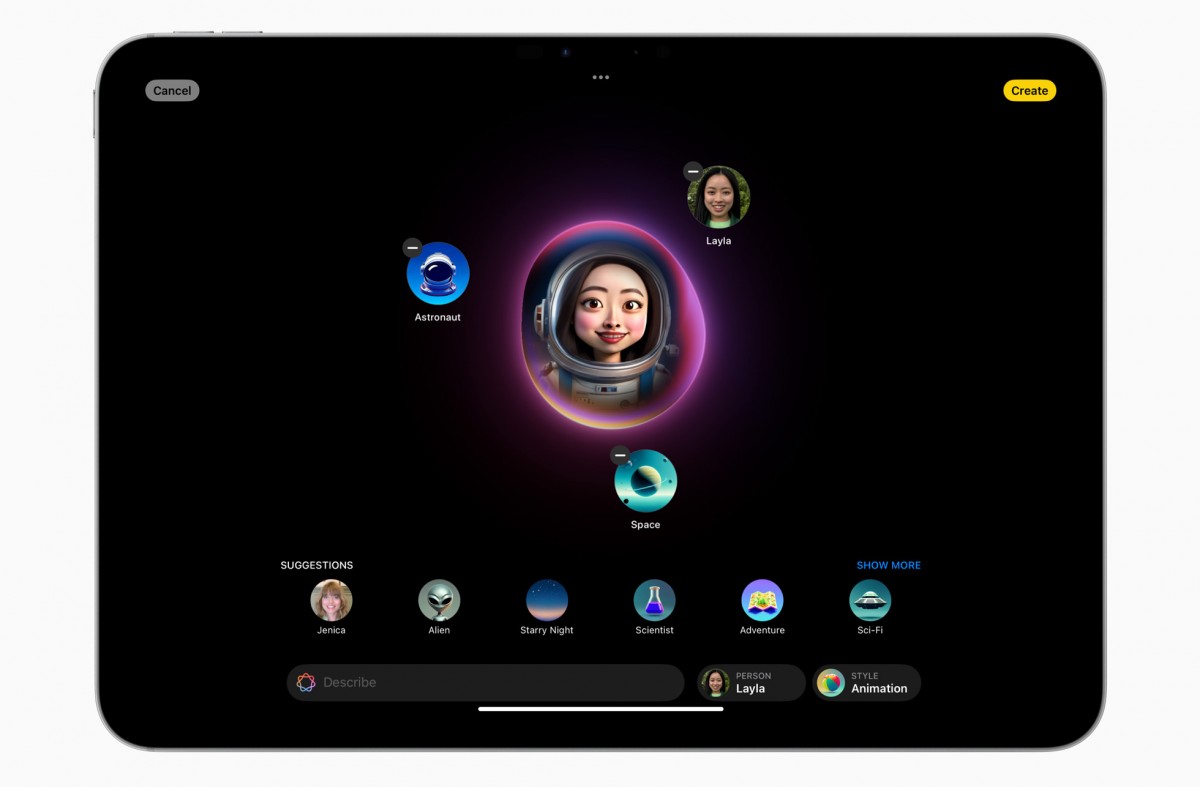
Apple Intelligence's Image Playground

While utilizing Apple Intelligence+ on your iPhone, iPad, or Mac, you’ll gain access to a comprehensive suite of AI features.

As Apple likely prepares a subscription plan akin to its competitor “+”-branded services, it’s reasonable to assume the company will address the trend of consumers upgrading their devices less frequently than before. The corporation is expected to generate significantly less revenue from hardware sales and more from services – with Apple Intelligence playing a pivotal role in this strategy.

Apple Intelligence's Genmoji creator

Apple intends to obtain a share of the subscription revenue generated by each integrated AI partner, mirroring its existing approach with third-party developers on the App Store.

As Apple outlines its vision for future revenue streams, one can’t help but wonder if the proliferation of monthly subscriptions will only continue to worsen for consumers.

The Finest Prosthetic Leg But, Because of a Neural Interface

0

For the first time, a small group of individuals with below-the-knee amputations successfully controlled the movements of their prosthetic legs using neural signals – rather than relying solely on pre-programmed cycles for all or part of a movement – and walked naturally once more. The achievement demanded a highly specialized amputation surgical procedure, combined with the precise attachment of a non-invasive floor electrode to a state-of-the-art robotic prosthetic for the lower extremities. The latest findings from a study on applied sciences were published in today’s edition of the journal.

“What ensues is nothing short of miraculous.” Individuals equipped with this cutting-edge neural interface can now walk at normal velocities, navigate stairs and inclines with ease, and successfully overcome obstacles without giving it a second thought. It’s pure. According to Dr. Rachel Kim, a pioneer in developing bionic prosthetics, “It’s involuntary, despite being constructed from titanium and silicone, the prosthetic limb behaves as if it were an organic extension of their body, functioning seamlessly without deliberate contemplation.”

The methodology hinges on the specific surgical procedure at the amputation site to establish an anatomically meaningful interface (AMI). The procedure involves pairing specific muscle groups (typically two pairs for below-knee amputations) and incorporates proprietary prosthetic components.

The interface establishes a seamless dialogue between human physiology and electronic machinery. Electrodes embedded within the prosthetic limb’s muscles transmit real-time signals to a miniaturized computer, which then deciphers these inputs into precise measurements of joint angle and force data, specifically for the ankle and ball-of-the-foot regions. The device also transmits information about the hypothetical limb’s location, updating a map that illustrates where the prosthetic is situated.

Video 1

According to Dr. Ferris, a University of Florida neuromechanical engineer, “The actual mode of management is far more advanced than anything else that’s been given.” This innovative concept has been meticulously developed over eight years, yielding promising results for advanced bionic lower-limb prosthetics. Notably, the latest publication boasts an expanded participant pool, featuring seven treatment subjects and seven control subjects with amputations and conventional prosthetic legs.

To verify the performance of the bionic legs, participants were asked to walk at varying speeds on flat surfaces, ascend and descend ramps and stairs, and navigate around obstacles. AMI customers exhibited an exceptionally natural gait, eerily mimicking the fluid motion of someone using their unaffected limbs. Researchers have found that incorporating extra naturalistic movement into daily activities can significantly boost one’s sense of freedom and fluidity, particularly when navigating challenging terrain. Moreover, studies have consistently demonstrated reduced energy expenditure, lower physical stress, and even social benefits for individuals who are amputated.

A team member and postdoctoral researcher at MIT notes that they were taken aback by the impressive efficacy of their bionic configuration. Although the prosthetic interface transmitted only 18% of the normal information typically sent from a limb to the spine, this limited amount of data proved sufficient to enable patients to walk with a considered normal gait.

The next stages of development for a bionic leg will focus on refining its functionality and portability. This includes enhancing the prosthetic’s ability to detect and respond to various terrain types, as well as improving its energy efficiency and reducing its overall size.

Amputations resulting from AMI have become a common occurrence at Brigham and Women’s Hospital in Massachusetts, where the study’s co-author is based. As a direct result of individual benefits conferred by reduced pain and enhanced usability through the use of even non-robotic prosthetics, this approach or something similar may prove highly transferable beyond the confines of the current research setting. To date, approximately 60 people globally have undergone the anterior medial approach (AMI) surgery on either their elbow or knee joint.

Initially, Dr. Herr stated that an individual who had previously undergone amputation of a limb may benefit from acute myocardial infarction rehabilitation, and he is strongly considering this process. According to the Amputee Coalition, over 200,000 individuals are living with a missing limb each year in the United States, resulting from amputation procedures.

Regarding this aspect, existing industrial-grade leg prosthetics could potentially be adapted to integrate a neural interface seamlessly. The realm most in need of improvement appears to be the integration between an amputee’s website and their prosthetic care. According to Herr, the commercialization of this interface is likely to take around 5 years to become a reality.

Professor Herr’s ultimate goal is to achieve seamless neural integration and embodiment, where a prosthetic becomes an intuitive extension of one’s physical body rather than a mere tool. This groundbreaking study marks a significant milestone in our understanding.

Prudential Monetary now says 2.5 million impacted by knowledge breach

0

Prudential Monetary now says 2.5 million impacted by knowledge breach

Prudential Monetary, a global financial services company, disclosed that more than 2.5 million people were affected by a data breach that occurred in February, resulting in the compromise of sensitive personal information.

Based on a Form 8-K filed with the SEC? Following a suspected cybercrime group’s breach of their systems, Prudential’s Securities and Trade Fee found itself vulnerable to attacks, with attackers gaining unauthorized access to sensitive information including administrative, consumer, worker, and contractor data.

In March, a Fortune 500 company disclosed in a statement that it had informed over 36,000 individuals whose personal information—including names, driver’s license numbers, and non-driver identification card numbers—had been compromised as a result of a data breach.

“After conducting an investigation, we found that an unauthorised third party breached our system on February 4, 2024, accessing and extracting a limited amount of personal data.”

“As part of our comprehensive response, we have collaborated closely with leading cybersecurity experts to confirm that unauthorized third-party access to our company systems has been thoroughly eliminated.”

Notwithstanding, last week, the company updated the information shared with the Maine Attorney General’s Office regarding the February data breach, and now states that…

A spokesperson for Prudential Monetary has yet to respond to BleepingComputer’s request for further details regarding the attack.

Breach claimed by ALPHV

While Prudential has yet to disclose additional information regarding the identity of the individuals responsible for the February 2024 cybersecurity incident that occurred on February 13.

ALPHV, following a shutdown of its operations, has been linked to Notchy, an affiliate responsible for the notorious Change Healthcare data breach.

The FBI has linked the ransomware gang to over 100 attacks throughout its first four months of operation, with ALPHV having infected more than 1,000 victims by September 2023.

As one of the largest life insurance companies globally, Prudential boasts a workforce of 40,000 employees across the world and generated a staggering $50+ billion in revenue in 2023 alone?

In May 2023, sensitive data—including names, addresses, dates of birth, phone numbers, and Social Security numbers—was compromised after the Clop cybercrime gang breached the MOVEit Switch file-sharing platform managed by Pension Benefit Data (PBI), a third-party vendor responsible for handling this information.

Introducing self-managed knowledge sources for Amazon OpenSearch Ingestion

0

Enterprise clients increasingly adopt OSI to disseminate knowledge across multiple use cases. These solutions encompass petabyte-scale log analytics, real-time streaming capabilities, safety analytics, and the processing of semi-structured key-value or document data. By leveraging OSI’s intuitive platform, users can seamlessly integrate information from a range of leading cloud service providers, including Amazon Web Services’ prominent offerings such as Amazon S3, Amazon MSK, and more.

Today, we’re actively supporting the consumption of knowledge from self-managed Elasticsearch instances. Both sets of sources can exist within Amazon EC2 environments as well as on-premises settings.

To successfully initiate engagement with these resources, follow these straightforward steps:

Resolution overview

OSI facilitates integration with AWS Cloud Development Kit (AWS CDK), Amazon Web Services Command Line Interface (AWS CLI), AWS Application Programming Interfaces (APIs), and other tools to streamline pipeline deployments. In this publication, we employ the console to demonstrate how to establish a self-directed Kafka pipeline.

Stipulations

To effectively join and leverage existing knowledge while verifying OSI, the following conditions need to be satisfied:

  • OSI typically operates within publicly accessible communities, like the internet, or private virtual clouds. The Open Search Index (OSI) deployed within a buyer’s Virtual Private Cloud (VPC) is now prepared to access knowledge sources both within the same or a different VPC, as well as online, connected via a stable network infrastructure. When connecting to knowledge sources in another Virtual Private Cloud (VPC), common approaches include establishing direct connections via Virtual Private Networks (VPNs) or using a managed service like AWS Direct Connect, which is powered by Amazon Web Services. When your knowledge sources reside within your organization’s internal network or an on-premises environment, common approaches to establishing community connectivity include leveraging a network hub, such as a transit gateway, and utilizing protocols that facilitate seamless communication between disparate systems. The diagram depicts the configuration pattern of the OSI model operating within a Virtual Private Cloud (VPC), leveraging Amazon OpenSearch Service as the data sink. OSI operates within a service Virtual Private Cloud (VPC), which enables secure communication between resources. Additionally, OSI creates a subnet within the buyer’s Virtual Private Cloud (VPC). For personal knowledge development and management, these Environments for Networking and Infrastructure (ENIs) enable the study of knowledge in an on-premises setting. The Open Systems Interconnection (OSI) model enables a Virtual Private Cloud (VPC) endpoint within its respective Service VPC, facilitating the transfer of information from the source to the designated sink.
  • – OSI relies on a layered architecture. This resolver provides authoritative answers for queries regarding names residing within a Virtual Private Cloud (VPC), public domains on the internet, and data stored locally. For users hosting their own zones, ensure that DNS resolution is enabled and properly linked to the Virtual Private Cloud (VPC). AmazonProvidedDNS as area title server. For extra info, see . You should employ sophisticated decision-making frameworks that account for complexities and uncertainties extending beyond your immediate control sphere.
  • OSI enables seamless transport-layer communication specifically for Apache Kafka’s reliable data transmission. Within Amazon OpenSearch Service’s Security and Authentication Layer (SASL), a variety of authentication mechanisms are supported, including PLAIN, SCRAM, IAM, GSAPI, and other mechanisms to provide secure access control. When utilizing SASL_SSLAre you certain you have access to the required certificates needed to authenticate with OSI? For self-managed OpenSearch knowledge sources, ensure that verifiable certificates are installed on the clusters. Amazon OpenSearch Service does not support insecure communication between OSI and OpenSearch. Certification verification cannot be disabled by default. The “” configuration option is simply not supported.
  • OSI leverages APIs to retrieve credentials and certificates, enabling seamless communication with self-managed knowledge sources. For extra info, see .
  • I am seeking a role as an Intelligent Automation (IAM) pipeline developer that enables the creation of knowledge sinks. For extra info, see .

What’s the most cost-effective way to integrate Apache Kafka into my data pipeline?

I’d like to leverage Kafka’s scalability and fault-tolerant architecture by running it on my own servers, rather than relying on cloud providers. This approach not only saves me money but also gives me full control over my data and infrastructure.

To get started, I’ll first set up a self-managed Kafka cluster using Apache ZooKeeper for coordination. Then, I’ll use Kafka’s built-in topics to define the structure of my data streams. Next, I’ll create producers to send data into Kafka from various sources, such as logs or databases.

Once my data is in Kafka, I can write consumers to process and transform it into a format suitable for further analysis or storage. For example, I might use Apache Spark Structured Streaming to read data from Kafka and perform real-time analytics.

To ensure reliability and scalability, I’ll also set up a distributed architecture with multiple brokers and replicas. This way, if one broker goes down, the others can take over without disrupting my pipeline.

By running Kafka self-managed, I’ll enjoy greater control, cost savings, and flexibility to adapt to changing requirements.

Once you’ve mastered the necessary skills, you’re able to establish a seamless pipeline of information within your expertise. Full the next steps:

  1. In the OpenSearch Service console, navigate to the area beneath the navigation pane.
  2. Select .
  3. Click on “Select” beneath the Navigation pane.
  4. Please choose between the two options.

Does this pipeline have a specific configuration that needs to be populated?

  1. Establishing a sterling reputation requires a robust pipeline infrastructure, leveraging capabilities such as Data Integration and Quality, Real-time Processing and Analytics, Scalability, Security, and Visibility into Performance Metrics.
  2. Pipeline:
    stages:
    – Build
    – Test
    – Deploy
    jobs:
    – job: MyJob
    stage: Build
    steps:
    – checkout scm
    – sh ‘mvn clean package’
    stage: Test
    steps:
    – deploy_artifact path=’target/*.jar’, repo=’maven-repo’ The following code snippet reveals pattern configuration in YAML for SASL_SSL authentication:

    model: '2' kafka-pipeline:   supply:     kafka:       acks: true       bootstrap_servers: ["node-0.instance.com:9092"]       encryption:         type: "ssl"         certificates: '${AWS_SECRETS_KAFKA_CERT}'       authentication:         sasl:           plain:             username: '${AWS_SECRETS_USERNAME}'             password: '${AWS_SECRETS_PASSWORD}'       subjects:         - title: on-prem-topic           group_id: osi-group-1   processor:     - grok:         match:           message:             ['%{COMMONAPACHELOG}']     - date:         timestamp: '@timestamp'         from_time_received: true   sink:     - opensearch:         hosts: ["https://search-domain-12345567890.us-east-1.es.amazonaws.com"]         aws:           region: 'us-east-1'           role_arn: 'arn:aws:iam::123456789012:role/pipeline-role'         index: "on-prem-kakfa-index" extension:   aws:     secrets:       kafka-cert:         secret_id: kafka-cert         region: us-east-1         role_arn: 'arn:aws:iam::123456789012:role/pipeline-role'       secrets-and-techniques:         secret_id: secrets-and-techniques         region: us-east-1         role_arn: 'arn:aws:iam::123456789012:role/pipeline-role'
  1. The statement is too vague to improve. It should be more specific about what kind of errors you want me to check. For example, you could specify that you want me to check for grammar errors, punctuation errors, spelling errors, etc.

    SKIP

  2. Below, select or. (SKIP)
  3. To facilitate secure communication with OSI, kindly confirm that you have specified the relevant VPC, subnets, and security group settings to allow outgoing traffic on necessary ports for data transmission.
  4. Choose a suitable subnet mask that corresponds to a specific CIDR (Classless Inter-Domain Routing) block, ensuring efficient allocation of IP addresses while maintaining network segmentation.

The OSI (Open Systems Interconnection) sources are generated within a dedicated service Virtual Private Cloud (VPC), carefully managed by Amazon Web Services (AWS), and distinctly isolated from the VPC chosen during the concluding step of the process. This option enables you to specify which Classless Inter-Domain Routing (CIDR) block sizes OSPF should utilize within this Service Virtual Private Cloud (VPC). The selection ensures that there is no possibility of a handle collision between CIDR ranges in your VPC, which is connected to both your on-premises community and the service VPC, thereby eliminating any potential risks of overlapping IP address spaces. Multiple pipelines within your account may utilize the same CIDR range for the associated Virtual Private Cloud (VPC), sharing common IP address blocks for this service.

  1. What are the most popular social media platforms for sharing articles?
  2. The complexity of modern systems is staggering. With so many interconnected components, it’s a wonder anything runs smoothly at all. Nevertheless, I shall endeavour to decipher this labyrinthine configuration.

    Assessing the situation, one finds that each component is intricately tied to another, creating a delicate balance that must be maintained lest the entire system come crashing down.

You’ll be able to monitor the pipeline creation and view any relevant log messages within the designated log group. Your pipeline is now efficiently established. To gain further insight on streamlining this process, refer to the subsequent section.

As part of our company’s data processing infrastructure, we aim to establish a reliable and efficient pipeline for handling and analyzing large datasets. To achieve this, we propose leveraging the power of self-managed OpenSearch as a primary supply chain component.

The proposed architecture will feature OpenSearch as the central hub, utilizing its robust search capabilities to index and query massive volumes of data with ease. By integrating OpenSearch into our pipeline, we can expect significant improvements in terms of scalability, performance, and data retrieval speed.

Moreover, OpenSearch’s rich set of features will enable us to handle complex queries, faceting, and aggregation requirements seamlessly. This, in turn, will empower our data scientists and analysts to make more accurate predictions, uncover hidden trends, and gain valuable insights from the vast amounts of data at their disposal.

To ensure seamless integration with existing systems and tools, we plan to develop custom connectors and APIs that allow for effortless interaction between OpenSearch and other components within our pipeline. This will enable real-time data processing, monitoring, and visualization across multiple levels and domains.

With self-managed OpenSearch as the foundation of our pipeline, we can rest assured that our data processing operations are secure, reliable, and optimized for peak performance. By leveraging its powerful features and scalability, we will be well-equipped to tackle even the most challenging big-data problems head-on.

By integrating OpenSearch into our pipeline, we will be able to:

* Achieve faster query response times
* Scale efficiently to handle massive data volumes
* Leverage advanced search features for nuanced analysis
* Streamline data processing and monitoring workflows

While the steps for building a pipeline for self-managed OpenSearch may share some similarities with those for Kafka, they do have distinct differences that need to be acknowledged and accounted for in order to ensure optimal performance and seamless integration. By navigating through the blueprint’s options, select the appropriate path to proceed. OpenSearch ingestion can support knowledge integration from all OpenSearch and Elasticsearch versions, specifically models 7.0 through 7.10, inclusive.

The next blueprint uncovers a repeating design template in YAML format, detailing the structure of this information pipeline.

opensearch-migration-pipeline:   supply:     opensearch:       acknowledgments: true       hosts: ['https://node-0.example.com:9200']       credentials:         username: !SecretsManager::GetSecretValue --query 'SecretString' --region us-east-1 --id secret:username         password: !SecretsManager::GetSecretValue --query 'SecretString' --region us-east-1 --id secret:password       indices:         - index_name_regex: "opensearch_dashboards_sample_data*"           exclude:             - index_name_regex: '..*'   sink:     - opensearch:         hosts: ['https://search-domain-12345567890.us-east-1.es.amazonaws.com']         aws:           role_arn: 'arn:aws:iam::123456789012:role/pipeline-role'           region: us-east-1         index: on-prem-os extension:   aws:     secrets:       - secret_id: self-managed-os-credentials         region: us-east-1         role_arn: 'arn:aws:iam::123456789012:role/pipeline-role'         refresh_interval: PT1H

Will there be a need for OpenSearch’s self-managed knowledge supply to adapt to emerging trends? Can the current structure support the evolving demands of users and content producers alike?

Before connecting to this knowledge supply and studying knowledge, certificates must be verifiably valid for OSI to establish a connection. Insecure connections are no longer supported.

Once connected, ensure that the network cluster possesses sufficient learning capacity to enable the OSI model to absorb and process new information. To curb OSI’s learning bandwidth consumption, consider implementing rate limiting and data compression strategies. By capping the maximum amount of bandwidth allocated to OSI and compressing redundant data, you can significantly reduce network utilization and prevent unnecessary strain on your infrastructure. Additionally, consider configuring OSI’s update frequency and batch size to optimize its learning process while minimizing overhead. The effectiveness of your learning bandwidth will depend on the volume of information, diversity of resources, and allocated Organizational Change Unit capacity. Commence with incremental adjustments to optimize the scope of Online Configuration Updates (OCUs), striking a balance between attainable bandwidth and tolerable migration timeframes.

This supply is typically intended for a one-time transfer of information, rather than a continuous process to keep data synchronized across knowledge sources and sinks.

The OpenSearch Service domain assists in consuming sources within your domains. By leveraging the Open Systems Interconnection (OSI) model, it is possible to seamlessly relocate computing resources outside their current geographical location, allowing for much faster migration times compared to traditional remote indexing methods that can be severely limited by bandwidth constraints.

OSI does not currently support deferred replay or visitor recordings; consult with us if your migration requires these features.

Conclusion

We’ve introduced self-managed resources for OpenSearch Ingestion, empowering users to integrate data from corporate knowledge centers or other on-premises environments with ease. The Open Security Information (OSI) further facilitates collaboration with a wide range of knowledge sources and integrations. Consult various knowledge resources to gather information.


In regards to the Authors

A Search Specialist with Amazon OpenSearch Service? He designs and develops comprehensive search capabilities with extensive options. Muthu operates within the realms of networking and safety, with a base in Austin, Texas.

Serves as a Product Supervisor for Amazon OpenSearch Service. He specializes in developing scalable solutions for ingesting diverse knowledge sources into Amazon OpenSearch Service through the application of various data science techniques. Arjun strongly advocates for large-scale distributed technologies and cloud-based innovations, residing outside of Seattle, Washington.